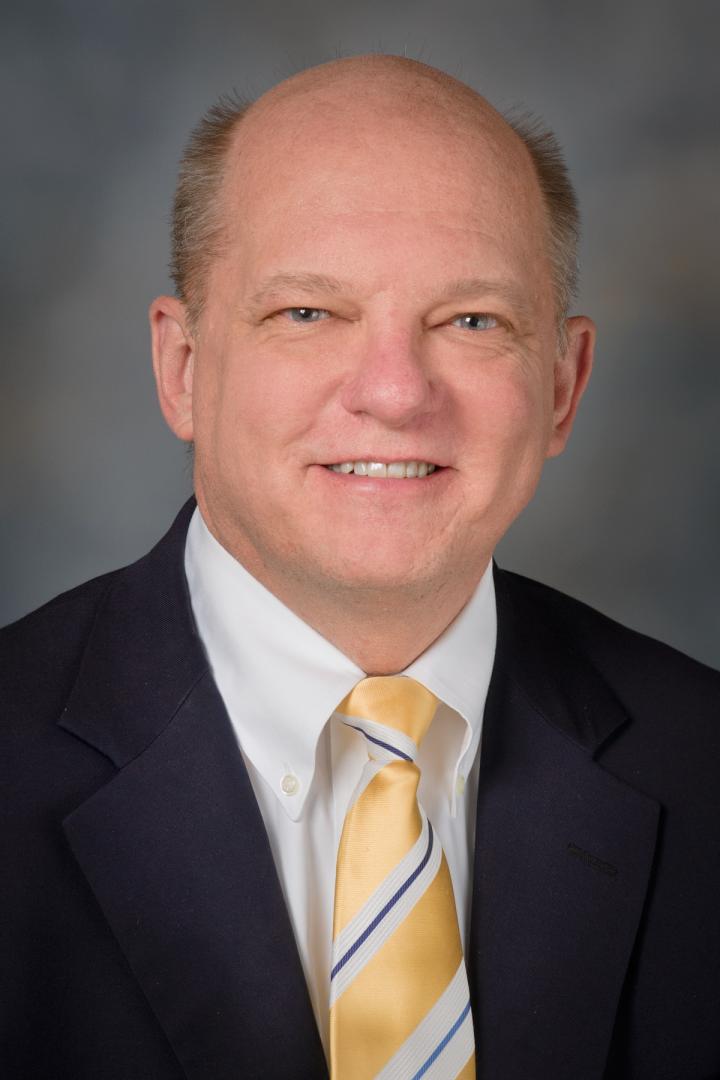
Credit: MD Anderson Cancer Center
HOUSTON ― Recognizing a critical need to address disparities in cancer care, The University of Texas MD Anderson Cancer Center has been designated as an ECHO superhub for oncology by the ECHO Institute at the University of New Mexico Health Science Center (UNMHSC). MD Anderson is one of just nine ECHO superhub sites in the world and the first focused on oncology.
Project ECHO (Extension for Community Healthcare Outcomes) was developed in 2003 to expand local capacity to provide specialty treatments for hepatitis C patients in rural New Mexico. The telementoring ECHO model connects primary care physicians from rural and underserved areas with specialists from academic medical centers to share best-practice management of complex health conditions.
As an ECHO superhub, MD Anderson will collaborate with and train other academic cancer centers interested in using the telementoring ECHO model to improve patient access to high-quality care in rural and underserved areas around the world. The new designation was announced today at MD Anderson by its founder, Sanjeev Arora, M.D., director of Project ECHO at UNMHSC.
"We believe that the ECHO model has great potential to promote greater equity in care delivery across the entire cancer spectrum," said Ernest Hawk, M.D., vice president and head, Division of Cancer Prevention and Population Sciences. "As we build a global partner network of academic and local health care providers through Project ECHO, we will establish projects to improve the capacity for local providers to provide high-quality cancer prevention, screening, and treatment options in their communities."
Currently, Project ECHO works with 109 partners across the United States and 21 other countries on more than 55 different medical conditions. MD Anderson first established an oncology-focused ECHO program in 2014 with a project aimed at improving cervical cancer prevention, screening and management services in Texas' Rio Grande Valley.
In this underserved region along the Texas-Mexico border, cervical cancer rates are as much as 30 percent higher than the rest of the state, primarily due to poor health care access and few local providers trained in cervical cancer management. MD Anderson faculty use the ECHO model to mentor local providers in educating women about the importance of screening and vaccination for the human papillomavirus (HPV), as well as best practices for screenings, diagnostics and early cancer management.
MD Anderson has now established a series of ECHO partnerships across Texas, Latin America and Africa to address needs in tobacco cessation, survivorship and palliative care in addition to cancer prevention, screening and management.
"Through participation in ECHO projects, local providers report both improved knowledge and ability to deliver high-quality care in their communities," said Kathleen Schmeler, M.D., associate professor, Gynecologic Oncology and Reproductive Medicine. "These rewarding partnerships also foster ongoing collaborative projects and work toward long-term solutions to disparities in cancer care. We hope establishing a broader global network of ECHO partners for oncology will further accelerate our mission."
Schmeler and Hawk will serve as directors of the MD Anderson ECHO superhub, which is managed by the cancer prevention and control platform, part of MD Anderson's Moon Shots Program™, an ambitious effort to reduce cancer deaths by more rapidly developing and implementing advances in prevention, early detection and treatment based on scientific discoveries. The program comprises 13 moon shots focused on a variety of the most challenging cancers backed by 10 platforms that provide deep expertise, cutting-edge technology and infrastructure.
###
Media Contact
Clayton R. Boldt, Ph.D.
[email protected]
713-792-9518
@mdandersonnews
http://www.mdanderson.org
############
Story Source: Materials provided by Scienmag