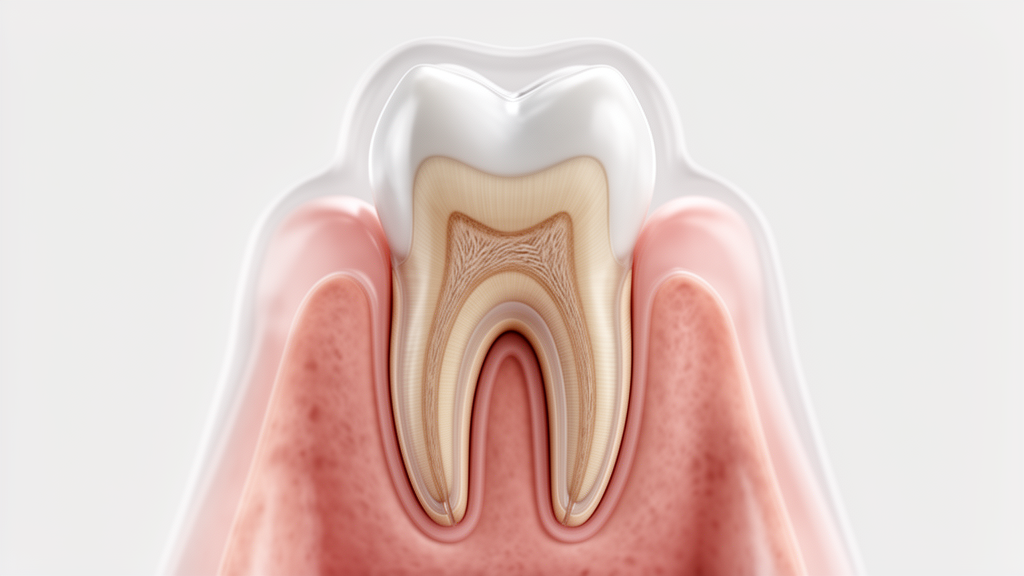
A single linear measurement of the human fetal maxillary central incisor can estimate gestational age with an expected cross-validated error of less than one week, according to an imaging study published in the International Journal of Legal Medicine. Researchers examined thirty human fetal specimens spanning eleven to twenty-three weeks of gestation to determine whether microfocus-computed tomography of developing deciduous tooth germs provides reliable metric and volumetric markers for forensic age determination. The investigation evaluated both microscopic tooth structures and standard skeletal indicators to understand how dental developmental parameters perform across this gestational window.
Accurate estimation of fetal gestational age plays an essential role in establishing legal viability and guiding forensic and clinical decision-making. Deciduous tooth germs represent early-forming, highly resistant anatomical structures that investigators have previously evaluated for age estimation using conventional two-dimensional linear measurements. However, the study authors noted that no previous research had provided an in situ volumetric quantification of the individual constituent tissue compartments that make up these developing dental structures during human gestation.
To address this technical gap, the researchers analyzed thirty fetal specimens obtained from the Dutch Fetal Biobank. The research team treated the anatomical specimens with Lugol’s solution staining to provide tissue contrast before scanning them with high-resolution microfocus-computed tomography. Through this three-dimensional imaging approach, the investigators were able to segment each individual deciduous tooth germ into three distinct tissue compartments: the mineralized tissue, the dental papilla, and the surrounding peripheral tissue.
For every segmented tooth germ in the sample, the researchers measured and recorded four anatomical variables: total volume, height, width, and thickness. The team then compared age-estimation models constructed at multiple levels of anatomical aggregation, examining metrics from individual tooth germs, bilateral pairs, dental quadrants, specific tooth categories, and the total dentition. In addition to assessing overall predictive accuracy, the researchers evaluated left-right asymmetry, the chronological sequence of mineralization, and intra-observer reproducibility across the imaging datasets.
Model validation using leave-one-out cross-validation revealed that the bilaterally averaged height of the maxillary central incisor predicted gestational age with a coefficient of determination of 0.971 and a root mean square error of 0.74 weeks. For individual age predictions, this metric demonstrated a 95 percent prediction interval of plus or minus 1.5 weeks. A composite model based on total tooth germ volume achieved comparable predictive accuracy, yielding an R-squared of 0.962 and an error of 0.83 weeks, while providing the practical advantage of remaining functional when individual teeth were unsegmentable or missing.
To account rigorously for potential bias introduced during model selection, the researchers applied nested cross-validation, which produced an expected prediction error of 0.92 weeks across the sample. When the team evaluated traditional skeletal markers on the exact same fetal cohort, femoral diaphyseal length yielded a leave-one-out cross-validation root mean square error of 0.61 weeks. Furthermore, the micro-CT scans revealed that the onset of dental mineralization followed a consistent, tooth-specific sequence, without showing a consistent developmental lead for either the upper or lower dental arcade.
The study authors concluded that microfocus-computed tomography offers the first in situ volumetric quantification of the tissue compartments within human fetal deciduous tooth germs. While the linear measurement of maxillary central incisor height delivered high precision in this exploratory cohort, the investigators emphasized that the technique warrants further evaluation as a complement to established skeletal indicators in post-mortem fetal imaging, pending external validation in larger and independent cohorts.
Subject of Research: Fetal gestational age estimation using micro-CT analysis of deciduous tooth germs
Article Title: Fetal age estimation using micro-CT volumetric and metric analysis of deciduous tooth germs
Article References: Fournier, G., Visser, S. C., Dawood, Y., Khan, F., Maret, D., Dédouit, F., & de Bakker, B. S. (2026). Fetal age estimation using micro-CT volumetric and metric analysis of deciduous tooth germs. International Journal of Legal Medicine. https://doi.org/10.1007/s00414-026-04080-w
Image Credits: AI Generated
DOI: 10.1007/s00414-026-04080-w
Keywords: deciduous tooth germs, fetal age estimation, gestational age, micro-CT, microfocus-computed tomography, maxillary central incisor, mineralized tissue, dental papilla, Dutch Fetal Biobank, Lugol's solution, femoral diaphyseal length, post-mortem fetal imaging, forensic age estimation, leave-one-out cross-validation, nested cross-validation, volumetric analysis, mineralization chronology
News Source: Ophelia Keating. (November 23, 2026). Maxillary Incisor Height Estimates Fetal Gestational Age in Micro-CT Analysis. Scienmag.