Using non-targeted metabolomics and CIELab colorimetry, researchers characterized skin color variation and anthocyanin metabolism in Marselan grapes across five distinct growth stages. By characterizing the metabolic shifts from berry swelling to over-maturity, the team identified specific compounds that drive the characteristic purple coloration of the fruit. The findings offer a theoretical basis for addressing color fading issues in local wines and provide insights for future breeding strategies aimed at enhancing grape quality.
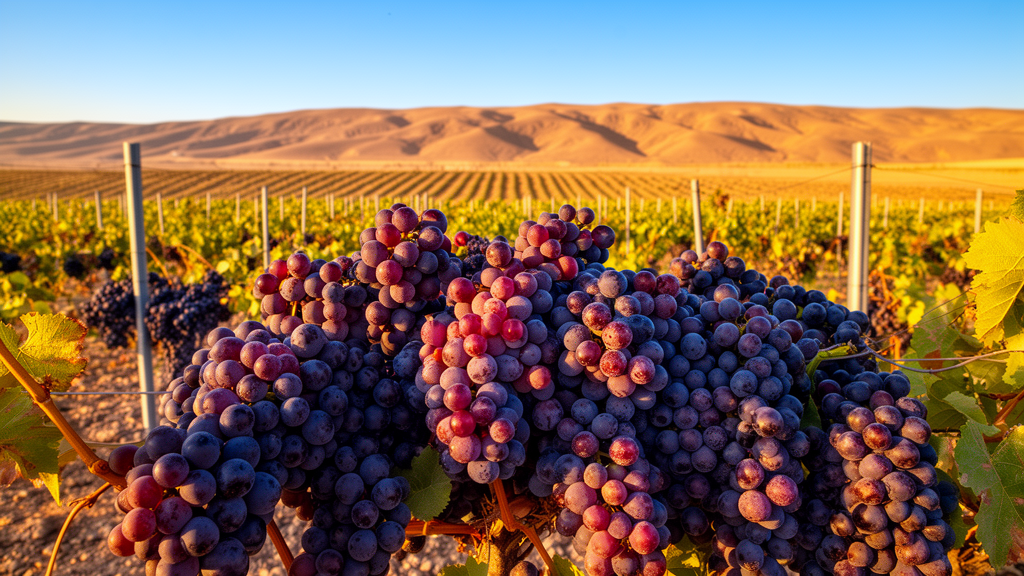
The research focused on Marselan, a red grape cultivar derived from a cross between Cabernet Sauvignon and Grenache Noir. This variety is known for its deep color, abundant tannins, and intense aroma, making it a promising candidate for wine production in China. The study site is located at a latitude similar to California and Bordeaux, characterized by large diurnal temperature differences, long sunshine hours, and sandy or gravelly soils. These climatic conditions are generally favorable for wine grape cultivation, although they also present specific challenges regarding acid accumulation and pigment stability during the ripening process.
To capture the temporal changes in grape chemistry, the team sampled berries from 25 tagged vines across five standardized developmental stages. These stages were defined using the Modified Eichhorn-Lorenz system: berry swelling, color change, near-maturity, mature, and over-mature. Sampling occurred between July and September, with the mature stage defined by more than 95% of berries completing color change and a soluble solids content exceeding 22 degrees Brix. The over-mature stage was characterized by berry skin shriveling due to water loss and a measured soluble solids content of 27.5 degrees Brix. This rigorous sampling protocol allowed for a detailed comparison of chemical profiles as the grapes progressed through ripening.
The analytical approach combined CIELab colorimetry with liquid chromatography-electrospray ionization-tandem mass spectrometry. This non-targeted metabolomics strategy enabled the identification of 36 distinct anthocyanins, including six free anthocyanins, 11 monosaccharides, six disaccharides, and 13 acylated forms. The study also measured pH, titratable acidity, total soluble solids, and the content of organic acids and soluble sugars. By correlating these quality parameters with pigment composition, the researchers aimed to understand the interplay between sugar accumulation, acid degradation, and anthocyanin biosynthesis in this specific geographic region.
Results indicated that anthocyanin content was extremely low during the berry swelling stage, consistent with the green skin color of the fruit at that time. A rapid increase in pigment accumulation began during the color change stage, continuing through near-maturity and peaking at the mature stage. However, a slight decline in anthocyanin content was observed during the over-mature stage, suggesting that pigments do not accumulate indefinitely after maturity. This decline is likely attributed to degradation processes triggered by environmental factors during over-ripening, a pattern also observed in other varieties such as Cabernet Sauvignon.
Malvidin 3-O-galactoside emerged as the predominant anthocyanin, increasing from 26.88 micrograms per milliliter at the berry expansion stage to 2,566.59 micrograms per milliliter at maturity. This compound accounted for over 50% of the total anthocyanin content and was identified as the primary driver of the berry’s purple skin color. Petunidin 3-O-galactoside was the second most abundant compound, showing an 180-fold increase during the color change period. The dominance of malvidin derivatives aligns with the observed shift in hue angle toward the blue-purple range, reflecting the specific chemical profile of Marselan grapes in this region.
A critical finding of the study was the relatively low proportion of acylated anthocyanins in the mature berries. Only three major anthocyanins at maturity were acylated, and their combined content was less than 18% of the total. This is significantly lower than the proportion found in regions like Bordeaux, where acylated anthocyanins typically exceed 30%. The study hypothesizes that the low acidity in Xinjiang grapes, resulting from rapid sugar accumulation and malic acid degradation under high temperatures, restricts the formation of these stable acylated forms. Consequently, the higher proportion of non-acylated anthocyanins may contribute to the poorer color stability observed in Marselan wines from this area.
Correlation analysis revealed that soluble sugars had a much stronger positive association with anthocyanin accumulation than organic acids. Sugar content was significantly correlated with 28 of the 36 identified anthocyanins, suggesting that sugars act as both energy sources and promoters of biosynthesis. In contrast, organic acids were negatively correlated with free anthocyanins. The study also found that monomeric phenols such as rutin, quercetin, and vanillic acid were positively correlated with acylated anthocyanins, while epicatechin and neochlorogenic acid showed negative correlations. These relationships highlight the complex metabolic network governing pigment stability and color intensity.
The colorimetric data showed that the skin color transitioned from green at the swelling stage to opaque purple at maturity. The lightness value, or L*, decreased steadily as anthocyanins accumulated, while the hue angle shifted from green to yellowish and finally to purplish red. The chroma, or color saturation, showed the largest decrease during the transition from swelling to color change, indicating a rapid visual transformation. The study noted that the blue-purple hue of the mature skin is largely determined by the high content of malvidin derivatives and the presence of specific acylated compounds that enhance color depth.
Principal component analysis confirmed that the different developmental stages were clearly distinguished by their anthocyanin profiles, with the first two principal components explaining 81.05% of the variance. Differential metabolite analysis identified peonidin 3-O-(6″-acetylgalactoside) as a core differential metabolite across all comparison groups, suggesting a key role in anthocyanin metabolism. Malvidin 3-O-galactoside was also highlighted as a unique differential metabolite between the swelling and color change stages, potentially serving as a marker for the onset of color development. These findings provide candidate metabolites for improving wine color stability through targeted breeding or cultivation practices.
The study underscores the impact of local climatic conditions on grape chemistry, particularly the trade-off between sugar accumulation and acid retention. By mapping the dynamic changes in pigment composition, the research offers valuable data for viticulturists and breeders. Understanding these metabolic dynamics can help in developing strategies to mitigate color fading and enhance the overall quality of Marselan wines produced in the Xinjiang region.
The study provides a robust theoretical basis for future investigations into the genetic and environmental factors controlling grape color and quality.
The study identified twelve monomeric phenols in the grape skins, which were categorized into two distinct groups based on their accumulation trends. One group accumulated continuously as the grapes ripened, reaching peak levels at the over-mature stage, while the other group exhibited the highest concentrations during the initial berry swelling stage. Catechin and rutin were the predominant monomeric phenols, with contents significantly higher than those of other phenolic acids. Specifically, rutin, vanillic acid, myricetin, resveratrol, and quercetin increased continuously throughout grape development. In contrast, epicatechin, neochlorogenic acid, caffeic acid, and ferulic acid reached their maximum levels at the swelling stage. Caffeic acid was detected only at the swelling and color change stages, whereas quercetin was not detected at the swelling stage. These dynamic changes in monomeric phenols reflect the complex interplay between environmental factors and developmental stages in determining the phenolic profile of Marselan grapes.
Correlation analysis between monomeric phenols and anthocyanins revealed a strong relationship, with significant correlations observed for 31 of the 36 identified anthocyanins. Among these, 21 correlations were extremely significant, indicating a robust association between specific phenolic compounds and pigment composition. Epicatechin, caffeic acid, ferulic acid, and neochlorogenic acid were negatively correlated with monomeric anthocyanins, while quercetin showed a positive correlation. Phenolic acids serve as important substrates for the formation of acylated anthocyanins, and the negative correlation between certain phenols and free anthocyanins suggests that acylation modifications play a crucial role in stabilizing pigment structures. Malvidin, a key contributor to the purple color of grapes, was found to be influenced by the contents of vanillic acid, benzoic acid, and rutin, highlighting the interconnected nature of phenolic metabolism and color development.
The colorimetric analysis provided detailed insights into the visual transformation of Marselan grape skins during ripening. The hue angle shifted from 166.68 at the initial swelling stage to 66.24, then to 33.22, and finally stabilized in the blue-purple range. This progression indirectly reflects the dominance of blue-purple pigments with less red tone in the mature skins, which is consistent with the high content of malvidin derivatives. The chroma, or color saturation, showed the largest decrease during the transition from the swelling to the color change stage, with a value of 11.44. This rapid change in color saturation corresponds to the direct green-to-red transition observed during the color change stage. The delta E value, which indicates visually perceptible color differences, reached its maximum of 18.96 at the color change stage, underscoring the significant visual impact of anthocyanin accumulation during this period.
The study also examined the correlation between anthocyanin metabolism and grape quality parameters, revealing that sugar content was significantly correlated with 28 of the 36 anthocyanins. This strong positive association suggests that sugars act as both energy sources and promoters of anthocyanin biosynthesis, a finding consistent with previous studies on other grape varieties. In contrast, organic acids were negatively correlated with free anthocyanins, indicating that the degradation of acids during ripening may influence pigment stability. The complex relationship between acylated anthocyanins and physical and chemical components in grapes was further elucidated through Pearson analysis, which showed that rutin, quercetin, and vanillic acid were significantly positively correlated with the detected acylated anthocyanins. These findings provide a theoretical basis for understanding the metabolic dynamics that govern grape color and quality, offering valuable insights for improving wine production in the Xinjiang region.
Subject of Research: Study on the dynamic changes of anthocyanins in Marselan ( Vitis vinifera L.) grapes at the northern foot of Tianshan Mountains
Article Title: Study on the dynamic changes of anthocyanins in Marselan ( Vitis vinifera L.) grapes at the northern foot of Tianshan Mountains
Article References: Tang, T., Fu, Q., Wang, F., Yang, J., Shi, X., Xi, Y., & Wang, B. (2026). Study on the dynamic changes of anthocyanins in Marselan (Vitis vinifera L.) grapes at the northern foot of Tianshan Mountains. Journal of Agriculture and Food Research, 32, Article 103417. https://doi.org/10.1016/j.jafr.2026.103417
Image Credits: AI Generated
DOI: 10.1016/j.jafr.2026.103417
Keywords: dynamic, changes, anthocyanins, Marselan, Vitis, vinifera, grapes, northern, foot, Tianshan, Mountains, scientific research
News Source: Alan Morgan. (November 9, 2026). Marselan Grape Anthocyanin Dynamics Revealed in Xinjiang Study. Scienmag.