Recent advancements in cancer research have unveiled intriguing insights into the complexities of papillary thyroid cancer (PTC) and its lymphatic spread. The recent study conducted by Li, K., Pan, Z., Chang, W., and colleagues has introduced an innovative approach by integrating spatial metabolomics with transcriptomics to dissect the molecular underpinnings of this prevalent thyroid malignancy. This groundbreaking research not only enhances our understanding of tumor biology but also opens doors for novel therapeutic strategies in combating PTC and its metastasis.
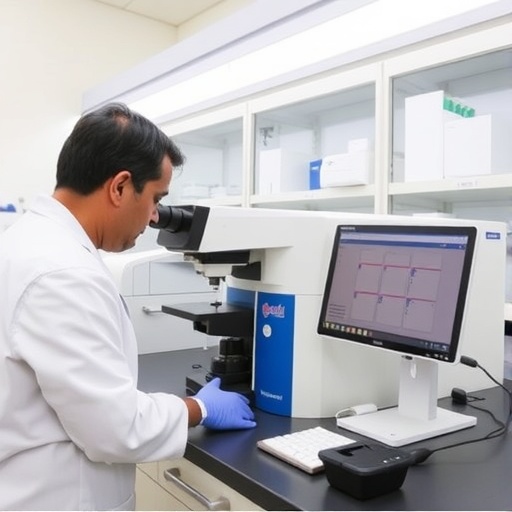
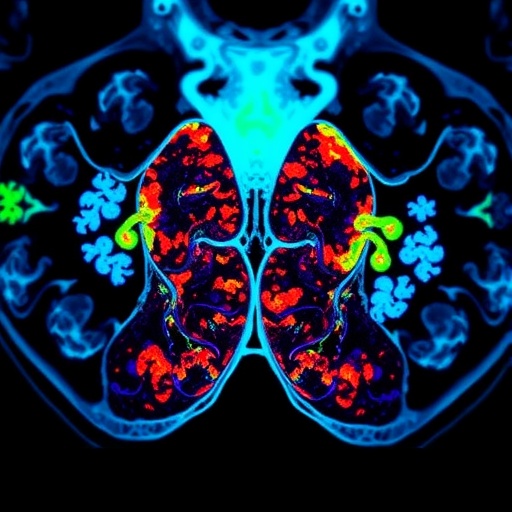
The methodology employed in this study is nothing short of revolutionary. By leveraging cutting-edge spatial metabolomics, the researchers were able to visualize and quantify metabolites directly from tissue sections. This technique allows for a comprehensive mapping of metabolomic alterations within the tumor microenvironment. Coupled with transcriptomic analysis, which investigates gene expression patterns, this dual approach sheds light on the metabolic pathways that are significantly altered in papillary thyroid cancer tissues compared to healthy counterparts.
One of the most striking revelations of the study is the intricate relationship between metabolic reprogramming and cancer progression. The researchers found that specific metabolites were consistently elevated in cancerous tissues, indicating that the tumor cells engage in a unique metabolic dialogue with surrounding stromal cells. This interaction is crucial as it not only supports tumor growth but also contributes to the capacity of cancer cells to invade lymphatic vessels, leading to metastasis.
Further analysis revealed that the metabolic landscape of papillary thyroid cancer varies significantly between primary tumors and metastatic lymph nodes. This insight provides crucial information that could inform the staging and treatment strategies for patients diagnosed with PTC. Understanding how tumor cells adapt their metabolism when transitioning from localized disease to metastatic spread is a key component in developing targeted interventions that could potentially halt or reverse this process.
The implications of Li et al.’s findings extend beyond basic research. The identification of specific metabolic signatures associated with PTC presents opportunities for developing diagnostic and prognostic biomarkers. In clinical settings, these biomarkers could serve as predictive tools to assess the likelihood of disease progression or response to therapy. For instance, patients exhibiting elevated levels of certain metabolites may be at a higher risk for lymph node metastasis and could benefit from more aggressive treatment modalities.
Innovative therapeutic approaches could also stem from the insights gained through this research. Targeting the metabolic pathways identified in the study may provide a novel avenue for interventions. For instance, pharmacological agents that inhibit specific enzymes involved in the altered metabolic pathways could thwart tumor growth and diminish metastatic potential. This targeted approach could significantly improve outcomes for patients with papillary thyroid cancer, marking a shift towards more personalized medicine.
Additionally, the spatial aspect of this research opens up avenues for investigating tumor heterogeneity. The study highlights that not all cells within a tumor exhibit the same metabolic activity, which further complicates therapeutic targeting. By understanding the spatial distribution of metabolites within tumors, researchers can devise strategies to address this heterogeneity, ensuring that treatments are effective across the entire tumor population.
The integration of spatial metabolomics and transcriptomics also facilitates a more holistic understanding of the tumor microenvironment. It reveals how various cell types within the tumor and surrounding stroma interact metabolically, creating a supportive ecosystem that nourishes tumor growth. This detailed characterization of the tumor microenvironment will likely inspire future studies aiming to disrupt these interactions, potentially leading to innovative therapeutic strategies.
In summary, the combination of spatial metabolomics and transcriptomics in the study of papillary thyroid cancer represents a significant advancement in cancer research. This integrative approach provides a comprehensive mapping of metabolic alterations associated with PTC and elucidates the mechanisms by which these changes contribute to tumor progression and metastasis. The findings underscore the need for continued exploration of the metabolic landscape of cancers, as they hold the key to unlocking novel therapeutic strategies and improving patient outcomes.
As the research community continues to build upon these groundbreaking findings, clinicians and scientists alike remain hopeful that these insights will translate into real-world applications, ultimately enhancing the lives of patients afflicted with papillary thyroid cancer.
The promise of personalized medicine is becoming a reality as we deepen our understanding of the molecular intricacies of specific cancers such as papillary thyroid cancer. The study conducted by Li and colleagues serves as a pivotal contribution to this field, emphasizing the importance of integrating multi-omics approaches to paint a comprehensive picture of cancer biology. The ongoing research initiatives inspired by this work are likely to yield transformative strategies to combat cancer effectively and improve patient care.
This investigation not only serves as a clarion call for future research directions but also cements the necessity of interdisciplinary collaboration in the fight against cancer. Integrating metabolomics, transcriptomics, and clinical insights is essential for advancing our understanding of cancer biology, leading to improved diagnostic, prognostic, and therapeutic modalities that can ultimately save lives.
In conclusion, the integration of spatial metabolomics and transcriptomics offers an unprecedented glimpse into the metabolic and genetic intricacies of papillary thyroid cancer. As we continue to unravel the complexities of cancer biology, the hope is that such innovative approaches will catalyze significant advancements in our ability to prevent, detect, and treat this disease effectively.
Subject of Research: Papillary thyroid cancer and its lymph node metastasis.
Article Title: Integrated spatial metabolomics and transcriptomics reveal the molecular landscape of papillary thyroid cancer and its lymph node metastasis.
Article References:
Li, K., Pan, Z., Chang, W. et al. Integrated spatial metabolomics and transcriptomics reveal the molecular landscape of papillary thyroid cancer and its lymph node metastasis.
J Transl Med (2025). https://doi.org/10.1186/s12967-025-07566-0
Image Credits: AI Generated
DOI: 10.1186/s12967-025-07566-0
Keywords: Papillary thyroid cancer, metastasis, spatial metabolomics, transcriptomics, tumor microenvironment, metabolic pathways, biomarkers, personalized medicine.
Tags: cancer biology insightscancer progression and metabolismgene expression patterns in thyroid cancerinnovative cancer research methodologieslymphatic spread of thyroid cancermetabolic reprogramming in cancermetabolite profiling in tumorsnovel therapeutic strategies for PTCpapillary thyroid cancer researchspatial metabolomics in cancertranscriptomics and metabolomics integrationtumor microenvironment analysis