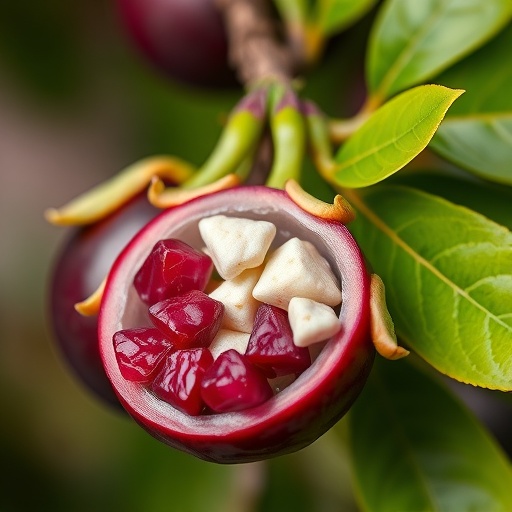
The purple rind of the mangosteen, a tropical fruit long prized in Southeast Asian traditional medicine, may hold the key to a new generation of natural strategies against dangerous blood clots. A new study published in Food Science and Biotechnology reports that an extract of Garcinia mangostana pericarp, together with α-mangostin, its dominant xanthone compound, can suppress the inflammatory and adhesive processes that drive thrombus formation, easing blood flow in both laboratory cell models and a living animal model of thrombosis.
Cardiovascular disease remains the leading cause of death worldwide, and thrombosis, the formation of blood clots inside blood vessels, sits at the center of heart attacks, strokes, and many other vascular events. While existing anticoagulant and antiplatelet drugs save lives, they carry risks of bleeding and are not always suitable for long-term preventive use. This has fueled intense interest in dietary compounds and botanical extracts that might gently modulate the vascular environment and reduce the likelihood of clots forming in the first place. The new research, led by Jin Tae Kim of the Korea Research Institute of Bioscience and Biotechnology and Hui Mang Son of Chung-Ang University, with corresponding authors Ho Jin Lee of Seoul National University and Hong Jin Lee of Chung-Ang University, adds mangosteen pericarp to the growing list of food-derived candidates worth serious scientific attention.
The research team focused on a 70 percent ethanol extract of the mangosteen pericarp, designated GMPE70, which they selected because it contains a relatively high concentration of α-mangostin, the most studied xanthone in the fruit’s rind. Xanthones are a class of polyphenolic compounds with well-documented antioxidant and anti-inflammatory properties, and α-mangostin in particular has attracted attention for its immunomodulatory effects, its ability to inhibit inflammatory signaling, and its reported benefits in metabolic and cardiovascular contexts. What makes the new study distinctive is that the investigators did not simply test the whole extract or the purified compound in isolation. Instead, they compared GMPE70 directly with α-mangostin at the exact concentration present in the extract, allowing them to determine whether the observed effects could be attributed to α-mangostin alone or whether other constituents of the pericarp contribute.
At the heart of the study lies the endothelium, the thin layer of cells lining the interior surface of blood vessels. A healthy endothelium maintains smooth blood flow, resists unnecessary leukocyte adhesion, and produces nitric oxide, a molecule that keeps vessels relaxed and prevents platelets from sticking together. When the endothelium becomes dysfunctional, often through chronic inflammation, oxidative stress, or metabolic disease, it transforms into a surface that actively promotes clot formation. Inflammatory signaling pathways, most notably the transcription factor nuclear factor kappa B, or NF-κB, switch on genes encoding adhesion molecules such as intercellular adhesion molecule-1 (ICAM-1) and vascular cell adhesion molecule-1 (VCAM-1). These molecules act as molecular Velcro, snagging circulating immune cells and platelets and initiating the cascade that can culminate in an occlusive thrombus.
Using EA.hy926 cells, a widely used human endothelial cell line, the researchers demonstrated that both GMPE70 and α-mangostin at its concentration in the extract suppressed NF-κB activation. This suppression had downstream consequences: the expression of ICAM-1 and VCAM-1, the two key endothelial adhesion molecules, was significantly reduced. Simultaneously, both treatments enhanced the phosphorylation of endothelial nitric oxide synthase (eNOS), the enzyme responsible for producing nitric oxide in blood vessels. Increased eNOS phosphorylation generally means increased NO bioavailability, which promotes vasodilation, inhibits platelet aggregation, and maintains an antithrombotic surface. In other words, the mangosteen compounds appeared to push endothelial cells away from a pro-inflammatory, pro-thrombotic state and back toward a healthy, anticoagulant phenotype.
Perhaps the most visually compelling evidence came from adhesion assays in which the researchers incubated EA.hy926 endothelial cells together with THP-1 monocytes, a human monocytic cell line frequently used to model leukocyte behavior. When endothelial cells are activated, monocytes adhere to their surface, mimicking the early stages of vascular inflammation and thrombus initiation. GMPE70 and α-mangostin both significantly reduced this monocyte-endothelial interaction, confirming that the molecular changes seen at the level of gene and protein expression translated into functional consequences at the cellular level. The team also found that expression of LFA-1, the major leukocyte counter-receptor that binds ICAM-1, was suppressed in the monocytes. This dual effect, reducing both the ligands on the endothelial surface and the receptors on the immune cells, suggests a coordinated dampening of the adhesive dialogue between the two cell types.
To move beyond the Petri dish, the researchers employed a well-established animal model of thrombosis in which rats are injected with collagen and epinephrine. This combination triggers rapid platelet aggregation and widespread vascular occlusion, and it has been used extensively to evaluate the antithrombotic potential of natural products and synthetic compounds alike. When rats received GMPE70 or α-mangostin, the degree of vascular occlusion was significantly attenuated compared to untreated controls. Molecular analysis of vascular tissue revealed that the gene expression of adhesion molecules was regulated by the treatments, mirroring the in vitro findings and suggesting that the mechanisms observed in cultured cells operate in living organisms as well.
The equivalence between the whole extract and purified α-mangostin is one of the study’s most interesting findings. If the effects of GMPE70 could be fully explained by its α-mangostin content alone, this would simplify quality control and standardization for any future nutraceutical or functional food application. It also raises the possibility that α-mangostin serves as the primary pharmacologically active principle of the pericarp with respect to vascular protection, with other xanthones and phenolic compounds playing secondary or synergistic roles that remain to be fully characterized.
The findings align with a broader body of research on α-mangostin. Previous studies have shown that the compound improves endothelial dysfunction in diabetic mouse models by inhibiting the acid sphingomyelinase/ceramide pathway, attenuates blood pressure and reverses vascular remodeling in hypertensive rats by balancing the renin-angiotensin system axes, and induces vasorelaxation through interactions with large-conductance calcium-activated potassium channels. A 2025 systematic review and meta-analysis further documented lipid-lowering effects of α-mangostin in hyperlipidemic animal models. The new study extends this literature by demonstrating, for the first time in a collagen and epinephrine-induced thrombosis model, that both the whole pericarp extract and its principal xanthone can attenuate vascular occlusion and modulate the adhesive program of the vessel wall.
What remains to be determined is whether the doses used in the animal experiments can be translated into realistic human intake levels and whether long-term supplementation with mangosteen pericarp extract would produce meaningful reductions in cardiovascular events. Human clinical trials would need to address questions of bioavailability, since xanthones are known to undergo extensive metabolism, and potential interactions with conventional antithrombotic medications. The authors caution that their work is a foundation rather than a prescription, but they argue that Garcinia mangostana pericarp extract represents a promising candidate for the prevention of thrombosis and the improvement of blood flow.
The research was supported by the National Research Foundation of Korea and by Chung-Ang University Research Scholarship Grants. As interest in food-based approaches to cardiovascular prevention continues to grow, the humble mangosteen, a fruit whose rind has been discarded as waste for centuries, may find itself at the center of a new chapter in vascular health research, one in which the boundary between food and medicine becomes increasingly productive.
Subject of Research: Effects of Garcinia mangostana pericarp extract and α-mangostin on thrombogenesis, endothelial inflammation, and blood flow in vitro and in vivo
Article Title: Garcinia mangostana pericarp extract and α-mangostin equally contained in the extract ameliorate thrombogenesis in vitro and in vivo
Article References: Kim, J. T., Son, H. M., Zhan, X., Zhou, Y., Lee, K. H., Lim, S. M., Lee, S. H., Lee, H. J., & Lee, H. J. (2026). Garcinia mangostana pericarp extract and α-mangostin equally contained in the extract ameliorate thrombogenesis in vitro and in vivo. Food Science and Biotechnology. https://doi.org/10.1007/s10068-026-02289-4
Image Credits: AI Generated
DOI: 10.1007/s10068-026-02289-4
Keywords: Garcinia mangostana pericarp, α-mangostin, adhesion molecules, thrombosis, NF-κB, eNOS, endothelial dysfunction, blood flow