
• HOME
  • NEWS
  • EXPLORE
    • CAREER
      • Companies
      • Jobs
    • EVENTS
    • iGEM
      • News
      • Team
    • PHOTOS
    • VIDEO
    • WIKI
  • BLOG
  • COMMUNITY
    • FACEBOOK
    • INSTAGRAM
    • TWITTER
Saturday, February 7, 2026
BIOENGINEER.ORG
No Result
View All Result
  • Login
  • HOME
  • NEWS
  • EXPLORE
    • CAREER
      • Companies
      • Jobs
        • Lecturer
        • PhD Studentship
        • Postdoc
        • Research Assistant
    • EVENTS
    • iGEM
      • News
      • Team
    • PHOTOS
    • VIDEO
    • WIKI
  • BLOG
  • COMMUNITY
    • FACEBOOK
    • INSTAGRAM
    • TWITTER
  • HOME
  • NEWS
  • EXPLORE
    • CAREER
      • Companies
      • Jobs
        • Lecturer
        • PhD Studentship
        • Postdoc
        • Research Assistant
    • EVENTS
    • iGEM
      • News
      • Team
    • PHOTOS
    • VIDEO
    • WIKI
  • BLOG
  • COMMUNITY
    • FACEBOOK
    • INSTAGRAM
    • TWITTER
No Result
View All Result
Bioengineer.org
No Result
View All Result
Home NEWS Science News

Major ALS research funding announced

Bioengineer by Bioengineer
November 28, 2016
in Science News
Reading Time: 2 mins read
0
Share on FacebookShare on TwitterShare on LinkedinShare on RedditShare on Telegram
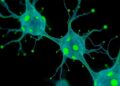
IMAGE

Credit: MNI

Researchers at the Montreal Neurological Institute of McGill University who play key roles in uncovering the mechanisms underlying ALS will share in $3.9 million in research funding, part of $4.5 million announced on Nov. 23 by the ALS Society of Canada in partnership with Brain Canada.

Guy Rouleau and his team, comprised of researchers from the MNI (including Patrick Dion, Edward Fon and Stefano Stifani), the Université de Montreal and Université Laval, have been awarded a $2.2 million Hudson Grant to study motor neurons and astrocytes created from people living with different forms of ALS via stem cell technology. They will examine the biology of these stem cells to determine if their characteristics in the laboratory can represent different forms of human disease and further develop them as a potential screening mechanism for therapeutics. The tools and tests created in this project will be valuable for both Canadian and global ALS researchers as new resources to understand the disease and find new ways to treat it.

Peter McPherson is part of a national research team led by Janice Robertson of the University of Toronto which has been awarded a $1.6 million Hudson Grant to understand whether the most common genetic abnormality in ALS, which occurs in the C90RF72 gene, causes or contributes to the disease through a loss of the gene's normal biological function.

Gary Armstrong has been awarded a $100,000 Discovery Grant to create new zebrafish models of ALS for the most prominent genetic cause of the disease, which relates to mutations in the C9ORF72 gene, using a state-of-the-art technique.

"Five years ago, the breadth of ALS research we are funding today would not have been possible simply because we didn't know enough about the disease to be able to ask the kinds of questions that today's researchers are investigating in their work," said Dr. David Taylor, Vice President of Research at ALS Canada. "The fact that we now have the ability to explore ALS from different angles reflects the growing body of knowledge about the disease and the increasing likelihood of effective treatments being developed."

Approximately 1,000 Canadians are diagnosed with ALS each year. At any time, there are approximately 2,500 to 3,000 people living with the disease in Canada, and the average cost of caring for one person with ALS is between $150,000 and $250,000. Every day, two to three Canadians will die of ALS.

###

Media Contact

Shawn Hayward
[email protected]
514-398-3376
@McGillU

http://www.mcgill.ca

############

Story Source: Materials provided by Scienmag

Share12Tweet8Share2ShareShareShare2

Related Posts

Succinate Receptor 1 Limits Blood Cell Formation, Leukemia

February 7, 2026

Palmitoylation of Tfr1 Drives Platelet Ferroptosis and Exacerbates Liver Damage in Heat Stroke

February 7, 2026

Oxygen-Enhanced Dual-Section Microneedle Patch Improves Drug Delivery and Boosts Photodynamic and Anti-Inflammatory Treatment for Psoriasis

February 7, 2026

Scientists Identify SARS-CoV-2 PLpro and RIPK1 Inhibitors Showing Potent Synergistic Antiviral Effects in Mouse COVID-19 Model

February 7, 2026
Please login to join discussion

POPULAR NEWS

  • Robotic Ureteral Reconstruction: A Novel Approach

    Robotic Ureteral Reconstruction: A Novel Approach

    82 shares
    Share 33 Tweet 21
  • Digital Privacy: Health Data Control in Incarceration

    63 shares
    Share 25 Tweet 16
  • Study Reveals Lipid Accumulation in ME/CFS Cells

    57 shares
    Share 23 Tweet 14
  • Breakthrough in RNA Research Accelerates Medical Innovations Timeline

    53 shares
    Share 21 Tweet 13

About

We bring you the latest biotechnology news from best research centers and universities around the world. Check our website.

Follow us

Recent News

Succinate Receptor 1 Limits Blood Cell Formation, Leukemia

Palmitoylation of Tfr1 Drives Platelet Ferroptosis and Exacerbates Liver Damage in Heat Stroke

Oxygen-Enhanced Dual-Section Microneedle Patch Improves Drug Delivery and Boosts Photodynamic and Anti-Inflammatory Treatment for Psoriasis

Subscribe to Blog via Email

Enter your email address to subscribe to this blog and receive notifications of new posts by email.

Join 73 other subscribers
  • Contact Us

Bioengineer.org © Copyright 2023 All Rights Reserved.

Welcome Back!

Login to your account below

Forgotten Password?

Retrieve your password

Please enter your username or email address to reset your password.

Log In
No Result
View All Result
  • Homepages
    • Home Page 1
    • Home Page 2
  • News
  • National
  • Business
  • Health
  • Lifestyle
  • Science

Bioengineer.org © Copyright 2023 All Rights Reserved.