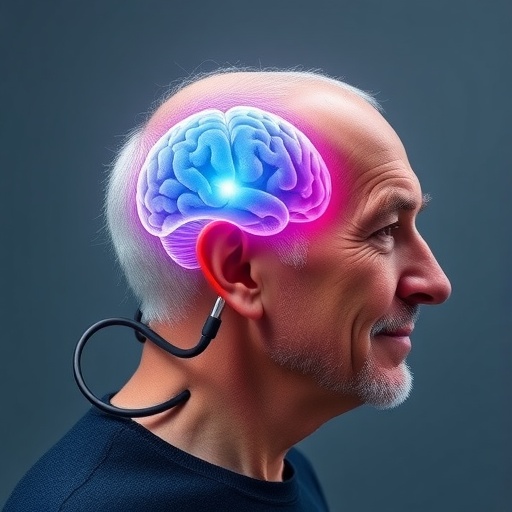
In a groundbreaking study poised to redefine therapeutic strategies for Parkinson’s disease, researchers have unveiled innovative findings that could spearhead a new era in neuromodulation treatments. The team led by Xu, Zhang, Mi, and their colleagues introduced transcranial magneto-acoustic stimulation (TMAS) as a novel, non-invasive intervention aimed at repairing dysfunctional neuronal circuits characteristic of Parkinson’s disease. Their comprehensive work reveals compelling evidence demonstrating not only enhancement of corticostriatal transmission in direct medium spiny neurons (dMSNs) but also a remarkable restoration of neuroplasticity in afflicted murine models.
Parkinson’s disease remains a debilitating neurodegenerative disorder marked predominantly by the degeneration of dopaminergic neurons and subsequent motor deficits. The corticostriatal pathway, comprising glutamatergic inputs from the cerebral cortex to the striatum’s medium spiny neurons, plays an indispensable role in motor control. Previous research has implicated significant disruptions within this pathway, especially impairments in synaptic transmission and plasticity in dMSNs, which contribute severely to the pathophysiological manifestations of the disease. Traditional pharmacological approaches often fail to fully address these synaptic dysfunctions, underscoring the urgent need for targeted neurostimulation techniques.
At the heart of the study lies TMAS, a sophisticated approach integrating magnetic and acoustic stimuli to non-invasively modulate neuronal activity. By delivering synchronized magneto-acoustic pulses transcranially, the technique offers an unprecedented mechanism to influence neuronal excitability and synaptic dynamics without the invasiveness and side effects associated with deep brain stimulation or pharmacotherapies. Leveraging this technology, the investigators sought to examine whether TMAS could revitalize corticostriatal synaptic transmission and ameliorate deficits in neuroplasticity seen in Parkinsonian models.
Employing meticulous electrophysiological assessments, the researchers subjected direct medium spiny neurons extracted from Parkinson’s disease model mice to TMAS. The results unveiled a significant upregulation in synaptic efficacy, with potentiation of corticostriatal transmission parameters when compared to controls. This functional recovery speaks volumes about the capacity of TMAS to recalibrate disrupted neural signaling pathways implicated in motor control, establishing a potential direct therapeutic impact on the dysfunctional circuits.
Moreover, the study delineated how TMAS notably enhanced synaptic plasticity features in these neurons. Neuroplasticity, essentially the brain’s ability to reorganize synaptic connections in response to experience or injury, is profoundly impaired in Parkinson’s pathology. The stimulation induced long-lasting potentiation resembling physiological learning mechanisms, indicating that TMAS could restore adaptive synaptic modifications essential for motor learning and functional recovery. Such findings suggest the therapy may transcend immediate symptom management, promoting enduring neural circuit recalibration.
Beyond enhancing electrophysiological markers, the team investigated the molecular substrates associated with the observed improvements. TMAS was found to modulate expression levels of key synaptic proteins and signaling cascades involved in glutamatergic transmission and plasticity. Upregulation of NMDA receptor subunits and associated scaffolding proteins was particularly prominent, hinting at the molecular underpinnings for robust synaptic strengthening. These insights shed light on targeted intracellular pathways that can be harnessed for therapeutic gain.
Importantly, TMAS application was demonstrated to be highly specific and controlled. The response of dMSNs was finely tuned, avoiding non-specific neuronal overstimulation or off-target effects typically of concern with brain stimulation modalities. This precision opens a promising avenue for clinical translation, where tailored stimulation paradigms could be employed to restore network-wide homeostasis while minimizing adverse events.
Complementing electrophysiological and molecular data, behavioral analyses in Parkinsonian mice treated with TMAS revealed significant improvements in motor coordination and agility. Tasks assessing balance, gait, and spontaneous movement showed marked recovery, affirming the functional relevance of the synaptic restoration observed in vitro. This integrated approach confirms that TMAS not only repairs microscopic synaptic disruptions but also translates to meaningful behavioral amelioration.
The novelty of combining magnetic and acoustic energies in a synergistic manner enhances TMAS’s efficacy. Magnetic fields can penetrate cranial tissues with minimal attenuation, whereas acoustic waves can finely tune mechanical forces at the neuronal membrane, together offering a multi-dimensional modulation strategy. This dual modality potentially circumvents limitations posed by either magnetic or acoustic stimulation alone, representing a conceptual leap in non-invasive neuromodulation techniques.
In addressing Parkinson’s disease, therapies that specifically target the direct pathway medium spiny neurons in the striatum are critical because these neurons facilitate movement initiation. Dysfunction in these neurons contributes to hallmark bradykinesia and rigidity. By selectively improving corticostriatal transmission to dMSNs, TMAS directly reinstates the facilitatory motor pathway, potentially shifting the balance from motor inhibition to activation – a central therapeutic goal for Parkinson’s patients.
The findings also invite exploration into TMAS’s applicability beyond Parkinson’s disease, given its influence on fundamental processes like synaptic transmission and plasticity. Neuropsychiatric disorders, stroke recovery, and other neurodegenerative conditions marked by cortical-striatal dysregulation could potentially benefit from this technology. Future research will need to explore dosing paradigms, long-term safety, and combinatory approaches with pharmacotherapies.
While the translation from murine models to human clinical application poses inherent challenges, the non-invasive nature of TMAS, alongside its targeted neuromodulatory capacity, positions it as a highly promising candidate for early-stage clinical trials. The current study’s success lays a firm foundation upon which researchers can build protocols adapted for human brain anatomy and Parkinson’s pathology heterogeneity.
In addition, the research underscores the importance of interdisciplinary methodologies. Bridging neuroengineering, electrophysiology, molecular biology, and behavioral neuroscience enabled comprehensive characterization of TMAS effects, highlighting a model for future neurotherapeutic innovations. Such multifaceted approaches are central to unraveling complex neural diseases and developing effective treatments.
This seminal work also opens new questions regarding the interaction between magneto-acoustic fields and the neuronal membrane environment. Understanding how mechanical and electromagnetic stimuli conjointly influence ion channel gating, neurotransmitter release, and gene expression will be critical for refining TMAS application and optimizing efficacy. These mechanistic investigations will undoubtedly enrich the broader field of brain stimulation technologies.
Overall, Xu et al. deliver a compelling narrative that underscores TMAS’s potential as a non-invasive, targeted intervention capable of reviving impaired corticostriatal circuitry and rescuing compromised neuroplasticity in Parkinson’s disease. Their findings portend a transformative impact on how we approach neurodegenerative diseases, offering hope for innovative, efficacious therapeutics beyond symptomatic relief.
In summary, transcranial magneto-acoustic stimulation emerges from this study not merely as a novel scientific concept but as a beacon of therapeutic promise. By seamlessly integrating magnetic and acoustic energies, researchers have demonstrated a powerful modality capable of restoring both the functional and plastic capacities of neurons integral to motor control. As Parkinson’s disease continues to challenge the global health landscape, such advancements represent critical milestones toward improving patients’ lives and reshaping neurological care paradigms.
Subject of Research:
Transcranial magneto-acoustic stimulation effects on corticostriatal transmission and neuroplasticity in Parkinson’s disease model mice.
Article Title:
Transcranial magneto-acoustic stimulation improves corticostriatal transmission in direct medium spiny neurons and rescues neuroplasticity of Parkinson’s disease model mice.
Article References:
Xu, Y., Zhang, S., Mi, J. et al. Transcranial magneto-acoustic stimulation improves corticostriatal transmission in direct medium spiny neurons and rescues neuroplasticity of Parkinson’s disease model mice. npj Parkinsons Dis. (2026). https://doi.org/10.1038/s41531-026-01333-8
Image Credits: AI Generated
Tags: corticostriatal pathway repairdopaminergic neuron degeneration treatmentexperimental neuromodulation methodsinnovative Parkinson’s disease interventionsmagneto-acoustic brain stimulation researchmedium spiny neurons plasticitymotor control restoration in Parkinson’sneuroplasticity restoration in neurodegenerationnon-invasive neuromodulation techniquesParkinson’s disease neurotherapysynaptic transmission enhancementtranscranial magneto-acoustic stimulation