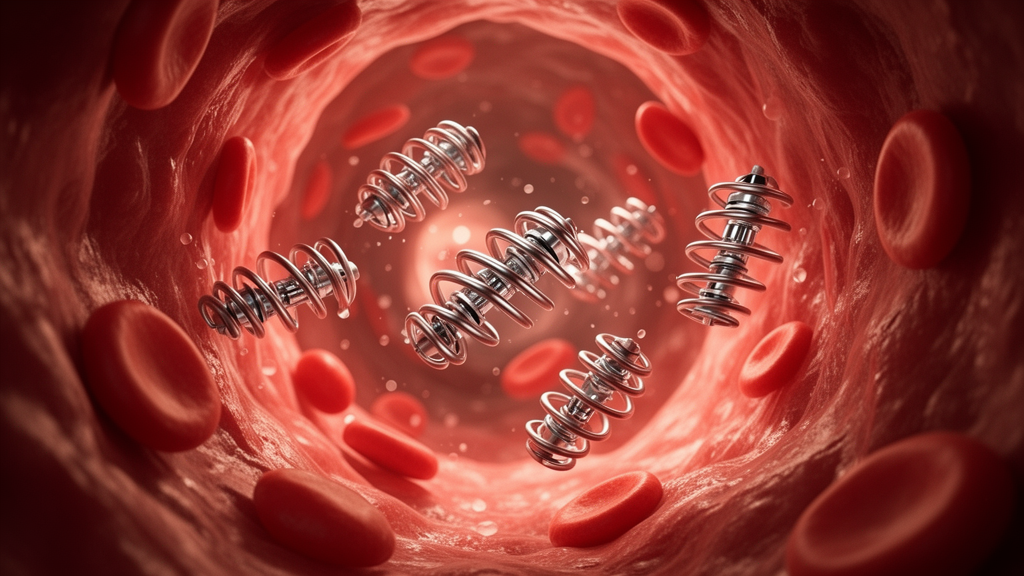
Minimally invasive surgical procedures have transformed modern clinical practice by minimizing tissue trauma, yet conventional tethered tools such as catheters and endoscopes face severe physical constraints in confined anatomical regions. Constrained by mechanical stiffness, fixed dimensions, and wall friction, traditional instruments struggle to penetrate sub-millimeter tortuous vascular networks, while standard systemic drugs suffer from poor bioavailability and off-target cytotoxicity. To circumvent these limitations, untethered magnetic microrobots have emerged as promising interventional platforms capable of converting remote electromagnetic fields into controlled mechanical movement within physiological fluids. A function-driven systematic review analyzing 121 studies from international databases details the field’s transition from single-mode mechanisms toward multifunctional clinical platforms. By establishing locomotion as the primary requirement for traversing complex biological environments, the synthesis connects propulsion physics with functional magnetic materials, microscale fabrication methodologies, and clinical interventions, providing a strategic blueprint for advancing miniature robotic carriers from laboratory validation into precision healthcare applications across deep-seated anatomical targets.
Translational motion relies primarily on magnetic gradient forces generated by non-uniform magnetic fields, driving magnetized carriers along spatial gradients via forces proportional to magnetization and field gradients. Across solid or liquid-solid interfaces, torque-assisted stick-slip actuation overcomes static friction through periodic magnetic pulses to generate net translation. In ophthalmic procedures, an eight-coil electromagnetic system producing fields of 10 to 40 millitesla and gradients reaching 500 millitesla per meter navigated cylindrical robots measuring 285 micrometers across and 1800 micrometers long. These carriers attained maximum displacements of 3.2 millimeters in porcine vitreous humor and 4 millimeters in balanced salt solution. In gastric interventions, multilayer soft robots translate via gradient forces before field rotation detaches exhausted layers to release adhesive patches. Furthermore, clinical-scale dual-coil platforms steered 1.69-millimeter capsules across vascular bifurcations against blood velocities of 0.65 to 0.85 meters per second, demonstrating that translational steering depends on balancing magnetic forces, hydrodynamic drag, and carrier geometry.
Within low-Reynolds-number microscale fluids, viscous drag dominates inertia, rendering reciprocating strokes ineffective under the scallop theorem. Magnetic swimmers overcome this physical barrier by converting rotating or oscillating fields into non-reciprocal traveling waves that mimic bacterial flagella or spermatozoa. External field frequency dictates swimming velocity, while field amplitude governs available magnetic torque and synchronization limits. Early artificial bacterial flagella featuring 38-micrometer helical tails achieved water swimming speeds of 1.2 micrometers per second under 2 millitesla at 1 hertz. Modern hard-magnetic microhelices measuring 135 micrometers reach 3.0 millimeters per second in water under 2 millitesla at 220 hertz, maintaining upstream velocities of 0.5 millimeters per second against whole blood flowing at 5.6 millimeters per second under 3 millitesla at 150 hertz. Biodegradable double-helical gelatin methacryloyl microswimmers achieve swimming speeds of 3.36 micrometers per second under 20 millitesla at 5 hertz, while biohybrid sperm motors exploit natural flagellar flexibility to advance payloads against pulsatile flows.
Tumbling locomotion converts magnetic torque directly into translational traction through friction with biological tissue boundaries, offering superior stability when traversing vascular walls and mucosal surfaces. Driven by magnetic torque, rotating fields regulate trajectory, tumbling frequency, and forward thrust. Spherical Janus microrollers measuring 7.8 micrometers reach rolling speeds up to 600 micrometers per second under 10 millitesla at 200 to 220 hertz, and achieve upstream velocities of 156.7 micrometers per second in whole blood under 1.2 dynes per square centimeter shear stress. For elongated robots, end-to-end flipping negotiates steep terrain. Rectangular microrobots measuring 800 by 400 micrometers attain speeds of 13.6 millimeters per second in water under 10 millitesla, traversing 45-degree dry inclines and 60-degree submerged slopes. In murine colons, SU-8 tumbling robots reached 2.07 millimeters per second in saline under ultrasound tracking, though speeds dropped to 0.21 millimeters per second in viscous 1% Tylose, showing that tumbling locomotion remains highly sensitive to interfacial lubrication and surface contact.
Jumping locomotion overcomes steep mucosal folds, macroscopic barriers, and irregular biological topographies where continuous swimming or tumbling fails. Inspired by springtails and nematodes, magnetic jumping systems accumulate elastic strain energy through magnetic torque-induced deformation of magnetoelastic composites and release it instantaneously to generate explosive take-off. Soft millirobots measuring 3.7 millimeters by 1.5 millimeters, composed of elastomer embedded with neodymium-iron-boron particles, perform directional leaps using a 16.5-millitesla sequence that couples elastic rebound with rigid-body rotation. In amphibious settings, soft robots weighing 33 milligrams with four superhydrophobic magnetoelastic legs achieve jumping heights of approximately 30 millimeters from water surfaces and 29 millimeters from solid ground when an initial minus 10-millitesla field switches to a 20-millitesla launch field. Bistable structural configurations further amplify take-off velocities by accelerating elastic release. Although jumping clears obstacles significantly larger than the robot itself without continuous surface contact, its discrete ballistic trajectory complicates micrometer-level positioning and remains vulnerable to fluid damping.
Developing material systems for microrobots requires balancing magnetic actuation strength against biocompatibility. Soft magnetic materials, including magnetite, elemental iron, and nickel-iron, feature high magnetic permeability alongside low coercivity and remanence. When particle sizes fall below single-domain thresholds of tens of nanometers, ambient thermal energy randomizes internal magnetic moments upon field removal, producing superparamagnetism governed by the Langevin function. This switch-like behavior eliminates residual magnetization, preventing spontaneous aggregation and vascular thrombosis. Conversely, hard magnetic materials such as neodymium-iron-boron possess high coercivity and remanence, retaining pre-programmed magnetic dipole vectors that generate robust torques independent of structural geometry. However, heavy metal toxicity and oxidation in saline environments pose significant clinical hurdles. To ensure biosafety, chemical vapor deposition of pinhole-free Parylene C polymer coatings prevents metal ion leaching and outperforms traditional gold plating in corrosion resistance, while bioactive nanostructured titanate coatings and hydrogel encapsulation matrices isolate toxic components and facilitate cellular transport.
Matrix materials provide structural scaffolding for magnetic units and therapeutic payloads, dictating overall flexibility, degradability, and host tissue integration. Natural hydrogels with water content exceeding 90 percent closely mimic soft tissues. Alginate forms cross-linked microcapsules that shield drugs in gastric acid below pH 3 and swell to release payloads in neutral intestinal fluids above pH 7. Cationic chitosan adheres electrostatically to mucosal glycoproteins to extend gastrointestinal retention, while gelatin methacryloyl supplies matrix metalloproteinase cleavage sites and RGD cell adhesion motifs for tissue repair. Synthetic responsive hydrogels provide precise actuation: poly(N-isopropylacrylamide) undergoes volume collapse above its lower critical solution temperature near 32 degrees Celsius to operate microgrippers, while poly(acrylic acid) networks enable pH-triggered oral delivery. Silicone elastomers such as polydimethylsiloxane and Ecoflex supply reversible elastic deformation, though non-resorbability limits permanent implantation. In contrast, biodegradable polyesters like poly(lactic-co-glycolic acid) provide sustained release, and shape-memory polymers, magnetic viscoelastic slimes, and gallium-based liquid metals enable adaptive shape morphing across tight gaps.
Manufacturing methodologies translate microrobotic concepts into functional devices through additive printing, template deposition, microfluidics, and modular assembly. Two-photon polymerization uses focused femtosecond lasers to fabricate intricate sub-micron geometries, including pure metallic nickel microspirals produced through resin sintering and reduction. For soft robots, direct ink writing extrudes magnetic polymers through nozzles surrounded by dynamic magnetic fields, programming independent magnetization axes voxel by voxel. Template-assisted electrochemical deposition utilizes nanoporous alumina membranes to synthesize multi-segment metallic barcode nanowires, while 3D photolithography templates enable electroforming of pure biocompatible iron microrobots and cobalt-platinum alloy microhelices. Microfluidic droplet platforms produce highly monodisperse alginate microgels and core-shell double emulsions for encapsulating living stem cells and biopharmaceuticals. Continuous-flow photolithography projects ultraviolet patterns across flowing prepolymers to continuously synthesize non-spherical particles. In addition, modular voxel assembly bonds independently magnetized cubes into three-dimensional mechanical metamaterials, while magnetic self-assembly dynamically organizes colloidal nanoparticles into reconfigurable swarms that split and merge across varying channel widths.
Clinical validation of magnetic microrobots focuses on vascular intervention, gastrointestinal procedures, and targeted payload delivery. In vascular systems, microrobots navigate against pulsatile blood flow using wall-hugging rotation or oscillating magnetic swarms, enabling targeted thrombolysis through microbubbles that grind clot surfaces under ultrasound excitation and helical drill tips that mechanically bore calcified thrombi. For vascular embolization, magnetic soft microfibers and thermally triggered nanorobot clusters melt phase-change materials to release thrombin, forming dense physical occlusions within aneurysm sacs. In gastrointestinal interventions, endoscopes transport microrobot swarms into deep colonic regions, while magnetically triggered capsules release encapsulated neural cells or macromolecular drugs on demand. Biopsy platforms deploy magnetic capsules equipped with thermoresponsive microgrippers, needle ejection modules, and rotating blades to sample submucosal tissue and achieve thermal hemostasis. To treat gastric ulcers, multimodal magnetic soft robots navigate stomach folds to deposit therapeutic patches, isolating lesions from gastric acid to accelerate healing.
In oncology and delicate microsurgery, magnetic microrobots execute multimodal therapies that bypass dense tumor matrices and minimize systemic toxicity. Magnetic hyperthermia platforms such as TriMag microrobots combine iron oxide nanoparticles for magnetic particle imaging with hard magnetic particles for thermal ablation, while MXene-based microswimmers induce photothermal heating under near-infrared light. For chemotherapy and immunotherapy, magnetotactic bacteria exploit natural chemotaxis to penetrate hypoxic tumor cores, autologous blood-derived hydrogel fibers evade immune clearance to treat intracranial lesions under X-ray guidance, and magnetic Janus particles guide M1 macrophages into solid tumors. Non-pharmacological strategies use spin-vortex microdisks to disrupt cancer cell membranes mechanically, rotating nanomotors to shear lysosomes, and glucose oxidase nanoreactors to drive starvation cascades. Beyond cancer, slippery micropropellers navigate porcine vitreous to reach retinal targets, porous scaffolds deliver stem cells for cartilage repair, and catalytic antimicrobial robots mechanically scrape biofilms while generating bactericidal hydroxyl radicals. Clinical translation requires overcoming long-term metal toxicity, achieving high-resolution real-time deep-tissue tracking, and stabilizing swarms within pulsatile hemodynamic environments.
Subject of Research: Locomotion mechanisms, materials, and clinical translation of magnetic microrobots
Article Title: Magnetic microrobots for precision medicine: From locomotion mechanisms and advanced materials to clinical translation
Article References: Li, G., Mao, Y., Liu, F., An, F., & Zhan, Q. (2026). Magnetic microrobots for precision medicine: From locomotion mechanisms and advanced materials to clinical translation. Bioengineering & Translational Medicine, Article e70197. https://doi.org/10.1002/btm2.70197
Image Credits: AI Generated
DOI: 10.1002/btm2.70197
Keywords: magnetic microrobots, targeted drug delivery, minimally invasive surgery, microscale locomotion, helical microswimmers, surface microrollers, magnetoelastic jumping, superparamagnetism, neodymium-iron-boron, two-photon polymerization, droplet microfluidics, vascular navigation, targeted thrombolysis, aneurysm embolization, capsule endoscopy, magnetic hyperthermia, biofilm removal, biocompatible hydrogels
News Source: Ophelia Keating. (November 12, 2026). Magnetic Microrobots Navigate Complex Physiological Barriers to Advance Targeted Medical Interventions. Scienmag.