A groundbreaking study has unveiled the potential of macular vessel density as a promising biomarker for diagnosing glaucoma in patients with high myopia. This innovative research was conducted by an esteemed group of scientists, including Chen, Liu, and Meng, and represents a significant contribution to the field of ophthalmology. The findings, currently published in the Journal of Translational Medicine, could reshape our understanding of glaucoma diagnostics, particularly for those living with severe myopic conditions.
High myopia, often defined as a refractive error greater than -6.00 diopters, places individuals at an elevated risk for various ocular complications, including glaucoma. Glaucoma, often referred to as the “silent thief of sight,” is a progressive optic neuropathy that can lead to irreversible vision loss if not diagnosed and treated promptly. Traditional diagnostic methods have primarily relied on intraocular pressure measurements and visual field assessments. However, these methods may not sufficiently identify early-stage glaucoma, especially in myopic patients where structural changes can initially be subtle.
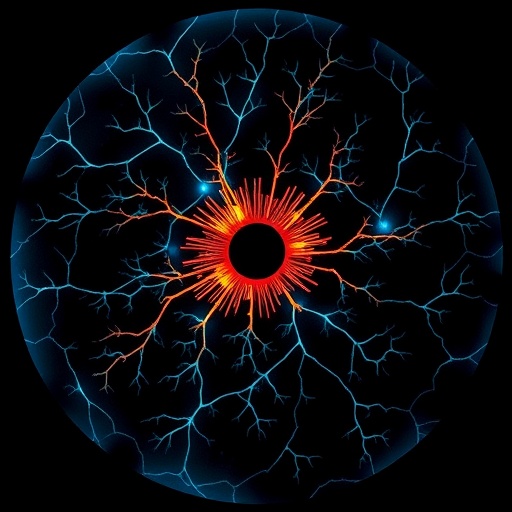
The research team conducted a multicenter study involving a diverse cohort of participants to explore the relationship between macular vessel density and glaucoma diagnosis. By employing advanced imaging techniques, the researchers quantified the density of vascular structures within the macula—an area responsible for central vision. This novel approach allowed for a more nuanced understanding of the role vascular health plays in the pathophysiology of glaucoma, particularly in highly myopic individuals.
One of the study’s primary strengths lies in its multicentric design, which enhances the reliability and applicability of the findings across different populations. The collaborating centers utilized state-of-the-art optical coherence tomography (OCT) angiography to obtain detailed images of the macular vasculature. This technology has opened new avenues for non-invasive vascular analysis, making it an invaluable tool in contemporary ophthalmic research.
The results indicated a significant correlation between reduced macular vessel density and the presence of glaucoma in highly myopic patients. The analysis revealed that lower vascular density was associated with increased likelihood of glaucomatous changes, an observation that aligns with existing literature on the vascular hypothesis of glaucoma. This hypothesis suggests that impaired blood flow to the optic nerve may contribute to optic nerve degeneration, thus exacerbating the disease’s progression.
The study also underscores the importance of early intervention. By identifying macular vessel density as a prospective biomarker, clinicians may be able to diagnose glaucoma at an earlier stage, allowing for timely treatment interventions. This is particularly crucial for individuals with high myopia, who may not exhibit typical glaucomatous indicators through conventional diagnostic approaches. The implications for clinical practice are profound; better diagnostic tools could lead to more effective treatment strategies tailored specifically for high myopia patients.
Moreover, this finding could catalyze a shift towards personalized medicine in ophthalmology. As researchers delve deeper into the vascular mechanisms underlying glaucoma, there is potential for developing targeted therapies that address the specific needs of high myopia patients. This could mean not only improving outcomes for those already diagnosed with glaucoma but also preventing the onset of the disease in at-risk populations.
The implications of this research stretch beyond the clinical setting into broader public health considerations. With a growing number of individuals worldwide experiencing high myopia due to an increasingly digital lifestyle, the prevalence of related ocular complications, including glaucoma, is expected to rise. Identifying and validating novel biomarkers like macular vessel density is vital for healthcare systems aiming to manage this burgeoning public health challenge effectively.
Despite the promising results, the research team highlights the need for further investigations to confirm these findings across larger and more diverse populations. Longitudinal studies that track macular vessel density over time, particularly in patients with varying degrees of myopia, will be essential in establishing the robustness and reliability of this biomarker in clinical practice. Such studies will provide deeper insights into the natural history of glaucoma in relation to myopia and vascular health.
In summary, macular vessel density emerges as a cutting-edge biomarker that holds the potential to transform glaucoma diagnostics, especially in the context of high myopia. As the research community continues to build on these findings, the prospect of more accurate, timely, and personalized care for glaucoma patients looks increasingly achievable. The future of glaucoma management may well hinge on our ability to integrate innovative diagnostic tools into everyday clinical practice, ensuring that every patient receives the tailored care they need.
The findings from this multicenter study mark a significant stride in our understanding of glaucoma within the highly myopic demographic. As technology advances and our comprehension of disease mechanisms deepens, we can anticipate a future where early detection and intervention may save the sight of countless individuals edging toward vision loss. With this research catalyzing new investigations and innovations, the field of ophthalmology stands on the brink of a transformative era in glaucoma care.
Subject of Research: Macular vessel density as a biomarker for glaucoma diagnosis in highly myopic eyes.
Article Title: Macular vessel density as a novel biomarker for glaucoma diagnosis in highly myopic eyes: a multicenter study.
Article References: Chen, Q., Liu, J., Meng, Q. et al. Macular vessel density as a novel biomarker for glaucoma diagnosis in highly myopic eyes: a multicenter study. J Transl Med (2025). https://doi.org/10.1186/s12967-025-07594-w
Image Credits: AI Generated
DOI:
Keywords: Glaucoma, macular vessel density, high myopia, multimodal imaging, biomarker, optic neuropathy, personalized medicine.
Tags: advanced imaging techniques in eye careChen Liu Meng glaucoma studyearly-stage glaucoma detectionglaucoma diagnosis in high myopiainnovative research in ophthalmologyirreversible vision loss from glaucomamacular vessel density as glaucoma biomarkermulticenter study on glaucomaocular complications of high myopiasignificance of biomarkers in ophthalmologytraditional glaucoma diagnostic methodsvascular structures in the macula