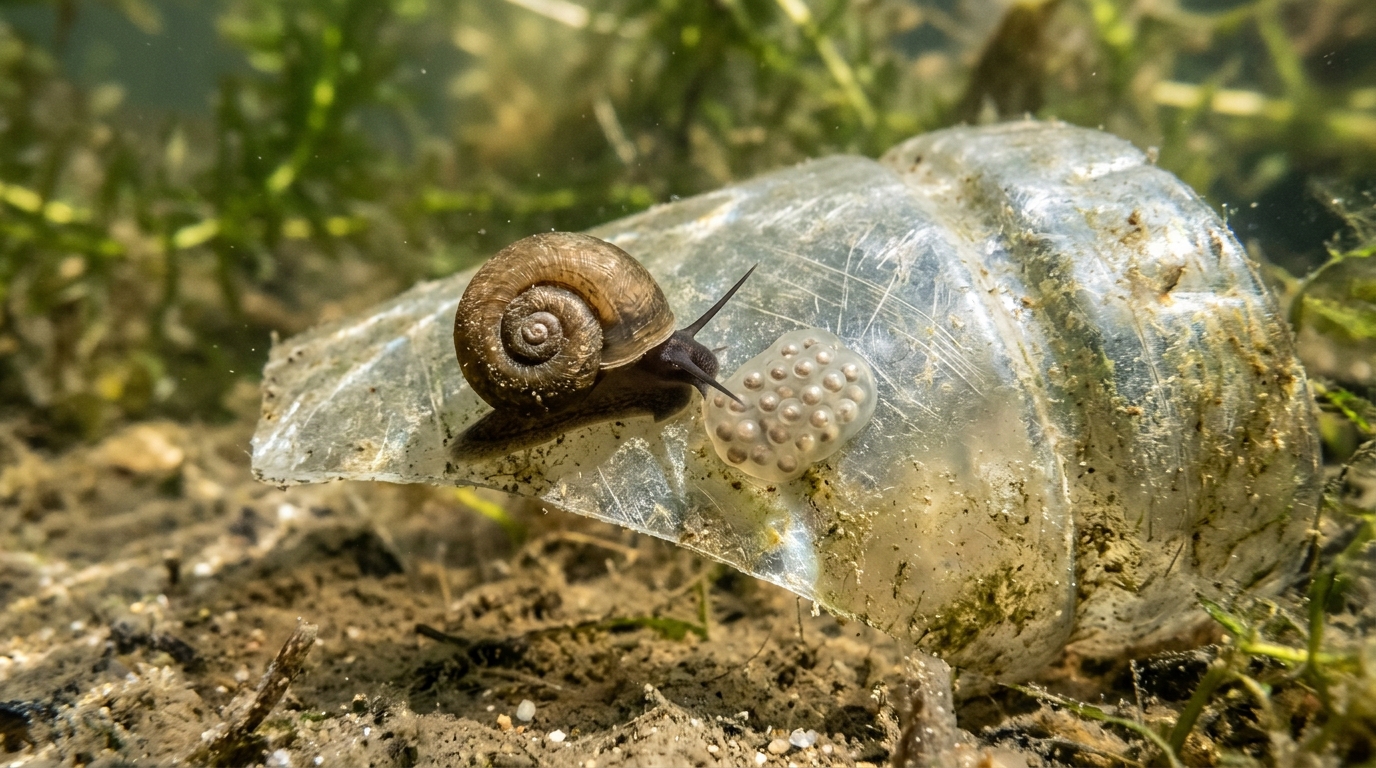
In controlled laboratory experiments, macroplastic pollution substantially increases the expected reproductive output of Bulinus truncatus, a freshwater snail serving as an intermediate host for human schistosomiasis. Researchers evaluating the demographic consequences of plastic debris observed that macroplastics consistently accelerated vital demographic rates, with biofouling emerging as the primary driver of host population responses. The findings establish that plastic waste reshapes host life-history traits, highlighting a previously unrecognized pathway with critical ecological implications for schistosomiasis transmission dynamics.
Plastic debris has gained increasing scientific recognition as an environmental driver of mosquito-borne diseases by generating artificial freshwater breeding habitats, yet its specific consequences for snail hosts transmitting human schistosomiasis have remained poorly understood. For freshwater snail species, including Bulinus truncatus, plastic contamination has the potential to alter broader population dynamics by modifying fundamental life-history processes. These biological shifts may occur through surface biofilm-derived nutritional subsidies, physical habitat alteration, and physiological or toxicity-induced reproductive trade-offs induced by plastic exposure.
To clarify these interactions, investigators conducted two controlled laboratory experiments examining the distinct and combined effects of macroplastics and microplastics on Bulinus truncatus. The research team systematically tested individual and joint plastic exposures by incorporating environmentally realistic polymer varieties, particle sizes, ambient concentrations, and biofouling conditions. Throughout the testing procedures, researchers directly evaluated multiple life-history parameters across the experimental treatments, focusing specifically on snail survival rates, individual somatic growth, total egg mass production, and subsequent egg hatching success.
To assess the overarching demographic ramifications of plastic contamination, the scientists established a formal measure of reproductive output for each experimental treatment. This metric was calculated as the expected number of cumulative viable offspring produced over the full course of the experiment. By linking individual vital rates to overall demographic potential, this analytical approach allowed the researchers to assess how isolated and combined exposures to plastic debris scale to determine net reproductive success in the snail population.
The experimental results demonstrated that macroplastic exposure and its associated ecological modifications consistently exerted the most critical influence on snail demographic expansion. Macroplastics substantially boosted individual somatic growth, stimulated egg mass production, and enhanced hatching performance. The researchers observed that these demographic surges were primarily propelled by biofilm-derived nutritional subsidies accumulating on macroplastic surfaces, identifying the ecological transformation of plastic substrates as the principal mechanism underlying elevated snail reproductive performance.
Microplastic exposure exhibited a distinctly different demographic pattern, improving individual snail survival while exerting an overall undetectable effect on net expected reproductive output. However, when snails were subjected to combined exposure involving both macroplastics and microplastics, the animals exhibited elevated egg mass production. This joint exposure resulted in an overall increase in expected reproductive output that was comparable to the demographic increases generated by biofouling macroplastics alone, further underscoring the dominant influence of biofouling substrates.
The investigators noted important scope limitations, explaining that schistosome infection rates and cercarial shedding were not directly measured within these experimental trials. Nevertheless, the researchers highlighted that these laboratory-observed life-history modifications may translate into significant snail population growth in natural environments. Because prior scientific work has firmly linked larger snail host populations to greater cercarial production and elevated human transmission risk, the authors concluded that integrating environmental plastic management into existing disease control strategies could offer valuable public health benefits.
Subject of Research: Effects of plastic pollution on schistosomiasis snail host life history
Article Title: Plastic pollution reshapes snail intermediate host life history: implications for schistosomiasis transmission
Article References: Yu, A., Mitchell, K. R., Vannatta, J. T., & A. De Leo, G. (2026). Plastic pollution reshapes snail intermediate host life history: implications for schistosomiasis transmission. Parasites & Vectors. https://doi.org/10.1186/s13071-026-07786-3
Image Credits: AI Generated
DOI: 10.1186/s13071-026-07786-3
Keywords: Bulinus truncatus, macroplastics, microplastics, schistosomiasis, snail intermediate hosts, biofouling, biofilm nutritional subsidies, reproductive output, somatic growth, egg mass production, hatching success, freshwater plastic pollution, host population dynamics, cercarial production, disease transmission risk, environmental disease management
News Source: Drew Townsend. (November 18, 2026). Macroplastic Pollution Boosts Schistosomiasis Snail Host Reproduction in Laboratory Study. Scienmag.