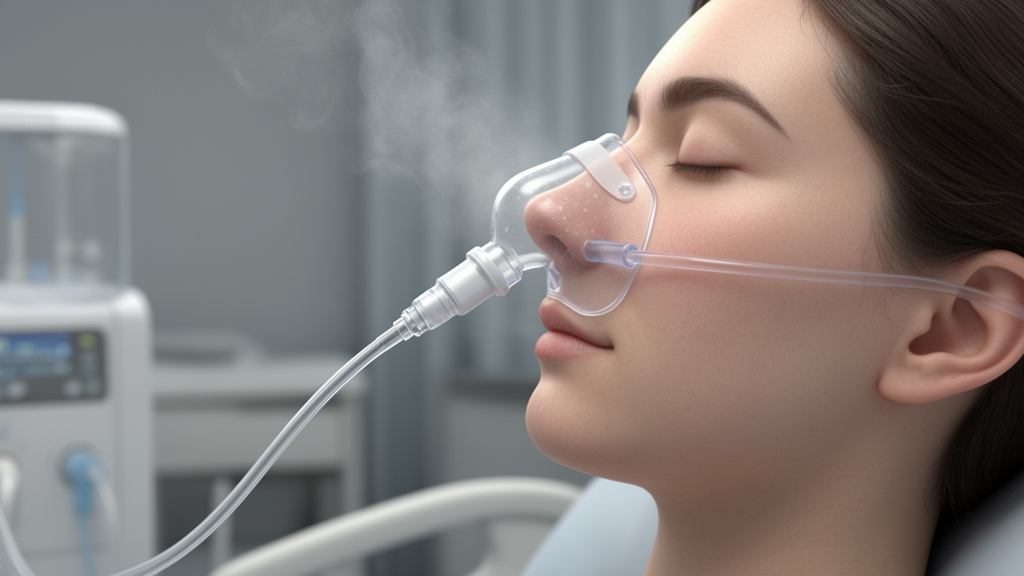
In a prospective observational cohort study of critically ill patients with COVID-19-related acute hypoxemic respiratory failure, machine learning models integrating baseline clinical and metabolomic data accurately predicted the failure of high-flow nasal cannula therapy.
High-flow nasal cannula support is widely used as a first-line non-invasive respiratory therapy in acute hypoxemic respiratory failure, a role that expanded substantially during the COVID-19 pandemic. However, treatment failure remains frequent among treated patients, and delayed intubation is associated with worse clinical outcomes, underscoring the clinical need for reliable early predictive tools to guide decision-making in the intensive care unit.
Conducted at a single tertiary intensive care unit by researchers in Barcelona, Spain, the study analyzed 111 adult patients with COVID-19-related acute hypoxemic respiratory failure treated with high-flow nasal cannula. The researchers divided the cohort into a training cohort of 89 patients treated between March 2020 and April 2021, and a temporally independent validation cohort of 22 patients treated between May 2021 and October 2021.
At baseline, investigators recorded a total of 164 variables for each patient, encompassing 25 clinical parameters and 139 metabolomic features. Predictive models were developed using Random Forest machine learning algorithms combined with recursive feature elimination and bootstrap resampling, with performance evaluated by calculating the area under the receiver operating characteristic curve through internal and temporally independent validation.
A six-variable model combining clinical and metabolomic features achieved an area under the receiver operating characteristic curve of 0.87 (95% confidence interval: 0.79 to 0.94) in the training cohort and 0.91 (95% confidence interval: 0.78 to 1.00) in the validation cohort. A simplified three-variable model incorporating the ratio of oxygen saturation to fraction of inspired oxygen, anthranilic acid, and octanoic acid achieved an area under the curve of 0.71 (95% confidence interval: 0.61 to 0.82) in training and 0.91 (95% confidence interval: 0.77 to 1.00) in validation, with both models demonstrating improved training performance relative to the ROX index.
The investigators noted that the predictive performance observed in the validation cohort must be interpreted cautiously because of its limited sample size of 22 patients. While the simplified three-variable model retained performance comparable to the broader model and supports further evaluation for clinical utility, the authors concluded that validation in larger and more diverse patient populations remains necessary.
While high-flow nasal cannula therapy became a cornerstone of initial respiratory management throughout the COVID-19 pandemic, treatment failure remained a frequent occurrence in intensive care units. When high-flow oxygen fails to stabilize a patient, postponing invasive mechanical ventilation can lead to worse clinical outcomes.
To construct their predictive framework, the researchers gathered an extensive baseline profile comprising 164 distinct variables from each participant upon admission. To navigate this high-dimensional feature space, the investigators implemented Random Forest machine learning coupled with recursive feature elimination and bootstrap resampling.
While the comprehensive six-variable model achieved an area under the receiver operating characteristic curve of 0.87 in the training cohort and 0.91 in validation, the simplified configuration relied on just three specific parameters: the ratio of pulse oxygen saturation to fraction of inspired oxygen, anthranilic acid, and octanoic acid.
Patients recruited between March 2020 and April 2021 formed the primary training cohort of 89 individuals, whereas 22 patients admitted between May 2021 and October 2021 constituted the validation cohort. Although the simplified model maintained an area under the curve of 0.91 in this prospective validation sample, the authors underscored that the limited cohort size warrants careful interpretation.
The published findings reflect an interdisciplinary effort combining intensive care medicine, metabolomics, and biomedical signal processing across institutions in Barcelona, including Hospital del Mar, Universitat Pompeu Fabra, and the Institute for Bioengineering of Catalonia.
Subject of Research: Predicting high-flow nasal cannula failure in COVID-19 acute hypoxemic respiratory failure
Article Title: Prediction of high-flow nasal cannula failure in COVID-19 acute hypoxemic respiratory failure using combined clinical and metabolomic data: a machine learning study
Article References: Parrilla-Gómez, F. J., Nebot, P., Oller-Moreno, S., Marin-Corral, J., Castellví-Font, A., Vilà-Vilardell, C., Pérez-Terán, P., Granado-García, A., Muñoz-Bermúdez, R., Ahuir-Bauset, L., Soriano Rodriguez, C., Camañes Mayordomo, C., Haro, N., Gomez-Gomez, A., Martín-López, E., Pozo, O. J., Marco, S., & Masclans Enviz, J. R. (2026). Prediction of high-flow nasal cannula failure in COVID-19 acute hypoxemic respiratory failure using combined clinical and metabolomic data: a machine learning study. Frontiers in Medicine, 13, Article 1946899. https://doi.org/10.3389/fmed.2026.1946899
Image Credits: AI Generated
DOI: 10.3389/fmed.2026.1946899
Keywords: COVID-19, high-flow nasal cannula, acute hypoxemic respiratory failure, metabolomics, machine learning, Random Forest, intensive care unit, predictive modeling, Prediction, high-flow, nasal, cannula
News Source: Teresa Odom. (November 9, 2026). Machine Learning Model Predicts High-Flow Nasal Cannula Failure in COVID-19 Patients. Scienmag.