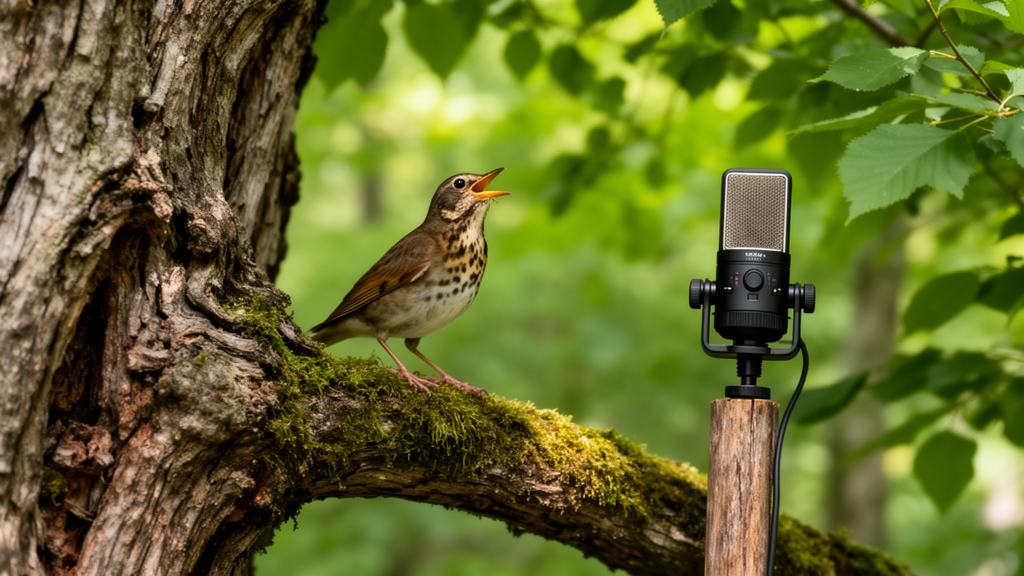
Ecologists tracking wild animal populations have long relied on physical capture–mark–recapture methods to monitor survival, abundance, and population trajectories, but these century-old techniques remain invasive, labor-intensive, and difficult to scale across broad geographical landscapes. Although autonomous audio recording units have become widespread tools for passive acoustic monitoring, standard algorithmic workflows have largely remained limited to species-level detection rather than tracking specific individuals over time. In a study published in Nature Methods, researchers led by Sam Lapp and Justin Kitzes demonstrated an automated deep-learning framework that identifies individual wild birds by their distinctive songs without requiring individually labeled audio recordings during initial model training. The approach extracts acoustic features directly from continuous passive recordings, clusters vocalizations belonging to unfamiliar animals, and constructs multi-year recapture histories that allow researchers to estimate demographic parameters such as annual apparent survival and local population abundance noninvasively.
The machine learning pipeline developed by the research team circumvents the conventional requirement for manually annotated individual song libraries by using a recording location prediction task as a supervised training objective. Using a four-year passive acoustic monitoring dataset collected across 126 survey locations in Pennsylvania forests, the researchers trained a ResNet18 convolutional neural network on spectrograms of ovenbird (Seiurus aurocapilla) vocalizations. Under this setup, the geographical survey location of each audio detection served as a pseudo-label. Because territorial male ovenbirds typically maintain localized home ranges during the breeding season while survey recording units were separated by at least 250 meters, individual birds were unlikely to appear simultaneously at multiple recording stations. Grouping vocalizations by station allowed the network to learn fine-grained acoustic features that separate song variants without needing human annotators to establish prior individual identities, enabling thousands of training samples to be harvested automatically following initial species detection.
To convert continuous environmental recordings into usable training inputs, the investigators applied the open-source HawkEars species classifier across the multi-year audio archive, generating confidence scores for ovenbird songs in consecutive three-second clips. The team implemented targeted automated filtering to safeguard feature extraction quality against background interference, rejecting clips where the classifier detected other vocal species or where ovenbird songs fell outside the central one-second window of the segment. The resulting training dataset comprised 94,378 three-second clips stratified across 126 sampling locations, supplemented by background recordings without ovenbird song. When testing network configurations, the authors found that supervised cross-entropy loss functions reliably produced feature spaces that separated individual songs, whereas contrastive metric learning losses failed to cluster song variants effectively, yielding validation accuracies of only 11 percent compared to 64 to 91 percent for supervised classification.
Once the convolutional neural network was trained on the location prediction task, the final classification layer was discarded so that the penultimate layer could serve as a generalized feature extractor. To discover individual bird identities in unannotated recordings, the team reduced the high-dimensional feature embeddings using t-SNE dimensionality reduction before grouping the vectors with HDBSCAN, a density-based hierarchical clustering algorithm that automatically determines cluster counts while isolating unassigned background noise. In validation experiments, reducing feature vectors to three dimensions via t-SNE improved clustering accuracy from 75 percent to 89 percent. Although uniform manifold approximation and projection (UMAP) was also evaluated, its performance proved more stochastic and degraded substantially when constrained to fewer than 30 output dimensions, leading the researchers to establish three-dimensional t-SNE as their primary dimensionality reduction method.
The performance of the automated category discovery system was rigorously benchmarked on an independent evaluation dataset collected from 13 time-synchronized acoustic localization arrays in Alberta, Canada. Because this evaluation dataset involved a distinct geographic region, different recording hardware, and an entirely separate bird population, none of the evaluation individuals or audio clips had been exposed to the model during training. Ground-truth individual identities were established by intersecting independent song variant annotations from two human experts—who achieved 98.8 percent agreement—with spatial song positions derived from acoustic localization. On this completely held-out test set, the custom ovenbird feature extractor achieved 99 percent individual identification accuracy and an adjusted Rand index of 0.99. In contrast, existing pretrained bioacoustic and computer vision models struggled with category discovery; Perch v.2 achieved an adjusted Rand index of 0.82 on the test set, while BirdNET, HawkEars, and ImageNet-trained backbones yielded adjusted Rand indices below 0.22.
The researchers also investigated how the clustering pipeline scaled when presented with an expanding pool of individuals across extensive regional surveys. Evaluating detections from 119 recording locations across Pennsylvania, the team assessed cluster purity, defined as the proportion of audio samples in an assigned cluster that originated from the cluster’s dominant recording location. When embeddings across all 119 sites were clustered simultaneously, the pipeline delineated an average of 234 distinct ovenbird song-type clusters while maintaining cluster purity near 100 percent. The experiments revealed that disabling the single-cluster formation setting in HDBSCAN was essential for large sample pools to prevent the algorithm from collapsing diverse vocalizations into a single massive group. Furthermore, clustering detections on a station-by-station basis yielded higher numbers of resolved individuals than global clustering, confirming the advantage of leveraging spatial stationarity in territorial songbirds.
To evaluate whether automated acoustic identification could support formal demographic modeling, the researchers applied their pipeline to 9,072 hours of passive acoustic monitoring recorded across 126 Pennsylvania stations between 2021 and 2024. The analysis focused on a standardized 12-day window from May 15 to May 26 each year, corresponding to peak breeding territoriality, between 6:00 and 7:30 daily. Following automated feature extraction and clustering, the investigators conducted an efficient two-phase manual review process that required less than 20 hours of human inspection. In the first phase, annotators screened sample spectrograms from each cluster to discard heterogeneous groups and merge identical song variants. In the second phase, annotators verified the top-ranking daily clip for each cluster, constructing complete multi-year detection–nondetection histories for 405 individual male ovenbirds.
Using these acoustic recapture histories, the team fitted Bayesian hierarchical Cormack–Jolly–Seber (CJS) models to estimate annual apparent survival and detection probabilities. Across the four-year study, the baseline CJS model estimated an annual apparent survival probability of 0.70, with a 95 percent credible interval of 0.66 to 0.74, and an annual detection probability of 0.89, with a 95 percent credible interval of 0.85 to 0.93. These demographic estimates align closely with historical mark–recapture studies relying on physical banding, which have documented ovenbird annual apparent survival rates ranging from 0.50 to 0.85. Model extensions evaluating environmental covariates revealed that apparent survival was slightly higher between the first and second years but did not vary substantially between the two regional landscapes or across microhabitat variables such as canopy cover, tree basal area, or topographic slope.
In parallel, the researchers modeled local bird abundance using generalized linear models incorporating site-level microhabitat characteristics. Unlike survival, ovenbird abundance was strongly associated with forest structure: abundance showed positive associations with tree basal area and percentage canopy cover, while displaying a negative relationship with ground slope. Mean abundance per survey location was consistently higher at State Game Lands 34, ranging from 2.1 to 2.8 detected individuals per location across years, compared to Ohiopyle State Park, which supported 1.1 to 1.5 individuals per point. Abundance peaked at both sites in 2022 before leveling off in subsequent seasons. These findings indicate that while forest structure directly influences breeding territory density, local microhabitat features do not necessarily drive annual apparent survival once territories are established.
The study highlights specific ecological conditions required before automated acoustic individual identification can be successfully applied to other taxa. Candidate species must exhibit vocal individuality where acoustic differences between individuals exceed variation within an individual, maintain a stable vocal signature over time, and demonstrate spatial stationarity during the recording period so individuals remain associated with specific sensor locations. While 30 percent of songbird species produce a single song type per individual, extending category discovery to repertoire species that produce multiple song variants remains an ongoing technical challenge. Furthermore, the authors caution that acoustic monitoring selectively samples vocalizing individuals and requires human verification to prevent false detections from inflating survival parameters, positioning automated acoustic identification as a powerful, noninvasive complement to physical capture in long-term ecological conservation.
Subject of Research: Automated individual identification and demographic modeling of songbirds using passive acoustic monitoring
Article Title: Automated identification of individual birds by song enables multi-year recapture from passive acoustic monitoring data
Article References: Lapp, S., Lyon, R. P., Wilson, S. J., Rhinehart, T. A., Czarnecki, C., Chronister, L. M., Fiss, C. J., Larkin, J. L., Bayne, E., & Kitzes, J. (2026). Automated identification of individual birds by song enables multi-year recapture from passive acoustic monitoring data. Nature Methods. https://doi.org/10.1038/s41592-026-03303-7
Image Credits: AI Generated
DOI: 10.1038/s41592-026-03303-7
Keywords: passive acoustic monitoring, individual identification, bioacoustics, convolutional neural networks, machine learning in ecology, ovenbird, Seiurus aurocapilla, mark-recapture, Cormack-Jolly-Seber model, acoustic localization, OpenSoundscape, HDBSCAN clustering, apparent survival, wildlife monitoring, t-SNE dimensionality reduction, HawkEars, soundscape ecology
News Source: Teresa Odom. (November 21, 2026). Machine Learning Identifies Wild Songbirds by Vocalization Across Multiple Years. Scienmag.