In a groundbreaking study published in Cell Reports Medicine, researchers from the Institute for Systems Biology (ISB) have uncovered previously unappreciated complexity in the evolution and identity of combined small-cell lung cancer (cSCLC). This rare lung cancer subtype, which displays properties of both small-cell lung cancer (SCLC) and non-small-cell lung cancer (NSCLC), has long baffled clinicians due to its aggressive nature and poor prognosis. The new research offers compelling evidence that these tumors originate from a single ancestral cancer cell and evolve dynamically, challenging earlier assumptions that they were simply mixtures of separate cancer types.
By harnessing advanced spatial multi-omics techniques integrated with single-cell genomic analyses, the team was able to dissect the heterogeneity within cSCLC tumors. They demonstrated that the cancer cells actively transition between neuroendocrine and non-neuroendocrine identities, highlighting a remarkable plasticity at the cellular level. This phenotypic flexibility sheds light on why cSCLC tumors are so refractory to standard treatments typically designed for classical small-cell lung cancer, emphasizing the need for tailored therapeutic strategies.
One of the significant innovations in this study was the identification of hybrid or intermediate cancer cell states. Around one-third of SCLC-like cells exhibited features that straddle both small-cell and non-small-cell lineages, indicating that tumor progression is not a binary process but rather a continuum of evolving cellular phenotypes. This discovery opens new avenues for understanding how cancer cells regulate identity and adapt to microenvironmental pressures over time.
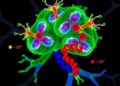
The spatial dimension of the study revealed distinct microenvironmental niches within individual tumors. Certain regions were densely infiltrated by immune cells, while others were largely devoid of immune presence. Intriguingly, fibroblast-rich zones often formed barriers between these immune-infiltrated and immune-excluded regions, potentially shielding parts of the tumor from immune-mediated eradication. This structural heterogeneity underscores the complexity of tumor-immune interactions and suggests that fibroblasts might play a critical role in tumor immune evasion.
Such insights were made possible by integrating spatial genomics with multi-region sequencing, capturing evolutionary dynamics not just over time but across different tumor compartments. According to co-corresponding author Qihui Shi, PhD, this comprehensive approach allowed the team to identify transitional cell states that conventional bulk sequencing methods cannot resolve. These findings emphasize the power of cutting-edge genomic tools in unraveling the intricate architecture of complex cancers.
Capitalizing on these discoveries, the researchers developed a novel diagnostic assay, termed the cSCLC Detector. This four-gene tool can more accurately identify cSCLC tumors by recognizing shared early “trunk” mutations that persist despite diverse cancer cell identities within the same tumor. The detector demonstrated a notably higher sensitivity for mixed tumor features in retrospective datasets of patients previously diagnosed with standard small-cell lung cancer, pointing towards a significant underdiagnosis of cSCLC in clinical practice.
Wei Wei, PhD, associate professor at ISB and co-corresponding author, emphasized the implications of these findings for cancer treatment paradigms. “Cancer is not static,” Dr. Wei remarked. “Understanding the dynamic evolution of tumor cell identities and microenvironmental influences is essential for developing effective, adaptive therapies that can overcome resistance mechanisms.”
This study fundamentally challenges the long-held view that tumor identity is fixed and highlights cellular plasticity as a driver of tumor progression and treatment failure. The presence of hybrid states and spatially varying microenvironments suggests that targeting cancer requires more than focusing on singular genetic mutations; it demands a nuanced appreciation of how tumor cells interact with their surroundings and maneuver through phenotypic states.
Further clinical application of the cSCLC Detector could transform diagnosis and patient stratification by uncovering hidden tumor heterogeneity that has major therapeutic implications. By identifying patients with combined small-cell lung cancers more reliably, clinicians might deploy more personalized treatment regimens, potentially improving outcomes for a population that currently faces very poor prognoses.
Beyond lung cancer, the study’s methodological advances provide a framework to explore identity plasticity and microenvironmental interactions in other malignancies. As spatial multi-omics technologies continue to evolve, they will likely become indispensable tools for dissecting tumor evolution in unprecedented detail, enabling real-time tracking of cancer cell states throughout disease progression.
Overall, this pioneering research underscores the urgent need to rethink cancer classification and treatment strategies to incorporate the dynamic and spatially complex nature of tumor ecosystems. The convergence of cutting-edge genomic technologies, computational biology, and cellular phenotyping heralds a new era in oncology, one where understanding tumor plasticity and microenvironmental niches will be essential to outsmart cancer’s relentless adaptability.
Subject of Research: People
Article Title: Spatial multi-omics unveils the monoclonal origin, neuroendocrine plasticity, and microenvironment niches in combined small cell lung cancer
News Publication Date: 10-Apr-2026
Web References:
Cell Reports Medicine article
DOI link
Keywords: Lung cancer, combined small-cell lung cancer, cancer plasticity, tumor microenvironment, spatial genomics, single-cell sequencing, cancer evolution, tumor heterogeneity, neuroendocrine plasticity, cancer diagnostics, immune evasion, fibroblasts
Tags: aggressive lung cancer subtypeschallenges in lung cancer treatmentcombined small-cell lung cancer evolutionhybrid cancer cell stateslung cancer cellular plasticityneuroendocrine to non-neuroendocrine transitionphenotypic flexibility in cancer cellssingle-cell genomic analysis lung cancersmall-cell and non-small-cell lung cancerspatial multi-omics in cancer researchtailored therapies for rare lung cancertumor heterogeneity in lung cancer