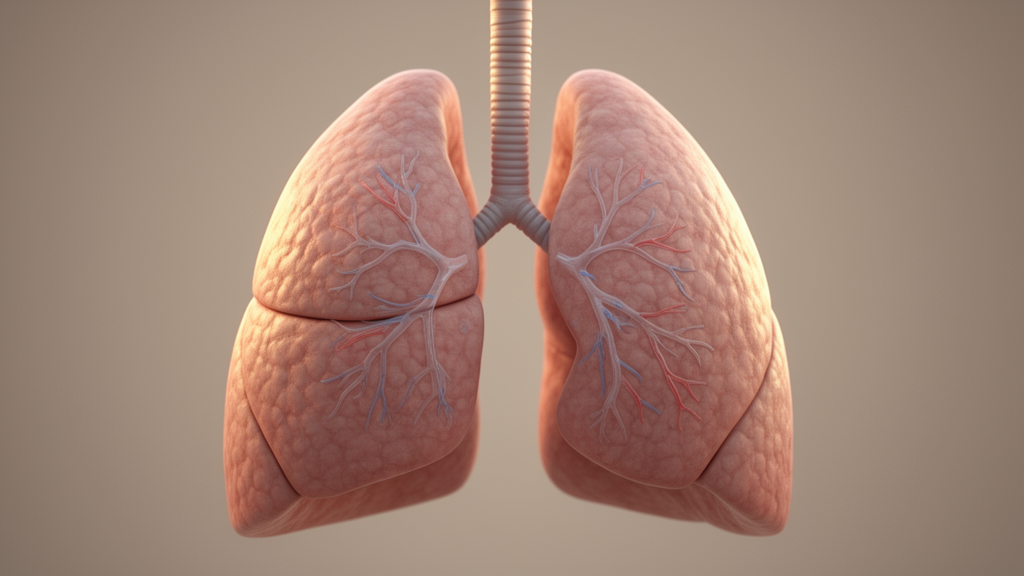
A large prospective cohort investigation based on data from the UK Biobank has found that reduced pulmonary function is independently associated with an elevated long-term risk of developing incident depression among individuals with chronic obstructive pulmonary disease. Analyzing 47,155 adult participants who met spirometric criteria for airway obstruction and were free of diagnosed depression at baseline, researchers observed that lower levels of forced expiratory volume in one second and forced vital capacity corresponded to higher rates of subsequent depressive illness over an average follow-up period of 13.2 years. In multivariable models adjusting for extensive demographic, socioeconomic, lifestyle, and clinical factors, participants in the highest quartiles of lung performance exhibited roughly a twenty percent lower relative hazard of receiving an inpatient or mortality diagnosis of depression compared to those in the lowest quartile.
Chronic obstructive pulmonary disease represents a substantial source of global morbidity and mortality, currently affecting more than 300 million individuals worldwide and standing as one of the leading contributors to disability-adjusted life years. Beyond the primary respiratory burden of progressive airflow limitation, affected individuals experience an array of debilitating systemic comorbidities. Among these secondary conditions, clinically significant depressive illness is exceptionally common, exhibiting a point prevalence nearing thirty percent in chronic pulmonary cohorts, which markedly exceeds the prevalence documented in general population surveys. When depression co-occurs with obstructive airway disease, patient prognosis deteriorates considerably, manifesting in poorer treatment adherence to inhaled medications and pulmonary rehabilitation programs, escalated frequency and severity of acute respiratory exacerbations, elevated hospital readmission rates, and higher all-cause mortality. Despite this substantial clinical impact, depressive conditions frequently remain unrecognized and untreated in routine pulmonary practice, underscoring the necessity of clarifying whether objective physiological lung measurements can prospectively identify patients facing an elevated susceptibility to mood disorders.
Although earlier observational studies had linked impaired lung capacity with mental health disorders, the vast majority of prior investigations relied on cross-sectional designs, enrolled small single-sex cohorts, or primarily examined the reverse hypothesis wherein depressive symptoms contribute to subsequent respiratory decline. A preceding large-scale prospective study in the general community by Hu and colleagues demonstrated an inverse association between baseline lung function and incident depression; however, general population samples encompass heterogeneous pulmonary patterns, including restrictive defects and preserved ratio abnormalities alongside obstruction. Whether a graded relationship persisted specifically among patients diagnosed with chronic airflow limitation remained an unresolved clinical question. Because airflow obstruction is universally present across chronic obstructive pulmonary disease cohorts yet ranges substantially in physiological severity, examining a dedicated patient sample permitted investigators to isolate the prospective impact of varying degrees of airway impairment on neuropsychiatric vulnerability while examining biological mediator pathways that operate in chronic respiratory illness.
The study cohort was drawn from the UK Biobank, an expansive prospective research repository that recruited more than 500,000 individuals aged 40 to 69 across twenty-two assessment centers throughout England, Scotland, and Wales between 2006 and 2010. Baseline examinations integrated self-completed touchscreen questionnaires, structured interviews, extensive anthropometric measurements, and biological sample collections linked prospectively to national hospital episode records and death registries. From the initial enrollment of 501,936 individuals, investigators excluded 149,018 participants who lacked acceptable spirometry results, leaving 352,918 adults with valid pre-bronchodilator respiratory measurements. Chronic obstructive pulmonary disease was defined using the standardized spirometric threshold of a pre-bronchodilator ratio of forced expiratory volume in one second to forced vital capacity below 0.70, identifying 65,185 eligible individuals. Researchers subsequently excluded 4,017 individuals with prevalent baseline depression, 10 participants lacking outcome tracking, and 14,003 individuals missing essential covariate data, resulting in a primary analytic sample of 47,155 participants.
Each subject completed two to three maximum forced expiratory blows lasting at least six seconds within an approximate six-minute testing window, with computer algorithms verifying reproducibility when measurements of vital capacity and expiratory volume differed by less than five percent. The highest valid individual values for forced expiratory volume in one second and forced vital capacity were subsequently standardized against the Global Lung Function Initiative 2012 multi-ethnic reference equations, which compute percent predicted values based on the participant’s age, biological sex, standing height, and ethnic background. Because testing did not include post-bronchodilator reversibility assessments, the operational diagnostic definition reflected spirometry-defined airflow limitation rather than verified clinical obstruction. Forced vital capacity percent predicted was evaluated as a complementary physiological dimension reflecting total mobilizable lung volume, with the recognition that reduced vital capacity in obstructive disorders can also stem from dynamic hyperinflation and pulmonary gas trapping.
Tracking of incident depressive illness was conducted through systematic linkage to hospital inpatient admissions databases, encompassing Hospital Episode Statistics for England, Scottish Morbidity Records for Scotland, and the Patient Episode Database for Wales, alongside national mortality registers. Incident episodes were identified using diagnostic codes from the International Classification of Diseases, Tenth Revision, specifically encompassing codes F32 for major depressive episodes and F33 for recurrent depressive disorder, with the incidence date marked by the first documented diagnostic occurrence. The researchers adjusted for a comprehensive panel of baseline confounders across four sequential models, incorporating age, sex, ethnic background, geographical assessment center, Townsend deprivation index, educational attainment, household income, body mass index, smoking classification, alcohol intake frequency, physical activity levels, and self-reported nightly sleep duration. Additionally, medical history variables including verified baseline diagnoses of physician-diagnosed asthma, systemic hypertension, and diabetes mellitus were fully incorporated to isolate the independent association between pulmonary performance and mental health outcomes.
Within the baseline cohort of 47,155 individuals with chronic obstructive pulmonary disease, the mean participant age was 58.8 years, and 42.5 percent were female. Overall baseline pulmonary metrics demonstrated a mean forced expiratory volume in one second percent predicted of 77.8 percent and a mean forced vital capacity percent predicted of 95.7 percent. Stratification across quartiles of expiratory volume revealed that participants in the lowest lung function quartile were significantly more likely to be active cigarette smokers, reside in socioeconomically disadvantaged areas as measured by higher Townsend deprivation scores, report lower annual household income, carry higher body mass index values, and manage comorbid cardiometabolic disorders. Over a mean observational follow-up of 13.2 years, 2,146 participants, representing 4.6 percent of the analyzed cohort, received a confirmed medical diagnosis of incident depression, with raw incidence rates decreasing monotonically from 5.6 percent in the lowest lung function quartile to 3.7 percent in the highest quartile.
Survival analyses using multivariable Cox proportional hazards modeling confirmed a robust inverse relationship between baseline spirometric values and future depression risk. After full multivariable adjustment for sociodemographic, lifestyle, and comorbid health conditions, participants positioned in the highest quartile of forced expiratory volume in one second percent predicted exhibited a hazard ratio of 0.79 with a 95 percent confidence interval spanning 0.70 to 0.90 relative to the lowest quartile. An equivalent comparison across quartiles of forced vital capacity percent predicted yielded a fully adjusted hazard ratio of 0.81 with a 95 percent confidence interval between 0.72 and 0.92, with both metrics demonstrating highly significant monotonic trends. When categorizing respiratory impairment through conventional clinical cut points, participants exhibiting an expiratory volume below eighty percent of predicted values experienced an eighteen percent higher risk of incident depression relative to those with preserved spirometry above eighty percent, reflecting an adjusted hazard ratio of 1.18.
To evaluate potential residual confounding and strengthen causal inference, the investigative team deployed multiple rigorous propensity score approaches comparing participants with moderate-to-severe pulmonary impairment against those presenting mild obstruction. Propensity score adjustments, one-to-one nearest-neighbor matching across 18,247 balanced pairs within a strict caliper of 0.02, and four distinct propensity weighting schemes were evaluated, including inverse probability of treatment weighting, standardized mortality ratio weighting, pairwise algorithmic weighting, and overlap weighting. Across all balancing methods, standardized mean differences for every included covariate fell comfortably below the 0.1 threshold, confirming excellent covariate balance between the severity groups. The resulting propensity-adjusted hazard ratios remained exceptionally consistent, ranging from 1.16 to 1.19. Furthermore, restricted cubic spline regressions indicated that the association between lung capacity and depression risk was approximately linear across the dominant distribution of chronic impairment, without evident structural thresholds.
To explore potential biological mechanisms linking reduced lung capacity with depressive episodes, the authors conducted formal mediation analyses examining twenty-two baseline blood biomarkers across 39,612 individuals with complete hematological and biochemical profiles. Using accelerated failure time models assuming a Weibull distribution, the researchers quantified differences in model-predicted depression-free survival time attributable to candidate inflammatory, erythrocyte, hepatic, and renal parameters. Eight blood biomarkers demonstrated statistically significant mediation effects that survived false discovery rate corrections. Circulating neutrophil count mediated the largest single fraction of the relationship, accounting for 10.33 percent of the total effect, followed by cystatin C at 8.51 percent, total leukocyte count at 4.70 percent, total bilirubin at 4.51 percent, red blood cell distribution width at 3.44 percent, serum albumin at 3.08 percent, aspartate aminotransferase at 0.73 percent, and circulating lymphocyte count at 0.62 percent.
The identification of these intermediate laboratory markers provides empirical support for several interconnected pathophysiological hypotheses linking respiratory compromise to mood regulation centers in the central nervous system. Pulmonary inflammation characteristic of chronic obstructive airway disorders can spill over into the general vascular circulation, releasing pro-inflammatory cytokines that disrupt blood-brain barrier permeability, activate resident microglial cells, and induce chronic neuroinflammation. Simultaneously, impaired gas exchange leading to sustained low-grade hypoxemia and hypercapnia can compromise cerebral metabolic function. The mediation contributions observed for renal and hepatic markers, such as cystatin C, albumin, and bilirubin, suggest that chronic airflow limitation operates within a framework of multi-organ metabolic and inflammatory stress. However, because pulmonary function and serum biomarkers were recorded concurrently at the baseline visit, these exploratory statistical mediation estimates cannot establish definitive longitudinal temporality and must be interpreted as hypothesis-generating biological associations rather than confirmed causal pathways.
The validity of the primary findings was further substantiated through extensive sensitivity analyses that systematically addressed potential methodological biases. Excluding participants who developed depressive episodes within the initial two years of follow-up yielded an adjusted hazard ratio of 1.18, confirming that reverse causation from prodromal affective symptoms did not account for the observed results. Applying multiple imputation by chained equations for missing covariate entries produced an identical hazard ratio of 1.18, and adjusting for cumulative lifetime smoking exposure measured in pack-years maintained a significant hazard ratio of 1.15. Competing risk analyses utilizing Fine-Gray sub-distribution hazard models with all-cause mortality as a competing event similarly confirmed the persistence of the association. Restricting the study cohort to participants meeting the Global Lung Function Initiative lower limit of normal criteria while excluding all individuals with a history of asthma also confirmed the stability of the inverse pulmonary-depression gradient.
Several methodological limitations temper the interpretation of the research. First, the observational cohort design cannot entirely exclude unmeasured residual confounding, nor can it conclusively demonstrate biological causality. Second, the UK Biobank population consists predominantly of white individuals of European ancestry and is recognized to exhibit a healthy-volunteer selection bias, which may constrain direct generalizability to broader, more clinically severe clinical populations. Third, baseline chronic obstructive pulmonary disease was defined through pre-bronchodilator spirometric ratios without pharmacological reversibility testing, which captures non-specific airway limitation rather than exclusively permanent clinical obstruction. Finally, depressive outcomes were determined via hospital admission records and death registrations, which capture relatively severe diagnostic encounters while potentially missing milder depressive episodes managed exclusively within primary care settings.
Subject of Research: Longitudinal relationship between lung function impairment and incident depression in chronic obstructive pulmonary disease
Article Title: Association and biological pathways between lung function and incident depression in chronic obstructive pulmonary disease participants: a prospective cohort study
Article References: Shi, Y., Wang, Y., Zhang, C., & Zhang, Y. (2026). Association and biological pathways between lung function and incident depression in chronic obstructive pulmonary disease participants: a prospective cohort study. Frontiers in Public Health, 14, Article 2024731. https://doi.org/10.3389/fpubh.2026.2024731
Image Credits: AI Generated
DOI: 10.3389/fpubh.2026.2024731
Keywords: Chronic Obstructive Pulmonary Disease, Depression, Pulmonary Function, FEV1, Forced Vital Capacity, UK Biobank, Prospective Cohort, Systemic Inflammation, Neutrophil Count, Cystatin C, Leukocyte Count, Total Bilirubin, Red Blood Cell Distribution Width, Serum Albumin, Mental Health, Spirometry, Propensity Score Analysis
News Source: Scienmag.