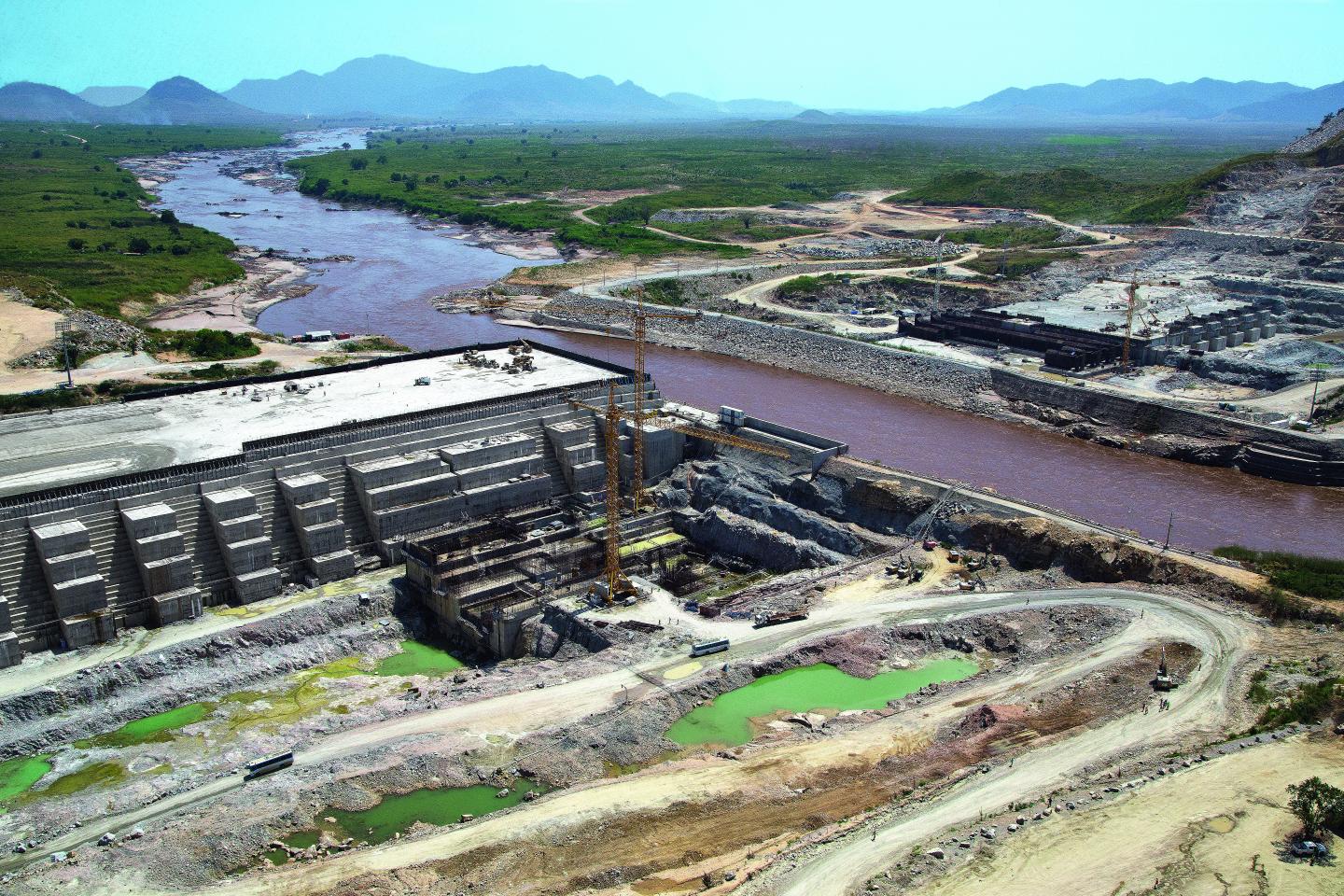
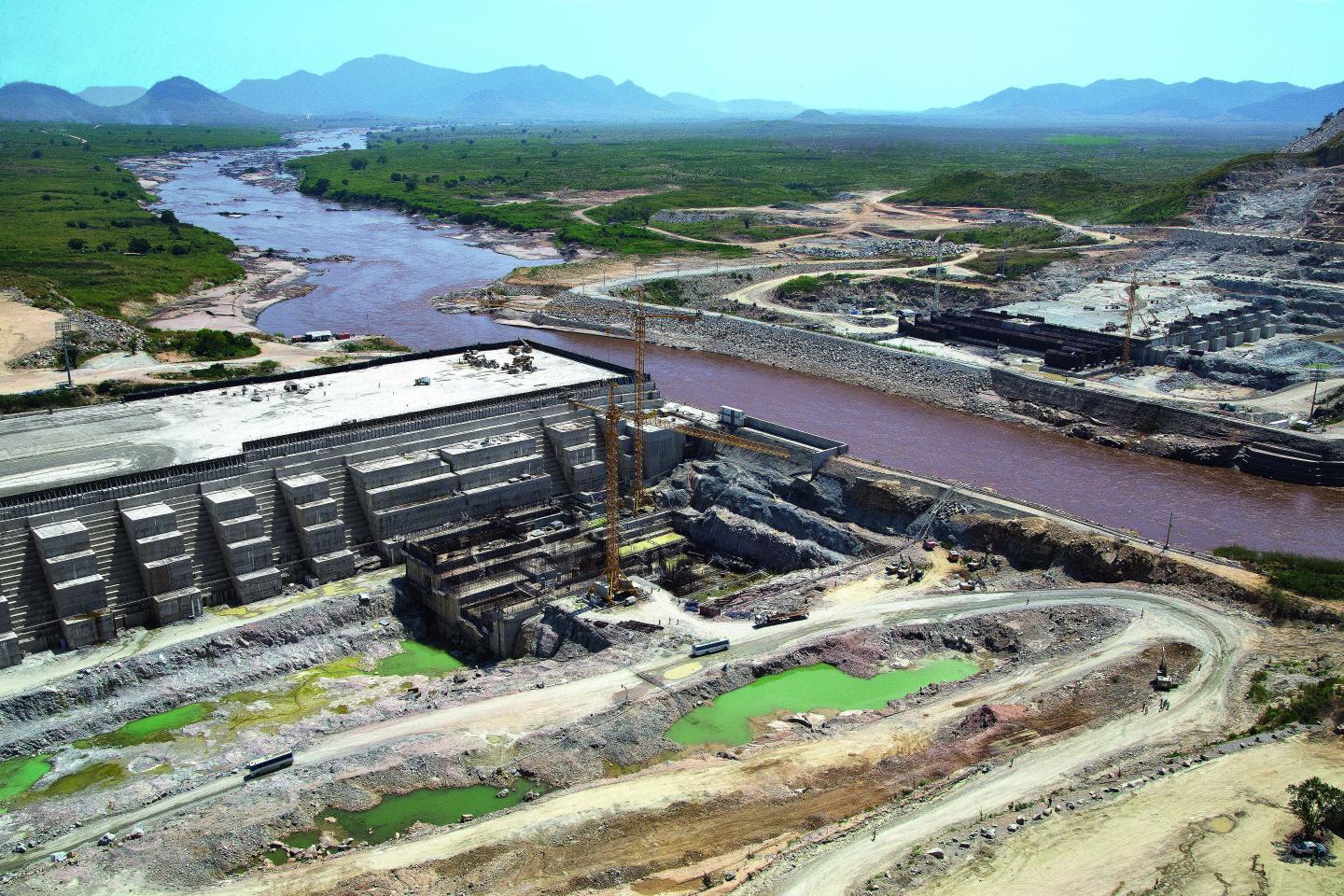
Credit: Jean-Daniel Stanley and Pablo L. Clemente and GSA Today.
Boulder, Colorado, USA: A multi-year study of Egypt's Nile Delta places the country's major breadbasket at serious risk. The soil-rich delta evolved as the result of natural conditions involving the Nile's fresh water flow and transport of sediment northward from Ethiopia, across the Sudan and Egypt to the Mediterranean.
About 70% of water flow reaching Egypt is derived from the Blue Nile and Atbara River, both sourced in Ethiopia. Over the past 200 years, rapidly increasing human activity has seriously altered flow conditions of the Nile. Emplacement in Egypt of barrages in the 1800s, construction the Aswan Low Dam in 1902, and the Aswan High Dam in 1965 has since altered water flow and distribution of nourishing organic-rich soil in the delta.
Egypt's population has recently swelled rapidly to about 90 million, with most living in the soil-rich Lower Nile Valley and Delta. These two areas comprise only about 3.5% of Egypt's total area, the remainder being mostly sandy desert. Due to much-intensified human impact, the delta no longer functions as a naturally expanding fluvial-coastal center. Less than 10% of Nile water now reaches the sea, and most of the nutrient-rich sediment is trapped in the delta by a dense canal and irrigation system.
The low-lying delta plain is only about 1 m above present sea level. The northern third of the delta is lowering at the rate of about 4 to 8 mm per year due to compaction of strata underlying the plain, seismic motion, and the lack of sufficient new sediment to re-nourish the delta margin being eroded by Mediterranean coastal currents.
While the coastal delta margin is being lowered, sea level is also rising at a rate of about 3 mm per year. Delta lowering and sea-level rise thus accounts for submergence of about 1 cm per year. At present rates, saline intrusion is now reaching agricultural terrains in central delta sectors — the coastal 20 to 40 km of delta surface will be underwater by the end of this century.
There is an additional looming danger of considerable importance: Ethiopia, itself energy-poor and undergoing drought conditions, is shortly (in 2017) to complete construction of the largest hydro-electric dam in Africa, its Grand Ethiopian Renaissance Dam (GERD). The large reservoir behind the dam is to be filled over a three- to five-year or longer period, during which it is expected that the amount of Nile flow to the Sudan and Egypt and its delta will be substantially reduced.
This down-river decrease of Nile fresh water will produce grave conditions. The pre-GERD Nile flow now barely supplies 97% of Egypt's present water needs with only 660 cubic meters per person, one of the world's lowest annual per capita water shares. With a population expected to double in the next 50 years, Egypt is projected to have critical countrywide fresh water and food shortages by 2025. It is hoped that some form of arbitration by regional or global bodies will be applied to this rapidly evolving situation, especially with regard to the three East African countries most impacted along the Blue Nile: Egypt, The Sudan, and Ethiopia.
###
ARTICLE
Increased Land Subsidence and Sea-Level Rise are Submerging Egypt's Nile Delta Coastal Margin
Study by Jean-Daniel Stanley, Senior Scientist Emeritus, and Pablo L. Clemente, Research Fellow, Mediterranean Basin (MEDIBA) Project, Smithsonian Institution, Washington DC. Email: [email protected].
GSA Today articles are open access online; for a print copy, please contact Kea Giles. Please discuss articles of interest with the authors before publishing stories on their work, and please make reference to GSA Today in articles published.
http://www.geosociety.org/
Media Contact
Kea Giles
[email protected]
@geosociety
http://www.geosociety.org
############
Story Source: Materials provided by Scienmag