In a groundbreaking endeavor, researchers at the University of Rochester have successfully transferred a longevity gene from naked mole rats to mice, resulting in improved health and an extension of the mouse’s lifespan.
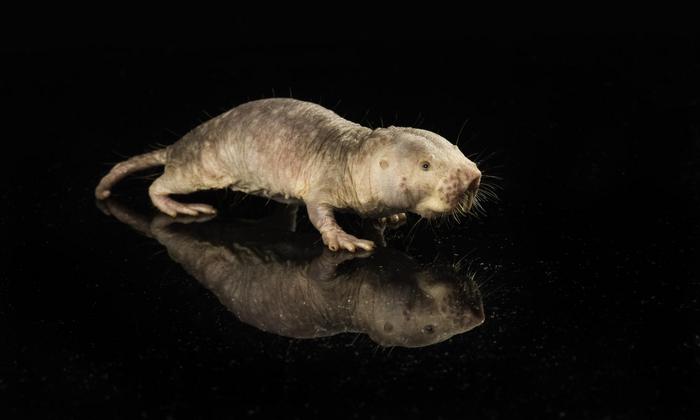
Credit: University of Rochester photo / J. Adam Fenster
In a groundbreaking endeavor, researchers at the University of Rochester have successfully transferred a longevity gene from naked mole rats to mice, resulting in improved health and an extension of the mouse’s lifespan.
Naked mole rats, known for their long lifespans and exceptional resistance to age-related diseases, have long captured the attention of the scientific community. By introducing a specific gene responsible for enhanced cellular repair and protection into mice, the Rochester researchers have opened exciting possibilities for unlocking the secrets of aging and extending human lifespan.
“Our study provides a proof of principle that unique longevity mechanisms that evolved in long-lived mammalian species can be exported to improve the lifespans of other mammals,” says Vera Gorbunova, the Doris Johns Cherry Professor of biology and medicine at Rochester. Gorbunova, along with Andrei Seluanov, a professor of biology, and their colleagues, report in a study published in Nature that they successfully transferred a gene responsible for making high molecular weight hyaluronic acid (HMW-HA) from a naked mole rat to mice. This led to improved health and an approximate 4.4 percent increase in median lifespan for the mice.
A unique mechanism for cancer resistance
Naked mole rats are mouse-sized rodents that have exceptional longevity for rodents of their size; they can live up to 41 years, nearly ten times as long as similar-size rodents. Unlike many other species, naked mole rats do not often contract diseases—including neurodegeneration, cardiovascular disease, arthritis, and cancer—as they age. Gorbunova and Seluanov have devoted decades of research to understanding the unique mechanisms that naked mole rats use to protect themselves against aging and diseases.
The researchers previously discovered that HMW-HA is one mechanism responsible for naked mole rats’ unusual resistance to cancer. Compared to mice and humans, naked mole rats have about ten times more HMW-HA in their bodies. When the researchers removed HMW-HA from naked mole rat cells, the cells were more likely to form tumors.
Gorbunova, Seluanov, and their colleagues wanted to see if the positive effects of HMW-HA could also be reproduced in other animals.
Transferring a gene that produces HMW-HA
The team genetically modified a mouse model to produce the naked mole rat version of the hyaluronan synthase 2 gene, which is the gene responsible for making a protein that produces HMW-HA. While all mammals have the hyaluronan synthase 2 gene, the naked mole rat version seems to be enhanced to drive stronger gene expression.
The researchers found that the mice that had the naked mole rat version of the gene had better protection against both spontaneous tumors and chemically induced skin cancer. The mice also had improved overall health and lived longer compared to regular mice. As the mice with the naked mole rat version of the gene aged, they had less inflammation in different parts of their bodies—inflammation being a hallmark of aging—and maintained a healthier gut.
While more research is needed on exactly why HMW-HA has such beneficial effects, the researchers believe it is due to HMW-HA’s ability to directly regulate the immune system.
A fountain of youth for humans?
The findings open new possibilities for exploring how HMW-HA could also be used to improve lifespan and reduce inflammation-related diseases in humans.
“It took us 10 years from the discovery of HMW-HA in the naked mole rat to showing that HMW-HA improves health in mice,” Gorbunova says. “Our next goal is to transfer this benefit to humans.”
They believe they can accomplish this through two routes: either by slowing down degradation of HMW-HA or by enhancing HMW-HA synthesis.
“We already have identified molecules that slow down hyaluronan degradation and are testing them in pre-clinical trials,” Seluanov says. “We hope that our findings will provide the first, but not the last, example of how longevity adaptations from a long-lived species can be adapted to benefit human longevity and health.”
Journal
Nature
DOI
10.1038/s41586-023-06463-0
Article Title
Increased hyaluronan by naked mole-rat Has2 improves healthspan in mice
Article Publication Date
23-Aug-2023