The quest to understand the relationship between mental states and physical capabilities is an ongoing pursuit in the field of geriatric medicine. Recent research has unveiled compelling insights into how loneliness affects balance learning abilities in aging patients with Parkinson’s disease, a condition that presents unique challenges in both motor and cognitive functions. As the population of older adults continues to grow, the implications of such studies become increasingly significant. Dr. S.Z. Jazaeri, alongside colleagues M.T. Joghataei and A. Jamali, has contributed to this emerging area of study, shedding light on the nuanced interplay of loneliness and balance in individuals coping with Parkinson’s.
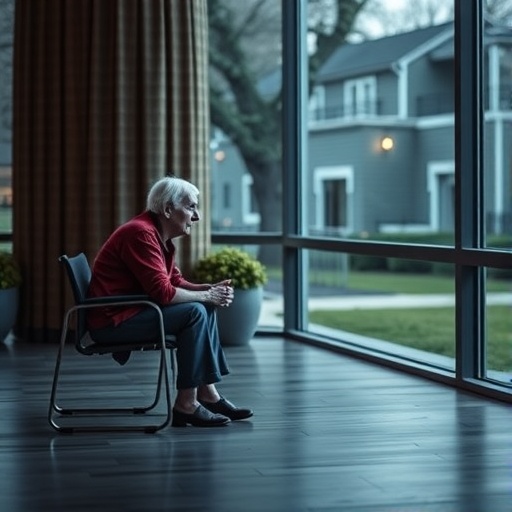
Parkinson’s disease is a neurodegenerative disorder that affects movement and balance, leading to symptoms such as tremors, stiffness, and postural instability. However, it is not just the physical symptoms that patients must navigate; emotional and psychological challenges often intertwine with these motor impairments. Loneliness, a common experience among older adults, has been shown to exacerbate physical conditions and impede recovery. The researchers focused on how feelings of isolation and lack of social interaction could potentially hinder an aging patient’s ability to learn and improve balance.
In their study, the researchers utilized a well-defined methodology to explore the effects of loneliness on balance learning. They assessed a cohort of aging patients diagnosed with Parkinson’s disease, taking into account various factors such as age, severity of disease, and baseline mobility levels. Utilizing advanced statistical techniques, they created a robust framework for understanding how loneliness interacted with the balance rehabilitation process. This rigor in their approach not only highlights the complexity of their findings but also underscores the need for nuanced interventions in clinical settings.
The results revealed striking correlations between loneliness and balance learning abilities. Patients who reported higher levels of loneliness exhibited poorer performance in balance-related tasks, indicating that emotional states significantly influenced their physical capabilities. The study delves into the psychological mechanisms at play. Since loneliness can lead to increased anxiety and depression, these emotional responses may obstruct the neural pathways essential for learning new motor skills. The brain’s plasticity, which is crucial for recovery and adaptability, might be negatively impacted in those who feel isolated.
Moreover, the implications of these findings extend beyond the individual. Understanding loneliness as a factor in rehabilitation allows healthcare providers to develop more comprehensive treatment plans, targeting not just the physiological aspects of Parkinson’s disease but also the emotional and psychological well-being of patients. Integrating social support systems into treatment protocols could foster a more conducive environment for balance learning and overall rehabilitation effectiveness.
Policy-level interactions are equally essential, as they underscore the need for community programs aimed at alleviating loneliness among older adults. Increasing social engagement can have profound effects not only on mental health but also on physical rehabilitation outcomes. Communities might consider creating initiatives that reduce barriers to social interaction, thereby addressing the loneliness that many aging individuals face. This synergy between physical health interventions and social connectivity may lead to innovative strategies that enhance the quality of life for those living with Parkinson’s disease.
Moreover, the timing of this research is particularly salient given the social isolation trends that have been exacerbated by the COVID-19 pandemic. Many older adults experienced heightened feelings of loneliness during lockdowns, which may have worsened their physical health concerns, including those related to balance and mobility. This research could serve as a wake-up call for healthcare providers, prompting them to critically assess how the social environments of their patients contribute to their rehabilitation journeys.
As the findings make their way into clinical practices, there is a potential for transformative change in how multidisciplinary teams approach rehabilitation for Parkinson’s patients. By acknowledging the dual role of loneliness and balance learning, healthcare professionals could weave in therapy sessions that concurrently address emotional well-being alongside physical exercises. Such a holistic approach could lead to improved long-term outcomes for patients, who often grapple with multiple intersecting challenges related to their disease.
In conclusion, the study led by Jazaeri, Joghataei, and Jamali opens up vital discussions about the psychological dimensions of physical rehabilitation in aging patients with Parkinson’s disease. As research continues to unveil the interconnectedness of emotional and physical health, healthcare standards must evolve accordingly. The notion that loneliness can substantially impede the ability to learn and maintain balance is a crucial consideration that invites further inquiry and systematic implementation in medical practices. As attenuating loneliness in older adults could very well enhance their rehabilitation experiences and effectiveness, the landscape of geriatric care might witness a significant transformation in the years to come.
The implications of this research stretch far and wide, not only influencing the treatment and care of Parkinson’s disease but also sparking conversations about the way society views and addresses loneliness among older adults. The findings beckon for a collective societal acknowledgment that loneliness is not merely a personal plight but a public health concern that requires an assertive response. As this research takes root in medical literature, it may lead to enhanced awareness and further studies aimed at improving life for many individuals grappling with the devastating affects of Parkinson’s disease, and by extension, informs broader discussions on aging and mental health.
Lastly, as we contemplate these findings, it is crucial to remember that support structures—both formal and informal—can play a transformative role in the lives of older adults. Collaboration between healthcare providers, community organizations, and families is essential for fostering environments that prioritize connectivity and emotional well-being. The intersection of loneliness, balance, and Parkinson’s disease is just beginning to be understood, and it opens up a wealth of possibilities for future research and clinical practice aimed at enriching the lives of individuals facing the dual challenges of aging and neurodegeneration.
Subject of Research: The impact of loneliness on balance learning ability in aging patients with Parkinson’s disease.
Article Title: The impact of loneliness on balance learning ability in aging patients with Parkinson’s disease.
Article References:
Jazaeri, S.Z., Joghataei, M.T., Jamali, A. et al. The impact of loneliness on balance learning ability in aging patients with Parkinson’s disease.
BMC Geriatr (2025). https://doi.org/10.1186/s12877-025-06674-2
Image Credits: AI Generated
DOI: 10.1186/s12877-025-06674-2
Keywords: loneliness, Parkinson’s disease, balance learning, aging, rehabilitation, emotional well-being, community health.
Tags: aging population and health interventionsbalance impairment in Parkinson’s diseasebalance learning challenges in elderlycognitive functions in aging individualsDr. S.Z. Jazaeri’s contributionsemotional impact of isolation on physical healthgeriatric medicine research advancementsimplications of loneliness on recoveryloneliness in aging Parkinson’s patientsneurodegenerative disorders and mental healthpsychological challenges in Parkinson’s diseasesocial interaction and motor skills in seniors