• HOME
  • NEWS
  • EXPLORE
    • CAREER
      • Companies
      • Jobs
    • EVENTS
    • iGEM
      • News
      • Team
    • PHOTOS
    • VIDEO
    • WIKI
  • BLOG
  • COMMUNITY
    • FACEBOOK
    • INSTAGRAM
    • TWITTER
Saturday, February 7, 2026
BIOENGINEER.ORG
No Result
View All Result
  • Login
  • HOME
  • NEWS
  • EXPLORE
    • CAREER
      • Companies
      • Jobs
        • Lecturer
        • PhD Studentship
        • Postdoc
        • Research Assistant
    • EVENTS
    • iGEM
      • News
      • Team
    • PHOTOS
    • VIDEO
    • WIKI
  • BLOG
  • COMMUNITY
    • FACEBOOK
    • INSTAGRAM
    • TWITTER
  • HOME
  • NEWS
  • EXPLORE
    • CAREER
      • Companies
      • Jobs
        • Lecturer
        • PhD Studentship
        • Postdoc
        • Research Assistant
    • EVENTS
    • iGEM
      • News
      • Team
    • PHOTOS
    • VIDEO
    • WIKI
  • BLOG
  • COMMUNITY
    • FACEBOOK
    • INSTAGRAM
    • TWITTER
No Result
View All Result
Bioengineer.org
No Result
View All Result
Home NEWS Science News Biology

Living room conservation: Gaming & virtual reality for insect and ecosystem conservation

Bioengineer by Bioengineer
April 18, 2019
in Biology
Reading Time: 2 mins read
0
IMAGE
Share on FacebookShare on TwitterShare on LinkedinShare on RedditShare on Telegram

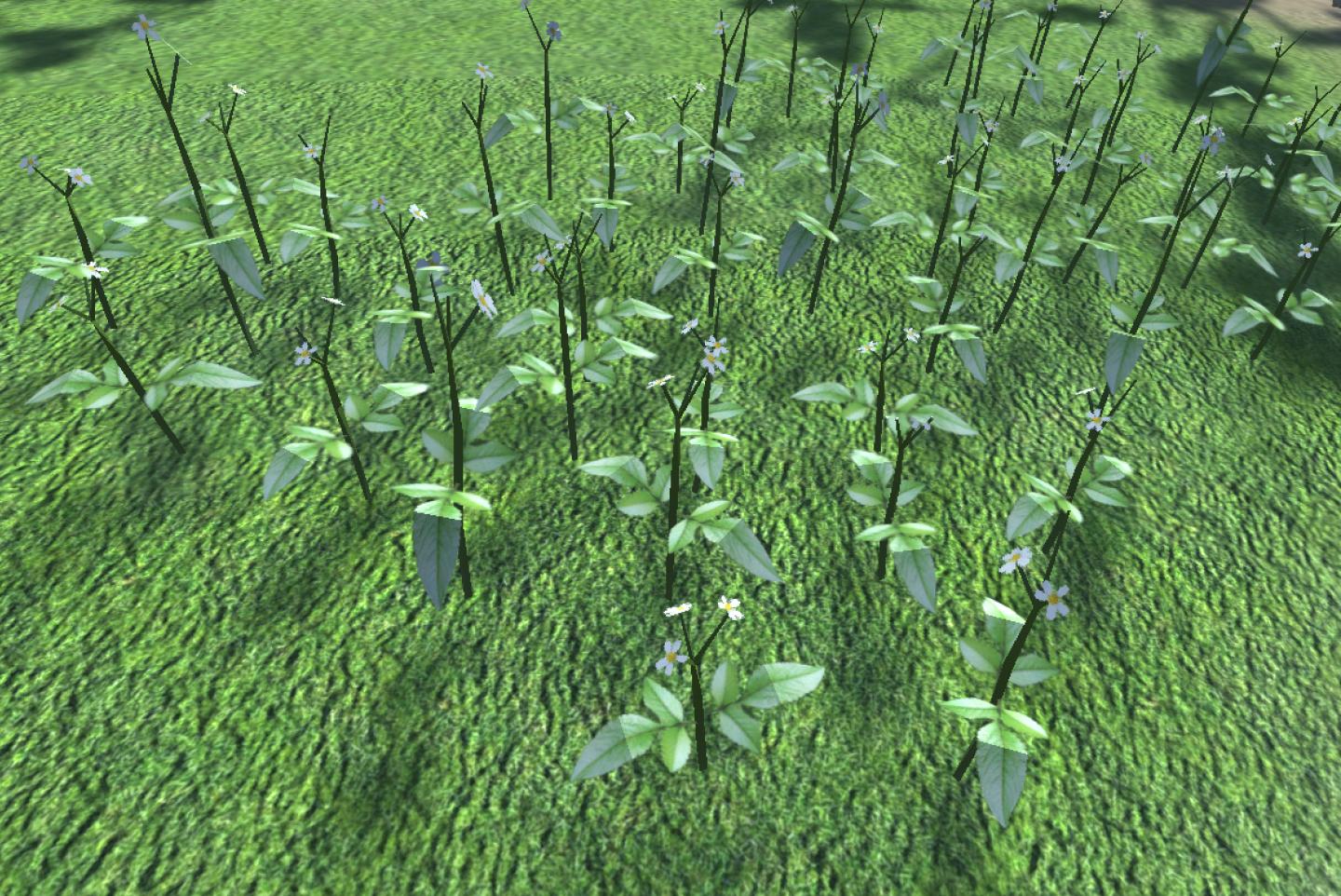
Players explore and search for butterflies using knowledge gained through gameplay
IMAGE

Credit: Alban Delamarre

Gaming and virtual reality (VR) could bridge the gap between urban societies and nature, thereby paving the way to insect conservation by the means of education, curiosity and life-like participation.

This is what Florida International University’s team of computer scientist Alban Delamarre and biologist Dr Jaeson Clayborn strive to achieve by developing a VR game (desktop version also available) dedicated to insect and plant species. Focused on imperiled butterflies, their innovative idea: Butterfly World 1.0, is described in the open-access journal Rethinking Ecology.

Butterfly World 1.0 is an adventure game designed to engage its users in simulated exploration and education. Set in the subtropical dry forest of the Florida Keys (an archipelago situated off the southern coast of Florida, USA), Butterfly World draws the players into an immersive virtual environment where they learn about relationships between butterflies, plants, and invasive species. While exploring the set, they interact with and learn about the federally endangered Schaus’ swallowtail butterfly, the invasive graceful twig ant, native and exotic plants, and several other butterflies inhabiting the dry forest ecosystem. Other nature-related VR experiences, including conservation awareness and educational programs, rely on passive observations with minimal direct interactions between participants and the virtual environment.

According to the authors, virtual reality and serious gaming are “the new frontiers in environmental education” and “present a unique opportunity to interact with and learn about different species and ecosystems”.

The major advantage is that this type of interactive, computer-generated experience allows for people to observe phenomena otherwise impossible or difficult to witness, such as forest succession over long periods of time, rare butterflies in tropical dry forests, or the effects of invasive species against native wildlife.

“Imagine if, instead of opening a textbook, students could open their eyes to a virtual world. We live in a time where experiential learning and stories about different species matter, because how we feel about and connect with these species will determine their continued existence in the present and future. While technology cannot replace actual exposure to the environment, it can provide similar, near-realistic experiences when appropriately implemented,” say the scientists.

In conclusion, Delamarre and Clayborn note that the purpose of Butterfly World is to build knowledge, reawaken latent curiosity, and cultivate empathy for insect and ecosystem conservation.

###

The game is accessible online at: http://ocelot.aul.fiu.edu/~adela177/ButterflyWorld/.

Original source:

Clayborn J, Delamarre A (2019) Living room conservation: a virtual way to engage participants in insect conservation. Rethinking Ecology 4: 31-43. https://doi.org/10.3897/rethinkingecology.4.32763

Contacts:

Dr Jaeson Clayborn

Email: [email protected]

Alban Delamarre

Email: [email protected]

Media Contact
Jaeson Clayborn
[email protected]

Related Journal Article

http://dx.doi.org/10.3897/rethinkingecology.4.32763

Tags: BiodiversityBiologyEcology/EnvironmentEntomologyNonprofessionalPollution/RemediationPopulation Biology
Share12Tweet8Share2ShareShareShare2

Related Posts

Florida Cane Toad: Complex Spread and Selective Evolution

Florida Cane Toad: Complex Spread and Selective Evolution

February 7, 2026
New Study Uncovers Mechanism Behind Burn Pit Particulate Matter–Induced Lung Inflammation

New Study Uncovers Mechanism Behind Burn Pit Particulate Matter–Induced Lung Inflammation

February 6, 2026

DeepBlastoid: Advancing Automated and Efficient Evaluation of Human Blastoids with Deep Learning

February 6, 2026

Navigating the Gut: The Role of Formic Acid in the Microbiome

February 6, 2026
Please login to join discussion

POPULAR NEWS

  • Robotic Ureteral Reconstruction: A Novel Approach

    Robotic Ureteral Reconstruction: A Novel Approach

    82 shares
    Share 33 Tweet 21
  • Digital Privacy: Health Data Control in Incarceration

    63 shares
    Share 25 Tweet 16
  • Study Reveals Lipid Accumulation in ME/CFS Cells

    57 shares
    Share 23 Tweet 14
  • Breakthrough in RNA Research Accelerates Medical Innovations Timeline

    53 shares
    Share 21 Tweet 13

About

We bring you the latest biotechnology news from best research centers and universities around the world. Check our website.

Follow us

Recent News

Digital Health Perspectives from Baltic Sea Experts

Florida Cane Toad: Complex Spread and Selective Evolution

Exploring Decision-Making in Dementia Caregivers’ Mobility

Subscribe to Blog via Email

Enter your email address to subscribe to this blog and receive notifications of new posts by email.

Join 73 other subscribers
  • Contact Us

Bioengineer.org © Copyright 2023 All Rights Reserved.

Welcome Back!

Login to your account below

Forgotten Password?

Retrieve your password

Please enter your username or email address to reset your password.

Log In
No Result
View All Result
  • Homepages
    • Home Page 1
    • Home Page 2
  • News
  • National
  • Business
  • Health
  • Lifestyle
  • Science

Bioengineer.org © Copyright 2023 All Rights Reserved.