• HOME
  • NEWS
  • EXPLORE
    • CAREER
      • Companies
      • Jobs
    • EVENTS
    • iGEM
      • News
      • Team
    • PHOTOS
    • VIDEO
    • WIKI
  • BLOG
  • COMMUNITY
    • FACEBOOK
    • INSTAGRAM
    • TWITTER
Wednesday, April 1, 2026
BIOENGINEER.ORG
No Result
View All Result
  • Login
  • HOME
  • NEWS
  • EXPLORE
    • CAREER
      • Companies
      • Jobs
        • Lecturer
        • PhD Studentship
        • Postdoc
        • Research Assistant
    • EVENTS
    • iGEM
      • News
      • Team
    • PHOTOS
    • VIDEO
    • WIKI
  • BLOG
  • COMMUNITY
    • FACEBOOK
    • INSTAGRAM
    • TWITTER
  • HOME
  • NEWS
  • EXPLORE
    • CAREER
      • Companies
      • Jobs
        • Lecturer
        • PhD Studentship
        • Postdoc
        • Research Assistant
    • EVENTS
    • iGEM
      • News
      • Team
    • PHOTOS
    • VIDEO
    • WIKI
  • BLOG
  • COMMUNITY
    • FACEBOOK
    • INSTAGRAM
    • TWITTER
No Result
View All Result
Bioengineer.org
No Result
View All Result
Home NEWS Science News Biology

Liverpool researchers to explore how seabirds navigate using…

Bioengineer by Bioengineer
January 24, 2018
in Biology, Science News
Reading Time: 2 mins read
0
Share on FacebookShare on TwitterShare on LinkedinShare on RedditShare on Telegram
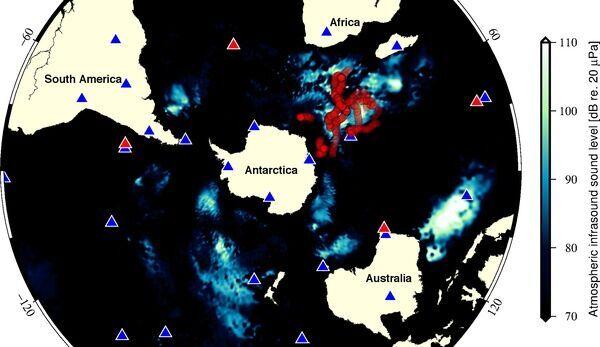
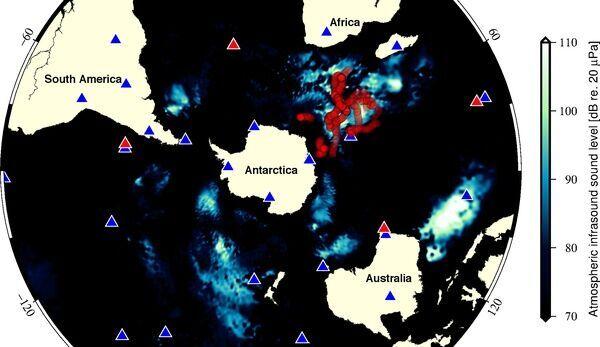
IMAGE

Credit: UofL

Researchers at the University of Liverpool have been awarded a £1million grant to undertake a research project to find out how seabirds capture infrasound.

Infrasound is sound below 20 Hz, lower than humans can perceive. It is known that elephants and whales use infrasound for communication, and that songbirds may use it to avoid storms and there is some evidence that pigeons use it for navigation.

Now, scientists from the University's School of Environmental Sciences want to find out whether the low frequency sound waves which create "hills" and "valleys" – or an infrasoundscape – help seabirds navigate as they travel millions of kilometres over their lifetime across a seemingly featureless ocean.

Working with the Comprehensive Nuclear-Test-Ban Treaty Organisation (CTBTO) – an organisation that monitors infrasound in order to detect nuclear explosions – researchers will compare the routes birds use based on the movement tracks of seabirds, based on millions of GPS positions, against atmospheric and oceanic infrasound, and meteorological and oceanographic maps.

Liverpool Ecologist, Dr Samantha Patrick, from the University's School of Environmental Sciences, said: "This is an innovative project that aims to shed some light on one of nature's unsolved questions.. Navigation is essential to animals yet we still do not fully understand how species are able to move so widely. For example, Arctic terns travel from the Arctic to the Antarctic but how they find their way year after year is a mystery."

Working with geophysicists, mathematicians and physiologists, this project will bring together expertise from across scientific fields. The development of novel data logging devices on seabirds which can detect infrasound and meteorological parameters will allow movement, infrasound and weather conditions to be captured allowing researchers to examine individual movement decisions at an intricate level.

Dr Patrick added: "The project aims to not only capture the use of infrasound, but will investigate whether birds can detect these signals using their inner ear and test the importance of such cues in the evolution of navigation."

The project is funded by the Human Frontier Science Program through the Young Investigators' Grants scheme.

###

Media Contact

Sarah Stamper
[email protected]
01-517-943-044
@livuninews

http://www.liv.ac.uk

Share12Tweet8Share2ShareShareShare2

Related Posts

NADPH Enzymes Suppress Pancreatic Precancerous Lesions

April 1, 2026

Entorhinal Cortex Maps Remote Tasks Without CA1

April 1, 2026

Chikungunya Virus Lingers in Joint Macrophages, Causes Chronic Disease

April 1, 2026

Recombinant Protein Restores Platelet Function in Mice

April 1, 2026
Please login to join discussion

POPULAR NEWS

  • blank

    Revolutionary AI Model Enhances Precision in Detecting Food Contamination

    96 shares
    Share 38 Tweet 24
  • Imagine a Social Media Feed That Challenges Your Views Instead of Reinforcing Them

    1006 shares
    Share 398 Tweet 249
  • Promising Outcomes from First Clinical Trials of Gene Regulation in Epilepsy

    51 shares
    Share 20 Tweet 13
  • Popular Anti-Aging Compound Linked to Damage in Corpus Callosum, Study Finds

    43 shares
    Share 17 Tweet 11

About

We bring you the latest biotechnology news from best research centers and universities around the world. Check our website.

Follow us

Recent News

NADPH Enzymes Suppress Pancreatic Precancerous Lesions

Entorhinal Cortex Maps Remote Tasks Without CA1

Chikungunya Virus Lingers in Joint Macrophages, Causes Chronic Disease

Subscribe to Blog via Email

Enter your email address to subscribe to this blog and receive notifications of new posts by email.

Join 78 other subscribers
  • Contact Us

Bioengineer.org © Copyright 2023 All Rights Reserved.

Welcome Back!

Login to your account below

Forgotten Password?

Retrieve your password

Please enter your username or email address to reset your password.

Log In
No Result
View All Result
  • Homepages
    • Home Page 1
    • Home Page 2
  • News
  • National
  • Business
  • Health
  • Lifestyle
  • Science

Bioengineer.org © Copyright 2023 All Rights Reserved.