Credit: Marco-Alexis Chaira
Tempe, Ariz. – Two Arizona State University professors are among the first recipients of Somatic Cell Genome Editing (SCGE) grants from the National Institutes of Health Common Fund. The $2,600,000, five-year grant will fund the first study of the genome editing technology CRISPR to be used on a "human liver on-a-chip" platform.
The SCGE program, launched in January 2018, is aimed at improving therapeutic options for both rare and common diseases, including supporting methods to improve editing the human genome.
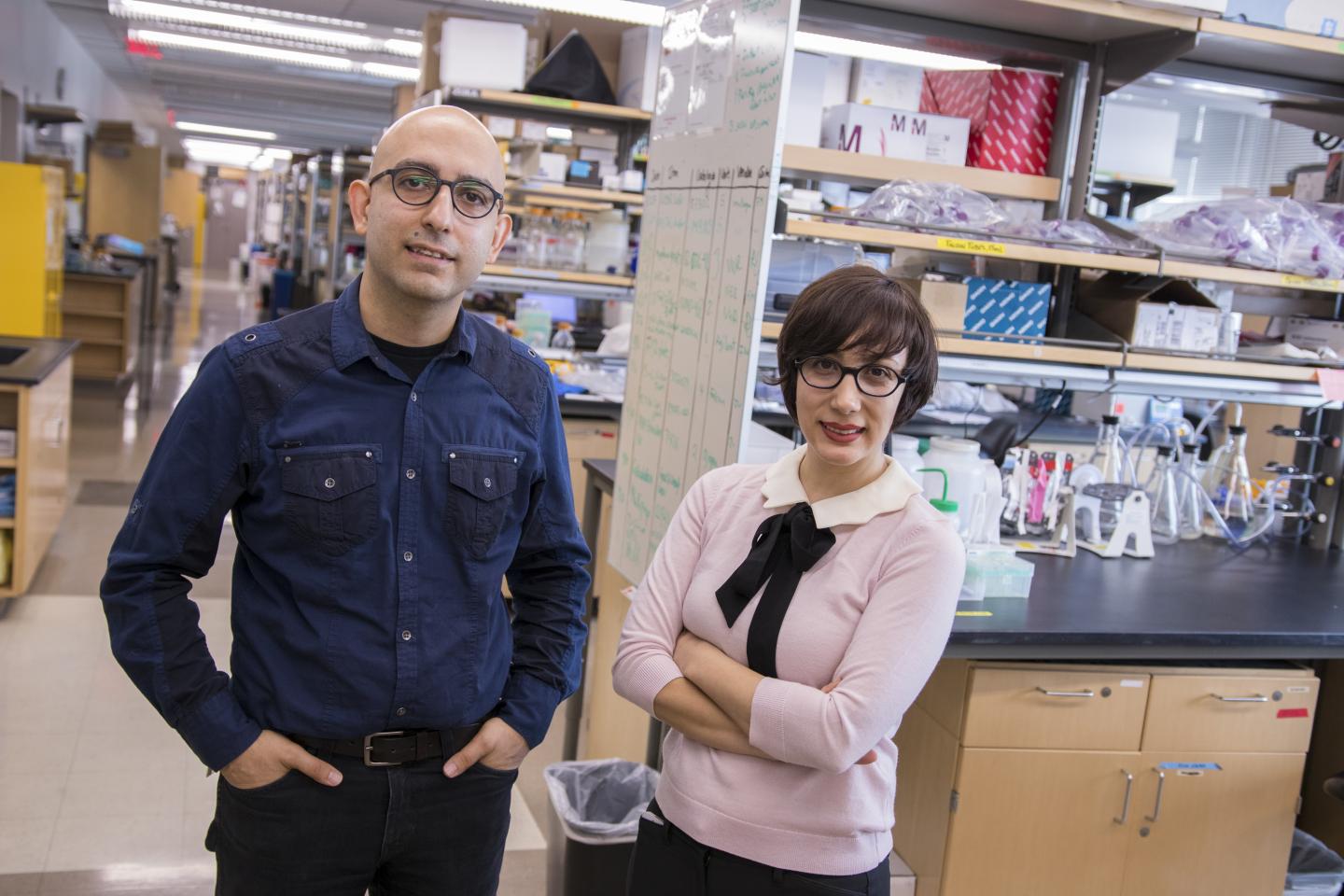
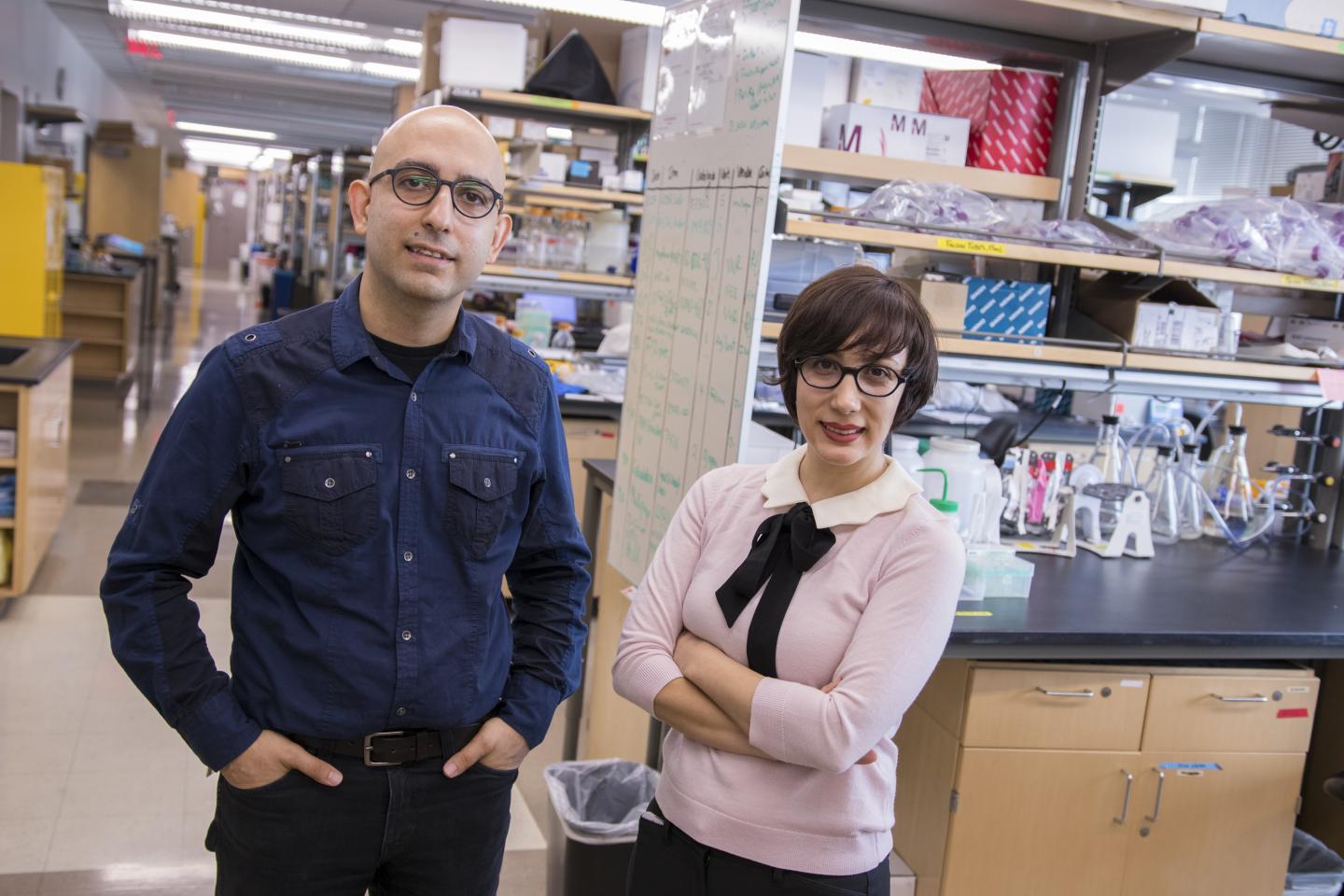
Samira Kiani and Mo Ebrahimkhani, assistant professors in the School of Biological and Health Systems Engineering, are combining their expertise in Clustered Regularly Interspaced Short Palindromic Repeats, or CRISPR, technology and human microphysiological systems to assess the safety and efficacy of genome editing and its effects on human tissue function.
CRISPR enables researchers to target genes and genetic materials in cells to regulate how they behave and function. Because of CRISPR's ease of engineering and programmability, it is considered a breakthrough technology with the potential to help cure disease, repair damaged body tissue and in other ways restore people's health.
However, as with any new technology, applying the CRISPR method can potentially produce some unintended results.
"[CRISPR] is a pathogenic source, so to put this in humans, you face a number of concerns, such as toxicity, an immune response, or some other side effects that it might affect cell tissues in humans," says Kiani, the project lead for the multi-institution endeavor. "There's a chance introducing the system creates some sort of off-target effects in the genome, meaning that it not only influences the target DNA code, but also does some unintended modifications in parts of the genome that we don't know [about] and don't want."
Kiani and Ebrahimkhani will apply the CRISPR method on the Liverchip® platform in an effort to identify the biomarkers within the human liver genome that indicate toxicity. DNA analysis will also reveal biomarkers that indicate the off-target effects of Cas9 – the DNA-cleaving enzyme used in CRISPR that enables highly precise gene editing and regulation.
Until now, CRISPR has only been tested in animal models or human cell lines. Using the Liverchip® platform provides a model that recapitulates closely human biology and will significantly reduce the number of discrepancies introduced by animal models.
These organ-on-a-chip mediums are essentially a 3D cell culture system designed to have the specific features that would exist in a human body. Multiple cells within the medium self-assemble to generate a tissue similar to a human organ, even mimicking the human body's blood flow and the profusion of the media in cells.
"The final objective is to create a culture system that can predict the liver tissue response in humans," says Ebrahimkhani, who worked with this platform during his studies at Massachusetts Institute of Technology. "In the long term, we hope to be able to achieve a candidate CRISPR system that can target a specific gene in humans with control over cell type, time of action and any potential toxicity."
The liver is likely to be one of the first human organs where gene therapies will be tested. Given the frequency of degenerative, genetic diseases associated with metabolism and the function of the liver, using the liver-on-a-chip platform as a proxy for human liver cells is ideal for studying CRISPR/Cas9's effectiveness as a therapeutic tool.
The multidisciplinary team of investigators includes Jin Park, an assistant research professor in the Virginia G. Piper Center for Personalized Diagnostics at ASU's Biodesign Institute. Park will help with data analysis of the RNA and DNA sequences to identify biomarkers in tissues. Linda Griffith, the School of Engineering Teaching Innovation Professor of Biological and Mechanical Engineering at the Massachusetts Institute of Technology and a leading expert in microphysical systems, and David Hughes of CN Bio Innovations – the commercial vendor for the Liverchip®- are collaborating with the ASU team in this research. They will contribute novel technologies and their expertise relevant to human-based cellular platforms.
"We're excited this opportunity to see that NIH entrusted the leadership of this multi-institution grant to Samira and Mo," says Marco Santello, director of the School of Biological and Health Systems Engineering, one of the six schools in the Ira A. Fulton Schools of Engineering. "It's a true testament to the caliber of the faculty in the Fulton Schools."
###
The NIH Common Fund awarded 21 SCGE grants totaling approximately $86 million over the next five years to support research aimed at improving methods to edit the human genome. These projects will help develop multicellular systems optimized for genome editing, advance delivery techniques of the CRISPR system and generate new, more effective genome editing tools.
Media Contact
Lanelle Strawder
[email protected]
480-727-5618
@ASU
http://asunews.asu.edu/