


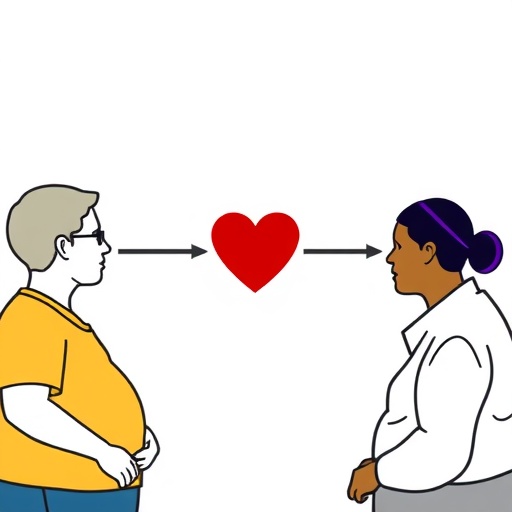
In a groundbreaking study published in the Journal of General Internal Medicine, researchers have unveiled critical associations between social risks and obesity in high-risk veterans. This research sheds light on the complex interplay between social determinants of health and obesity, a multifaceted issue that significantly impacts the veteran population. With a focus on veterans who face additional challenges due to socioeconomic factors, this work aims to understand the underlying causes of obesity within this demographic, providing critical insights for public health interventions.
An alarming trend has surfaced in recent years: as the rates of obesity continue to rise nationwide, high-risk veterans are experiencing disproportionately higher levels of obesity compared to the general population. The study highlights that a myriad of social risks—ranging from unemployment and housing instability to food insecurity—play a pivotal role in exacerbating obesity within this group. Such findings are particularly concerning given that obesity is linked to various physical and mental health problems, including diabetes, heart disease, and depression, which are already prevalent among veterans.
The research team, led by R. M. Kane, along with co-authors K. M. Stechuchak and L. Greene, adopted a comprehensive approach, examining both qualitative and quantitative data to provide a holistic picture of how social risks affect health outcomes. By incorporating interviews and surveys alongside clinical data, they were able to illustrate not just the statistical correlations but also the real-life narratives behind the numbers, giving voices to veterans whose struggles often go unnoticed in larger discussions about health and wellness.
From the findings, it became evident that social support—or the lack thereof—has a significant influence on obesity prevalence. Veterans without strong community ties or family support reported higher rates of sedentary behavior and unhealthy eating habits. Conversely, those who participated in community activities or had access to nutritional education displayed healthier behaviors. This highlights the need for enhanced community engagement and support networks as part of obesity prevention strategies tailored specifically for veterans.
Moreover, the authors noted that mental health challenges, often exacerbated by prior combat experiences or trauma, impact lifestyle choices that contribute to obesity. The stigma surrounding mental health issues in the veteran community may deter individuals from seeking help, perpetuating a cycle of poor mental health and obesity. Addressing mental health as a critical component of obesity interventions could provide a dual benefit: improving mental well-being while tackling obesity.
Another crucial discovery of the study was the role of economic factors in dietary choices. Veterans facing financial hardships frequently resort to cheap, calorie-dense food that lacks nutritional value. Food deserts—areas with limited access to affordable and healthy food options—are a significant hurdle for many veterans, further complicating their efforts to maintain a healthy diet. The authors advocate for policy changes that promote food accessibility, suggesting that improved access to healthy foods could have a profound impact on veterans’ health outcomes.
In addition to economic and social barriers, the study also pointed out the physical environment’s influence on obesity rates. Veterans living in neighborhoods with limited recreational spaces or unsafe environments are less likely to engage in physical activity. Urban designs that do not prioritize walkability or safe outdoor spaces can lead to a sedentary lifestyle, which is a critical factor in the obesity epidemic. As such, urban planning that considers the health needs of veterans could be instrumental in promoting better health outcomes.
Collaboration between healthcare providers, policymakers, and community organizations is essential to create a multi-faceted approach to combatting obesity among high-risk veterans. The study calls for comprehensive support systems that address not only the physical health of veterans but also the underlying social determinants that drive obesity. This aligns with a broader movement towards social prescribing, where healthcare providers connect patients with community resources that can assist in addressing non-medical issues affecting their health.
The implications of the study extend beyond the veteran population. Policymakers and public health officials must recognize the interconnectedness of social risks and health outcomes across various demographics. By understanding that factors such as socioeconomic status, mental health, and physical environments contribute to health inequities, more effective interventions can be designed to address these root causes rather than merely treating the symptoms.
In conclusion, this research serves as a clarion call for immediate action to address the alarming rates of obesity among high-risk veterans. By emphasizing the importance of social determinants of health, the study encourages stakeholders across sectors to work collaboratively towards sustainable solutions. As the findings suggest, tackling obesity is not solely a medical issue but a societal one, requiring comprehensive strategies that address the various factors influencing health in this vulnerable population.
To fully leverage the insights gained from this study, further research is needed to track the long-term impacts of social interventions on obesity among veterans. As we enter an era where health equality is increasingly prioritized, understanding and addressing the social risks inherent to specific populations will be crucial. The veteran community deserves tailored support that acknowledges their unique challenges, ultimately fostering a healthier future for those who have served.
In summary, the intersection of obesity and social risks in high-risk veterans is a pressing public health concern that demands immediate attention. This research not only provides important data but also strengthens the argument for comprehensive, community-oriented solutions aimed at improving the health of one of society’s most deserving groups. It is through such studies that we can hope to better understand and tackle the challenges of obesity in veterans, ultimately paving the way for a healthier generation going forward.
Subject of Research: The associations between social risks and obesity in high-risk veterans.
Article Title: Associations Between Social Risks and Obesity in High-risk Veterans.
Article References:
Kane, R.M., Stechuchak, K.M., Greene, L. et al. Associations Between Social Risks and Obesity in High-risk Veterans.
J GEN INTERN MED (2025). https://doi.org/10.1007/s11606-025-10056-0
Image Credits: AI Generated
DOI: https://doi.org/10.1007/s11606-025-10056-0
Keywords: obesity, veterans, social determinants of health, public health, socioeconomic factors, mental health, food accessibility.
Tags: comprehensive study on veteran obesitycritical associations between social risks and healthfood insecurity and obesityhousing instability and obesity riskJournal of General Internal Medicine research findingsmental health issues in veteransobesity in at-risk veteranspublic health interventions for veteransrising obesity rates in veteran populationsocial determinants of health and obesitysocioeconomic factors and health outcomesunemployment and veteran health



