The precise segregation of DNA and the faithful inheritance of plasmids are crucial steps in bacterial cell division. Now, a team of researchers led by Seán Murray at the Max Planck Institute for Terrestrial Microbiology has developed a computational simulation that explains a key mechanism of DNA segregation. Their findings pave the way for experimental testing and reveal fundamental biochemical principles relevant to synthetic biology and medical applications.
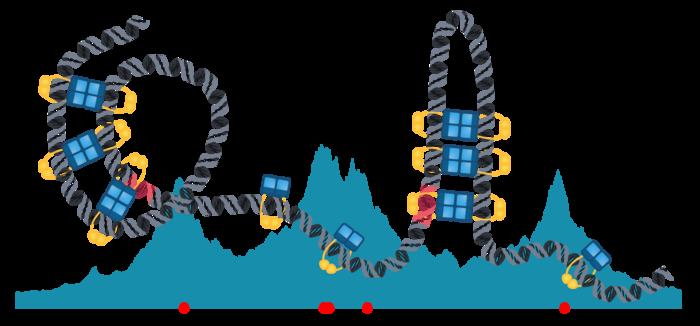
Credit: MPI f. Terrestrial Microbiology/ Connolley
The precise segregation of DNA and the faithful inheritance of plasmids are crucial steps in bacterial cell division. Now, a team of researchers led by Seán Murray at the Max Planck Institute for Terrestrial Microbiology has developed a computational simulation that explains a key mechanism of DNA segregation. Their findings pave the way for experimental testing and reveal fundamental biochemical principles relevant to synthetic biology and medical applications.
The faithful inheritance of genetic material to the next generation is a fundamental process underlying all forms of life. Central to this process is the accurate transmission of copied genetic material during cell division. A research team led by Seán Murray at the Max Planck Institute for Terrestrial Microbiology has now successfully developed a computational simulation for this central process. Unlike experimental techniques, which are often limited by their resolution, stochastic modeling makes it possible to unravel the underlying processes of DNA segregation and to understand the fine structure of the proteins involved.
An essential part of this process, in many bacteria, is the formation of a large macromolecular complex called the partition complex, which is formed as part of the ParABS system. Here the ParB protein operates by moving the DNA through interacting with DNA-bound ParA-ATP, thereby allowing active separation of the DNA. For its correct functioning it requires precise interactions between its protein subparts and the DNA.
“Sliding and bridging” principle
Despite their significance, both the structure of the protein complexes and the mechanisms behind their assembly have remained elusive. Building on recent discoveries, the research team has developed a model showing that the DNA and ParB dimers can follow a “sliding and bridging” principle.
Graduate student Lara Connolley, first author of the study, focused on the process of loading ParB dimers onto DNA, which occurs at specific regions known as parS sites. “According to our stochastic model, ParB dimers attach to DNA at parS sites by forming a protein clamp and then slide along the DNA strand, much like beads on a chain. We also predict that short-lived bridges organize the DNA into hairpin and helical structures to condense the DNA. Furthermore, these bridges do not interfere with sliding,” explains Lara Connolley. Research group leader Seán Murray adds: “The bridging interactions between dimers lead to DNA bending and the formation of a variety of structures. Further research into these structural variations could potentially be the key to understanding the role of ParB in different biological contexts.” The study opens the door for further research and experimentation to build on the findings.
The next step is to carry out experiments to test and validate the model predictions in more detail. In addition, studies in different bacterial species would help to better understand the diversity present in the structure of the partition complex. “Our study provides a deeper insight into the world of DNA segregation and has potential relevance to many different bacterial species, as well as low copy number plasmids, which are also segregated by the ParABS system”, says Max Planck scientist Seán Murray. “Antibiotic resistance genes are located on such plasmids. Therefore, in addition to being important as basic research, these results could also be important for public health.”
Journal
Nature Communications
Method of Research
Computational simulation/modeling
Subject of Research
Cells
Article Title
Partition complex structure can arise from sliding and bridging of ParB dimers
Article Publication Date
29-Jul-2023