• HOME
  • NEWS
  • EXPLORE
    • CAREER
      • Companies
      • Jobs
    • EVENTS
    • iGEM
      • News
      • Team
    • PHOTOS
    • VIDEO
    • WIKI
  • BLOG
  • COMMUNITY
    • FACEBOOK
    • INSTAGRAM
    • TWITTER
Wednesday, April 1, 2026
BIOENGINEER.ORG
No Result
View All Result
  • Login
  • HOME
  • NEWS
  • EXPLORE
    • CAREER
      • Companies
      • Jobs
        • Lecturer
        • PhD Studentship
        • Postdoc
        • Research Assistant
    • EVENTS
    • iGEM
      • News
      • Team
    • PHOTOS
    • VIDEO
    • WIKI
  • BLOG
  • COMMUNITY
    • FACEBOOK
    • INSTAGRAM
    • TWITTER
  • HOME
  • NEWS
  • EXPLORE
    • CAREER
      • Companies
      • Jobs
        • Lecturer
        • PhD Studentship
        • Postdoc
        • Research Assistant
    • EVENTS
    • iGEM
      • News
      • Team
    • PHOTOS
    • VIDEO
    • WIKI
  • BLOG
  • COMMUNITY
    • FACEBOOK
    • INSTAGRAM
    • TWITTER
No Result
View All Result
Bioengineer.org
No Result
View All Result
Home NEWS Science News Biology

Lighter weights just as effective as heavier weights to gain muscle,…

Bioengineer by Bioengineer
February 9, 2018
in Biology
Reading Time: 2 mins read
0
Share on FacebookShare on TwitterShare on LinkedinShare on RedditShare on Telegram
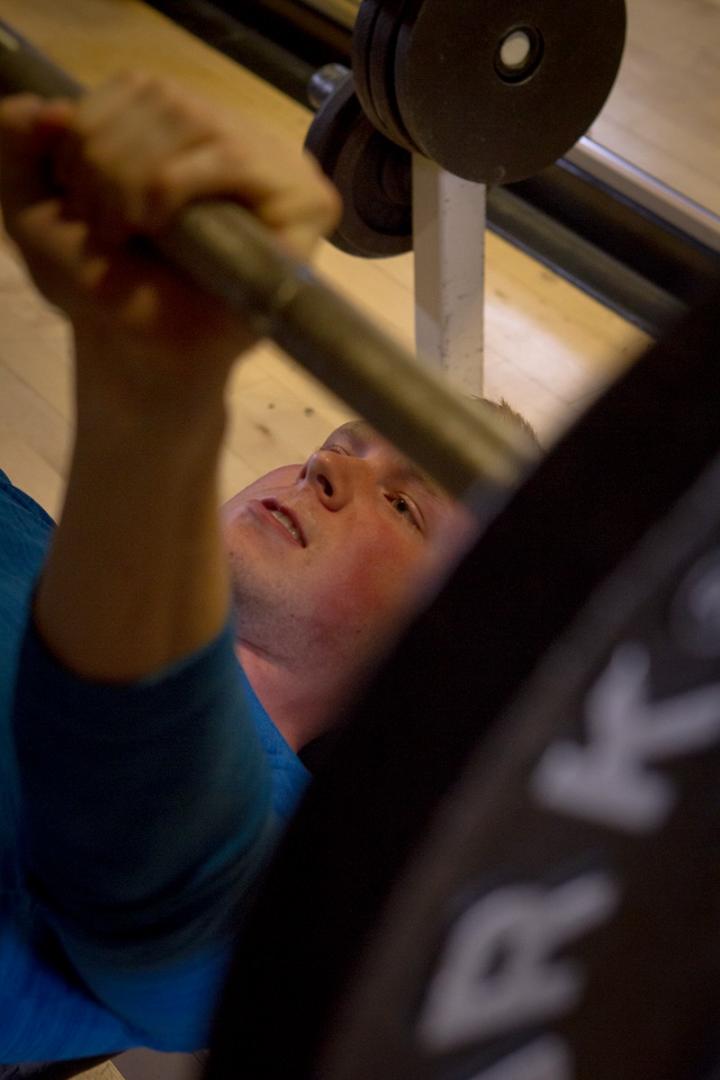
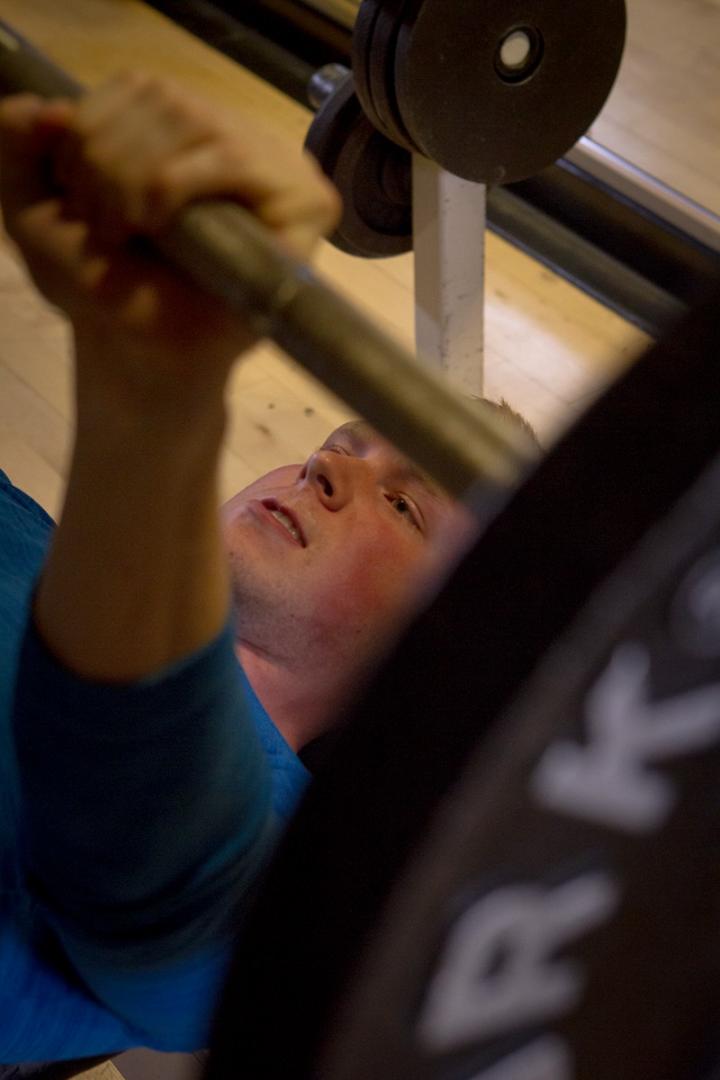
IMAGE

New research from McMaster University is challenging traditional workout wisdom, suggesting that lifting lighter weights many times is as efficient as lifting heavy weights for fewer repetitions.

It is the latest in a series of studies that started in 2010, contradicting the decades-old message that the best way to build muscle is to lift heavy weights.

"Fatigue is the great equalizer here," says Stuart Phillips, senior author on the study and professor in the Department of Kinesiology. "Lift to the point of exhaustion and it doesn't matter whether the weights are heavy or light."

Researchers recruited two groups of men for the study–all of them experienced weight lifters–who followed a 12-week, whole-body protocol. One group lifted lighter weights (up to 50 per cent of maximum strength) for sets ranging from 20 to 25 repetitions. The other group lifted heavier weights (up to 90 per cent of maximum strength) for eight to 12 repetitions. Both groups lifted to the point of failure.

Researchers analyzed muscle and blood samples and found gains in muscle mass and muscle fibre size, a key measure of strength, were virtually identical.

"At the point of fatigue, both groups would have been trying to maximally activate their muscle fibres to generate force," says Phillips, who conducted the work with graduate students and co-authors Rob Morton and Sara Oikawa.

While researchers stress that elite athletes are unlikely to adopt this training regime, it is an effective way to get stronger, put on muscle and generally improve health.

"For the 'mere mortal' who wants to get stronger, we've shown that you can take a break from lifting heavy weights and not compromise any gains," says Phillips. "It's also a new choice which could appeal to the masses and get people to take up something they should be doing for their health."

Another key finding was that none of the strength or muscle growth were related to testosterone or growth hormone, which many believe are responsible for such gains.

"It's a complete falsehood that the short-lived rise in testosterone or growth hormone is a driver of muscle growth," says Morton. "It's just time to end that kind of thinking."

Researchers suggest, however, that more work remains to be done in this area, including what underlying mechanisms are at work and in what populations does this sort of program work.

The findings are published online in the Journal of Applied Physiology.

###

A full copy of the study can be found at http://jap.physiology.org/content/jap/121/1/129.full.pdf

McMaster provides a high definition broadcast studio that can connect with any television broadcaster around the world. To book an interview please contact:

Michelle Donovan
Manager, Media Relations
McMaster University
905-525-9140, ext. 22869
(905) 512-8548 (cell)
[email protected]

Media Contact

Michelle Donovan
[email protected]
905-525-9140
@mcmasteru

Home

Share12Tweet8Share2ShareShareShare2

Related Posts

Do Your Genes Influence How Lifestyle Choices Affect Aging?

Do Your Genes Influence How Lifestyle Choices Affect Aging?

April 1, 2026
Combining Single-Cell Multiomics Unlocks Precise Identification of Rare Cell Types and States

Combining Single-Cell Multiomics Unlocks Precise Identification of Rare Cell Types and States

March 31, 2026

Genetically Engineered Marmosets Pave the Way for Advancements in Human Deafness Research

March 31, 2026

How Great Hammerhead Sharks Outsmart Ocean Temperature Swings: Insights from FIU Researchers

March 31, 2026
Please login to join discussion

POPULAR NEWS

  • blank

    Revolutionary AI Model Enhances Precision in Detecting Food Contamination

    96 shares
    Share 38 Tweet 24
  • Imagine a Social Media Feed That Challenges Your Views Instead of Reinforcing Them

    1006 shares
    Share 398 Tweet 249
  • Promising Outcomes from First Clinical Trials of Gene Regulation in Epilepsy

    51 shares
    Share 20 Tweet 13
  • Popular Anti-Aging Compound Linked to Damage in Corpus Callosum, Study Finds

    43 shares
    Share 17 Tweet 11

About

We bring you the latest biotechnology news from best research centers and universities around the world. Check our website.

Follow us

Recent News

Creating Desktop Particle Accelerators to Open New Frontiers in Scientific Research

Do Your Genes Influence How Lifestyle Choices Affect Aging?

Urban Systems and Traffic: Unequal Two-Way Links

Subscribe to Blog via Email

Enter your email address to subscribe to this blog and receive notifications of new posts by email.

Join 78 other subscribers
  • Contact Us

Bioengineer.org © Copyright 2023 All Rights Reserved.

Welcome Back!

Login to your account below

Forgotten Password?

Retrieve your password

Please enter your username or email address to reset your password.

Log In
No Result
View All Result
  • Homepages
    • Home Page 1
    • Home Page 2
  • News
  • National
  • Business
  • Health
  • Lifestyle
  • Science

Bioengineer.org © Copyright 2023 All Rights Reserved.