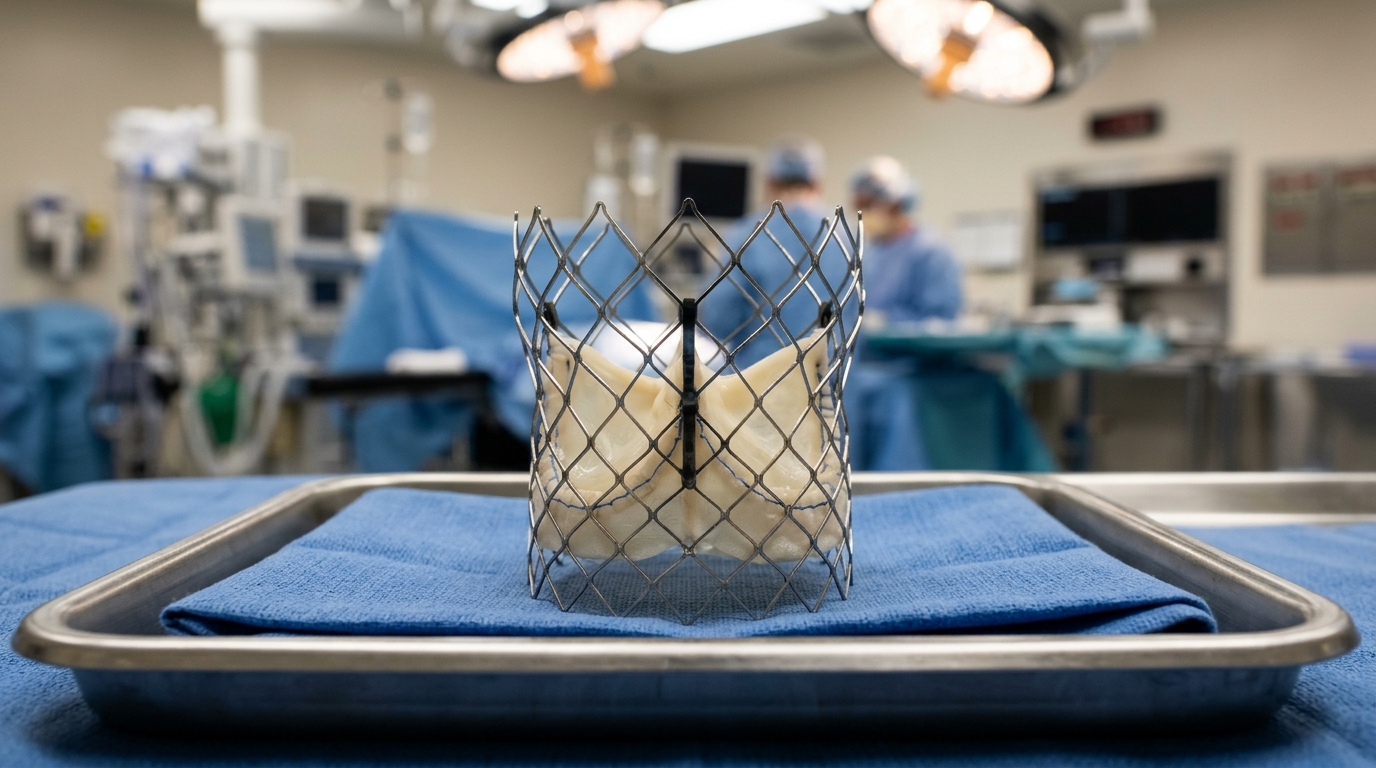
In a preliminary clinical evaluation published in Frontiers in Cardiovascular Medicine, a novel supra-annular sizing method targeting the LIGHT plane achieved complete technical and device success in patients with Sievers type 0 bicuspid aortic valve undergoing transcatheter aortic valve replacement. All eight consecutive patients treated under the protocol achieved successful implantation without procedural mortality, stroke, or structural annular rupture. The findings demonstrate the initial feasibility of an anatomy-driven approach tailored specifically to the complex geometry of type 0 bicuspid valves.
Transcatheter aortic valve replacement, commonly abbreviated as TAVR, has steadily expanded from high-risk surgical candidates to younger and lower-risk patient populations. With this expansion, interventional cardiologists are treating an increasing proportion of individuals with bicuspid aortic valve anatomy rather than standard tricuspid morphology. In patients exhibiting Sievers type 0 bicuspid anatomy, peculiar structural characteristics present major clinical difficulties. Conventional sizing techniques focused on the aortic annulus frequently fail to identify the optimal anchoring and sealing level in these patients, a limitation that has historically contributed to worse clinical outcomes after transcatheter replacement when compared to outcomes observed in tricuspid anatomy.
To address the shortcomings of conventional annular measurements, a research team led by Gianluca Ricchetti, Vittorio Romano, Barbara Bellini, Ciro Vella, Filippo Russo, Marco Bruno Ancona, Luca Angelo Ferri, and Matteo Montorfano at San Raffaele Hospital (IRCCS) in Milan, Italy, developed a supra-annular sizing strategy. Their approach relies on the identification of what the authors designate as the LIGHT plane, an acronym for the Level of Implantation at the neo-hinGe Height in Type 0 BAV. This specific anatomical plane is defined by native leaflet dynamics and is hypothesized by the investigators to represent the level of maximal mechanical interaction between the replacement prosthesis and the native leaflets.
The investigation was conducted as a brief research report examining eight consecutive patients diagnosed with Sievers type 0 bicuspid aortic valve and severe aortic stenosis. Each patient in the consecutive series underwent transcatheter aortic valve replacement utilizing supra-annular self-expanding valves. Rather than selecting valve dimensions based on conventional annular measurements, the interventional team selected prosthesis sizes based on the perimeter measured directly at the LIGHT plane. Clinical, procedural, and in-hospital outcomes were formally evaluated according to standardized Valve Academic Research Consortium-3, or VARC-3, criteria.
Application of the LIGHT plane perimeter measurement led to a change in device selection, resulting in prosthesis downsizing in five of the eight treated patients, representing 62.5 percent of the studied cohort. Despite this downsizing, technical success and device success were both achieved in 100 percent of the cases. Hemodynamic evaluation following the procedure revealed favorable valve performance, with the eight patients demonstrating a median post-procedural transvalvular gradient of 8.0 mmHg, accompanied by an interquartile range spanning from 5.5 to 10.5 mmHg.
Assessment of in-hospital safety endpoints showed no occurrence of patient death, annular rupture, stroke, or major vascular complications among the eight participants. One patient, representing 12.5 percent of the study group, required the implantation of a permanent pacemaker following the intervention. The study authors concluded that supra-annular sizing at the LIGHT plane proved both feasible and safe within this preliminary clinical experience. While the investigators noted that this anatomy-driven methodology may improve transcatheter replacement outcomes in this anatomically challenging patient subset, the findings remain limited by the preliminary nature and small sample size of the initial eight-patient cohort.
Subject of Research: Supra-annular LIGHT plane sizing for transcatheter aortic valve replacement in Sievers type 0 bicuspid aortic valve stenosis
Article Title: Supra-annular sizing method at the LIGHT plane in Sievers type 0 bicuspid aortic valve
Article References: Ricchetti, G., Romano, V., Bellini, B., Vella, C., Russo, F., Ancona, M. B., Ferri, L. A., & Montorfano, M. (2026). Supra-annular sizing method at the LIGHT plane in Sievers type 0 bicuspid aortic valve. Frontiers in Cardiovascular Medicine, 13, 1958439. https://doi.org/10.3389/fcvm.2026.1958439
Image Credits: AI Generated
DOI: 10.3389/fcvm.2026.1958439
Keywords: transcatheter aortic valve replacement, TAVR, bicuspid aortic valve, Sievers type 0, LIGHT plane, supra-annular sizing, aortic stenosis, self-expanding valves, VARC-3 criteria, prosthesis downsizing, device success, transvalvular gradient, permanent pacemaker implantation, paravalvular leak, leaflet dynamics, San Raffaele Hospital
News Source: Ophelia Keating. (November 27, 2026). LIGHT Plane Sizing Achieves Full Success in Preliminary Bicuspid Valve Study. Scienmag.