Published in Results in Chemistry in December 2026, the study by Cong Gao, Xusen Li, Haoying Liu, Yuanyuan Xu, Jingyan Dong, Yuli Zhang, and Shipeng Chen examines how these specific chemical additives facilitate the precise deposition of copper in high-density printed circuit boards, advanced packaging, and through-silicon vias. As the industry moves beyond Moore’s Law, the demand for finer line widths, higher aspect ratios, and three-dimensional stacking has intensified the need for reliable metallization techniques that can prevent structural defects such as voids and seam closures.
Acidic copper sulfate electroplating has become the mainstream technology for electronic interconnections due to its simple composition, high current efficiency, and strong process compatibility. However, the process is inherently susceptible to non-uniform electric field distribution and differential mass transport within vias. These physical imbalances can readily induce defects like “dog-bone” profiles and rough coatings, which severely compromise interconnection reliability and signal transmission performance. To achieve precise deposition control, the system relies on a ternary additive package comprising accelerators, inhibitors, and levelers, each playing a distinct role in the electrochemical process.
Levelers serve as the core functional component for achieving uniform electroplating and bottom-up superfilling in high-aspect-ratio vias. Their essential role lies in position-selective inhibition, which arises from the combined effects of electric field distribution, interfacial adsorption, coordination chemistry, and convective transport. By selectively adsorbing onto high-current-density regions and strong convection zones, levelers achieve a microscopic leveling effect that inhibits protrusions while filling recesses.
The review categorizes levelers into five major types based on their molecular structures and action characteristics: dye-type, quaternary ammonium and phosphonium salts, nitrogen-containing heterocyclic compounds, polymeric levelers, and green levelers. Dye-type levelers, such as Janus Green B and Basic Blue 1, exhibit strong leveling capability and significant cathodic polarization enhancement. However, their practical application is constrained by poor thermal stability and environmental toxicity, leading to a gradual shift toward dye-free alternatives. Structural modifications, such as chlorination of the triphenylmethane scaffold, have been shown to improve adsorption stability and performance within this class.
Quaternary ammonium and quaternary phosphonium salt levelers represent another significant category, characterized by rapid adsorption and strong inhibition capability. These molecules carry positive charges that facilitate electrostatic interactions with the copper surface. For instance, the tributyl(hexyl)phosphonium chloride (TBHP) developed by Song et al. has demonstrated an ultra-high filling rate of 95.5% in micro-vias. Additionally, polyquaternary ammonium salts offer better thermal stability and wider operating concentration windows compared to their monomeric counterparts, making them promising for industrial applications due to their robust adsorption properties.
Nitrogen-containing heterocyclic and tetrazole-type levelers, including imidazole, pyridine, and carbazole derivatives, possess strong adsorption capability due to the lone-pair electrons from nitrogen atoms. These levelers offer high structural tunability, allowing for precise control over deposition behavior. The review highlights that subtle structural differences can significantly alter the filling mode; for example, iodonitrotetrazolium (INT) exhibits strong convection-dependent behavior enabling superfilling, whereas Thiazolyl Blue (MTT) achieves only conformal filling due to excessively strong adsorption. This distinction underscores the sensitivity of electroplating outcomes to molecular design.
Polymeric levelers, such as imidazole-epoxy copolymers (IDEO) and PD-SO₂, feature large molecular dimensions and broad coverage areas. These characteristics provide stable adsorption and good leveling uniformity, making them particularly suitable for through-holes and high-aspect-ratio applications. They are capable of significantly mitigating “dog-bone” defects, with throwing power reaching above 85%. The review also notes the emergence of polyoxyethylene amine ethers, which integrate suppressing functionality with adsorption capability, offering a multifunctional design that simplifies additive formulations and improves process robustness.
Green levelers, represented by succinimide (SM) and weakly polar carbonyl-based molecules, align with the trend of green manufacturing in high-end electronics. These levelers are non-toxic, environmentally friendly, and thermally stable. Although they currently exhibit lower performance compared to traditional dye-based or quaternary salt levelers, they represent an important future development direction. The review emphasizes that the development of environmentally friendly nitrogen-free and dye-free levelers is limited in variety, constraining the clean development of high-end electronic manufacturing.
The structure-performance relationships of levelers are governed by several key structural features, including heteroatom content, conjugation, charge density, and molecular size. Higher heteroatom content generally provides more adsorption sites, but excessively strong adsorption can reduce deposition rates or shift the filling mode from superfilling to conformal deposition. Extended conjugation and aromatic rings facilitate stable adsorption through π–π stacking, while higher positive charge density enhances electric-field responsiveness. However, the actual adsorption distribution depends critically on the concentration of chloride ions and the competing adsorption of other additives, indicating that these relationships are guiding principles rather than absolute rules.
Current challenges in the field include the decomposition of dye-type levelers at high temperatures, the excessive inhibition effects at elevated concentrations, and the scarcity of dedicated levelers for ultra-high aspect ratio structures exceeding 10:1. Mechanistic research is largely based on macroscopic electrochemical characterization, while in situ molecular-level synergistic and competitive interaction mechanisms remain insufficiently elucidated. Furthermore, leveler development still relies primarily on empirical trial-and-error approaches, with limited use of theoretical calculations such as density functional theory and molecular dynamics simulations for targeted molecular design.
Future development trends point toward enhanced stability, environmental friendliness, and high selectivity. Key directions include designing thermally stable molecules for high-temperature electroplating, developing eco-friendly formulations, and strengthening the design of levelers with strong convection dependence. The integration of theoretical calculation methods will enable targeted molecular design and efficient screening, significantly reducing research and development cycles. Ultimately, the goal is to develop dedicated, ultra-low-defect leveler systems for high-end scenarios including Chiplet, advanced packaging substrates, and through-silicon vias, meeting the technical requirements of next-generation high-density and high-reliability interconnections.
This review provides a systematic overview of the action mechanisms, structural classifications, and development trends of levelers in acidic copper electroplating. By synthesizing recent representative studies, the authors offer theoretical support and directional guidance for the development of high-performance levelers. The findings highlight the complexity of interfacial interactions and the need for a deeper understanding of molecular-level mechanisms to advance electronic manufacturing technologies.
The review details how levelers interact with other components in the plating bath, specifically polyethylene glycol (PEG), chloride ions, and accelerators like SPS or MPS. These additives do not function in isolation but engage in complex interfacial interactions that regulate copper deposition. Chloride ions act as ionic bridges, promoting the stable co-adsorption of both PEG and levelers on the copper surface. This synergy constructs a dense, uniform adsorption layer that significantly enhances inhibition at high-current-density regions, such as via openings and panel surfaces. The resulting gradient distribution, characterized by strong inhibition at openings and weak inhibition at bottoms, is the core mechanism for achieving void-free and crack-free uniform electroplating in high-aspect-ratio structures.
Competitive adsorption between levelers and accelerators further refines this control. Levelers and accelerators share active sites on the copper cathode, establishing a dynamic equilibrium. Because levelers often possess stronger adsorption binding energy, they can displace accelerator molecules in high-current regions, attenuating local acceleration effects. This displacement balances the deposition rate difference between the via interior and exterior. The competition is also potential-dependent; leveler adsorption predominates at lower potentials, while accelerators more readily occupy surface sites at higher potentials. This potential-responsive characteristic allows for more precise deposition control throughout the electroplating process.
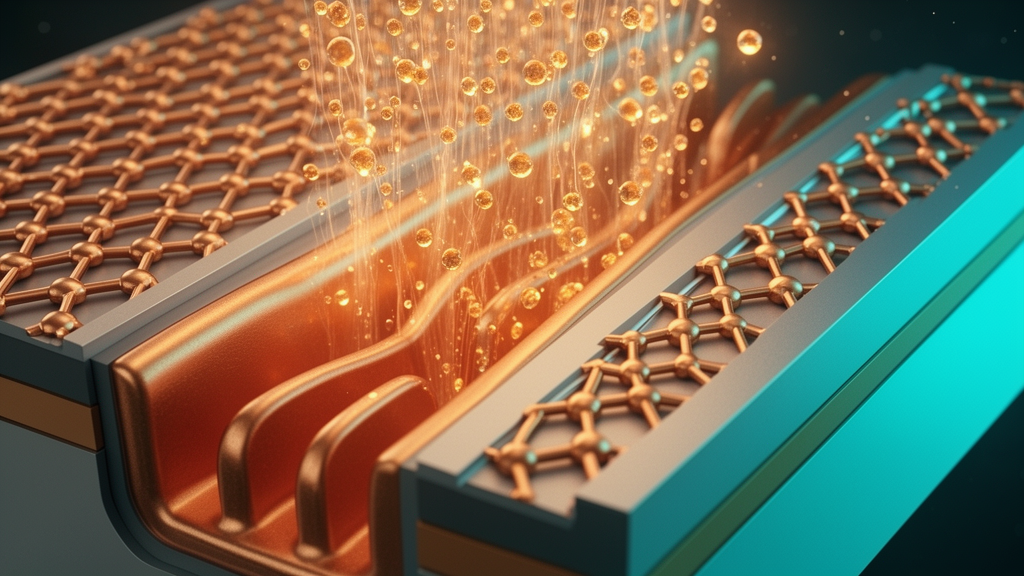
Convection-dependent adsorption is another critical mechanism, particularly within through-holes and micro-vias. Solution convection intensity exhibits a gradient distribution, with strong convection at the via opening and weak convection at the via bottom. Conversely, lower adsorption amounts and weaker inhibition prevail in weak convection zones. This differential inhibition enables bottom-up superfilling, where the deposition rate at the via bottom exceeds that at the via opening. The synergistic interplay between this convection-dependent adsorption and the enrichment of accelerators in concave regions jointly determines the overall superfilling performance.
The review also addresses the degradation of levelers during long-term electroplating, a factor that complicates industrial bath management. Under continuous electrolysis, levelers may undergo cathodic reduction, anodic oxidation, or acid-catalyzed hydrolysis, generating breakdown products. These products often exhibit different adsorption behavior and inhibition strength from the parent molecules. For instance, Janus Green B has been shown to undergo reductive cleavage of its nitrogen-nitrogen bond at the cathode surface, yielding hydrogenated products that can interfere with the adsorption of other additives. These breakdown products may even be incorporated into the growing copper film, degrading deposit quality. The accumulation of such chemically similar compounds makes selective detection difficult, posing a persistent hurdle for automated bath management and maintaining consistent plating quality.
Monitoring these changes in industrial settings remains challenging. Cyclic voltammetric stripping is the most widely used monitoring technique, but it measures the combined electrochemical effect rather than individual concentrations. High-performance liquid chromatography offers additive-specific quantitation and enables direct monitoring of degradation products, yet it is less suited for real-time process control. This gap between analytical capability and industrial demand highlights the need for more advanced monitoring tools. As the industry pushes toward higher aspect ratios and finer features, understanding and managing the stability and degradation of levelers will be essential for ensuring the reliability of next-generation electronic interconnections.
Subject of Research: Mechanisms and classifications of levelers in acidic copper electroplating for electronic interconnections
Article Title: Research progress on levelers in acidic copper electroplating systems
Article References: Gao, C., Li, X., Liu, H., Xu, Y., Dong, J., Zhang, Y., & Chen, S. (2026). Research progress on levelers in acidic copper electroplating systems. Results in Chemistry, 32, Article 104031. https://doi.org/10.1016/j.rechem.2026.104031
Image Credits: AI Generated
DOI: 10.1016/j.rechem.2026.104031
Keywords: acidic copper electroplating, levelers, printed circuit boards, through-silicon vias, electrochemical deposition, advanced packaging, superfilling, molecular adsorption, green chemistry, electronic interconnections, Research, progress
News Source: Bethany Barker. (November 9, 2026). Levelers Enable Defect-Free Copper Filling in Advanced Electronics. Scienmag.