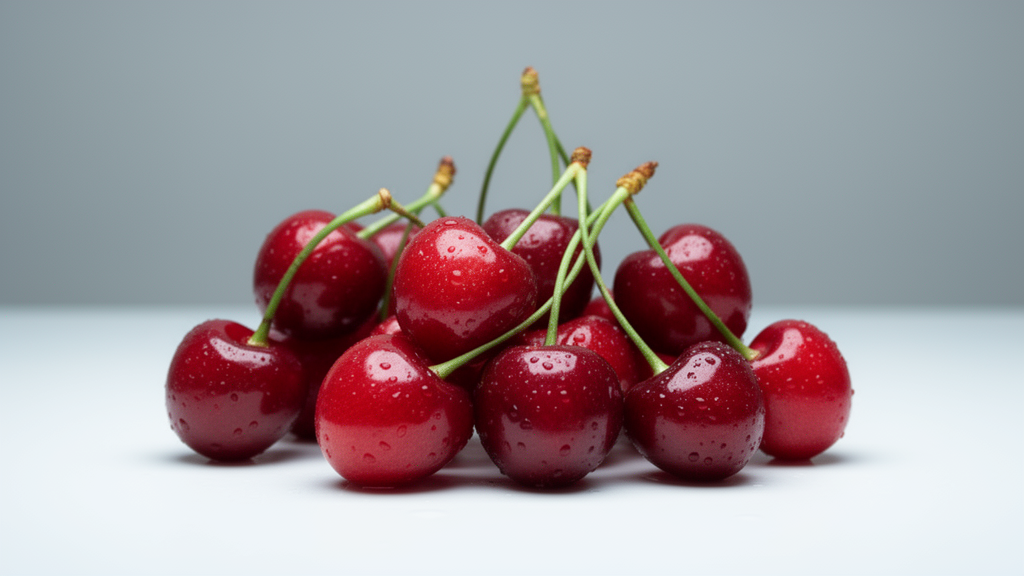
Postharvest illumination using narrow-spectrum light-emitting diodes significantly alters the physiological ripening trajectory of cold-stored dwarf sour cherries, boosting valuable nutrient concentrations while accelerating moisture dissipation, according to research published in Agricultural Products Processing and Storage. A scientific investigation led by Zhuoyu Wang, Andrej Svyantek, and Zachariah Miller evaluated how continuous exposure to specific blue and red light-emitting diode wavelengths modified the postharvest preservation dynamics of the ‘Carmine Jewel’ cultivar over a twenty-four-day holding regime. The researchers discovered that while both blue and red treatments substantially elevated soluble solids, total phenolics, ascorbic acid, and individual anthocyanin compounds relative to conventional dark storage, they also caused an undesirable increase in fruit weight loss and produced divergent effects on tissue firmness. These findings demonstrate that targeted optical radiation actively steers primary and secondary metabolism in harvested tart cherries kept under cold conditions, presenting handlers with a trade-off between nutrient enhancement and physical desiccation that requires precise optimization.
The dwarf sour cherry, botanically classified as a hybrid between Prunus cerasus and the Mongolian ground cherry Prunus fruticosa, was developed at the University of Saskatchewan to unite cold hardiness with compact tree architecture. Reaching less than eight feet in mature height, these short-statured trees yield cherries characterized by high sugar and organic acid contents, offering a balanced profile of semi-sweet and tart flavors suited for both processing and fresh distribution. Fresh sour cherries generally exhibit richer concentrations of phytonutrients, total anthocyanins, and phenolic compounds than standard sweet cherries, but their commercial potential is frequently curtailed by rapid postharvest deterioration. Shelf life is constrained by tissue softening, moisture transpiration, skin dulling, pedicel browning, and postharvest fungal colonization. While sweet cherry postharvest technologies have been widely cataloged—spanning modified atmosphere packaging, chemical treatments, and edible coatings—comparatively few preservation techniques have been verified for cold-hardy dwarf tart cherry cultivars like ‘Carmine Jewel’.
To investigate whether solid-state lighting could maintain fruit quality and stimulate nutrient synthesis during chilled holding, the investigators harvested non-damaged ‘Carmine Jewel’ fruits bearing intact green stems from mature plantings established in 2015 at the Montana State University Western Agricultural Research Center in Corvallis. After manual sorting by size and chromatic uniformity, more than 1,650 representative fruits were transferred to a walk-in cooler operated between zero and four degrees Celsius with relative humidity maintained between 90 and 95 percent. The storage chamber accommodated four isolated regimes: high-intensity blue light, high-intensity red light, and complete darkness serving as the experimental control, with each tier shielded by reflective hydroponic poly film. The blue fixtures supplied a peak emission of 475 nanometers at a fluence rate of 14 watts per square meter, equivalent to approximately 29.4 micromoles per square meter per second, matching the red fixtures, which emitted a peak wavelength of 650 nanometers at the identical fluence rate.
The researchers sampled batches on days 1, 3, 6, 12, 18, and 24 to monitor structural, chromatic, physicochemical, and microbiological transitions across storage. Physical fruit mass tracking revealed that both red and blue treatments substantially accelerated moisture dissipation compared to dark holding. Over the twenty-four days of evaluation, control fruit in darkness exhibited a modest total mass reduction of approximately 2.5 percent, whereas red and blue exposures drove cumulative weight loss up to between 7 and 9 percent. Within the initial twelve days, LED-treated cherries consistently registered elevated weight loss over the dark control, and by day twenty-four, fruits maintained under red illumination exhibited significantly greater weight loss than those stored under blue light. The authors noted that this accelerated desiccation likely stems from light-mediated stomatal opening, elevated cellular respiration consuming internal substrates, and slight thermal shifts within the immediate fruit microenvironment, underscoring that unregulated photoradiation poses distinct packaging challenges for commercial distribution.
Cherries preserved in total darkness underwent an initial apparent increase in measured firmness from 160 to 190 grams per millimeter by day twelve, an artifact typical of moisture transpiration and superficial tissue contraction observed in other soft fruits such as blueberries. Following this temporary elevation, dark-stored fruits experienced cellular softening, dropping back below 160 grams per millimeter by day twenty-four for a total swing of 25 grams per millimeter. In contrast, blue illumination moderated texture swings, limiting overall firmness variation to approximately 10 grams per millimeter throughout the entire trial. Red light, however, exerted a detrimental impact toward the conclusion of storage, driving cherry firmness significantly below that of the control on day twenty-four, possibly through ethylene stimulation or heat-accelerated cell wall dissolution.
Visual appearance and skin pigmentation also responded distinctly to specific spectra when assessed with a tristimulus colorimeter measuring standardized chromatic coordinates across the cheek of each fruit. Fruit surface lightness, captured by the L-star metric on a scale from zero to one hundred, dropped abruptly across all experimental lots during the first four days of storage, contracting from 27.5 down to 24.5 as the cherries darkened. Blue-illuminated cherries maintained higher lightness values than control fruits across storage, achieving a statistically significant divergence on day eighteen. Concurrently, red illumination exerted a pronounced effect on the red-green a-star coordinate, generating significantly elevated values on days eighteen and twenty-four that produced a brighter, visibly redder exterior compared to blue and dark treatments. The yellow-blue b-star metric steadily declined across every treatment during storage, illustrating an overarching darkening of fruit tissue consistent with advancing postharvest physiological ripeness.
Evaluation of pressed cherry juice demonstrated notable shifts in soluble solids, organic acid retention, and juice pH during cold residence. Total soluble solid content climbed across every storage condition, but both illuminated treatments accelerated initial sugar accumulation on days three and six relative to dark storage. By day twenty-four, soluble solids reached their peak under blue illumination, exceeding the dark control by 0.5 to 1.5 degrees Brix, while red-lit cherries also retained higher soluble solids than unlit counterparts. Juice pH varied minimally throughout the study within a narrow band of 0.15 units, yet LED-exposed fruits maintained slightly lower average pH values between day six and day twenty-four. Although total titratable acidity, measured as malic acid equivalents, declined by approximately 0.3 percent overall across twenty-four days, LED treatments better preserved organic acids, averaging 2.8 percent compared to 2.4 percent under darkness, reflecting an uncoupled metabolic shift where sugar accumulation outpaced acid depletion.
Microbiological evaluation revealed that narrow-band optical treatments did not alter surface microbial dynamics relative to the unilluminated control under chilled conditions. Initial mold and yeast populations stood at approximately 9.0 log colony-forming units per gram and expanded to 10.5 log colony-forming units per gram by day twenty-four under darkness, with red and blue regimes exhibiting statistically indistinguishable growth increments exceeding 1.5 log units. Despite this measurable microbial proliferation over three weeks at high relative humidity, no physical fruit decay, mold sporulation, or off-flavor generation occurred in any treatment group. While prior scientific literature has documented blue light suppression of Botrytis cinerea in tomatoes and strawberries, the low storage temperature of zero to four degrees Celsius appears to have stabilized microbial activity sufficiently to prevent visible pathology without requiring optical sanitization, demonstrating that high humidity storage can succeed without relying on LED antimicrobial suppression to preserve marketable condition.
The most dramatic responses to LED exposure occurred within secondary metabolic pathways responsible for synthesizing beneficial phenolic and anthocyanin phytonutrients. Spectrophotometric assays indicated that both red and blue regimes triggered marked accumulations of total phenolics, whereas cherries stored in darkness exhibited no significant phenolic increases throughout holding. Blue wavelengths induced rapid early phenolic biosynthesis, with concentrations surpassing 875 micrograms of gallic acid equivalents per milliliter by day six, while red wavelengths stimulated an equivalent phenolic surge by day twenty-four. Total anthocyanin content likewise rose steadily under both spectra, increasing from 21 milligrams per liter up to more than 26 milligrams per liter between days twelve and twenty-four, delivering more than 8 milligrams per liter of additional anthocyanins relative to dark holding. Targeted chromatographic mass spectrometry verified that red light significantly boosted the dominant pigment cyanidin-3-glucosylrutinoside to 195.23 milligrams per liter, while also substantially elevating cyanidin-3-rutinoside, cyanidin-3-glucoside, and cyanidin-3-sophoroside.
Ascorbic acid concentrations in red-illuminated cherries increased across holding, reaching an average of 40 micrograms per milliliter on day twenty-four, which surpassed the dark control by 1 to 20 micrograms per milliliter. In antioxidant evaluations, red illumination boosted radical scavenging to 413.80 Trolox equivalent antioxidant capacity millimoles per milligram in DPPH assays and 190.28 millimoles per liter of ferrous equivalents in FRAP testing. Multivariate principal component analysis revealed that storage duration, weight loss, mold counts, pH, and chromatic coordinates accounted for the majority of observational variance, while berry firmness contributed the least. The close correlation between fruit mass loss and anthocyanin density indicates that physical dehydration partially concentrated bioactive solutes. Consequently, while solid-state lighting significantly enriches the nutritional value and cosmetic redness of ‘Carmine Jewel’ tart cherries, future commercial adoption requires fine-tuning radiation fluence and duration to minimize commercial mass loss.
Subject of Research: Effects of LED postharvest illumination on dwarf sour cherry quality
Article Title: Light-emitting diodes (LEDs) effect on the quality of ‘Carmine Jewel’ cherries during postharvest storage
Article References: Wang, Z., Svyantek, A., & Miller, Z. (2026). Light-emitting diodes (LEDs) effect on the quality of ‘Carmine Jewel’ cherries during postharvest storage. Agricultural Products Processing and Storage, 2(1), Article 21. https://doi.org/10.1007/s44462-025-00046-0
Image Credits: AI Generated
DOI: 10.1007/s44462-025-00046-0
Keywords: sour cherries, postharvest storage, light-emitting diodes, anthocyanins, ascorbic acid, Carmine Jewel, fruit quality, antioxidant capacity, Light-emitting, diodes, LEDs, effect
News Source: Alan Morgan. (November 10, 2026). LED Lights Boost Nutrients but Accelerate Moisture Loss in Cold-Stored Cherries. Scienmag.