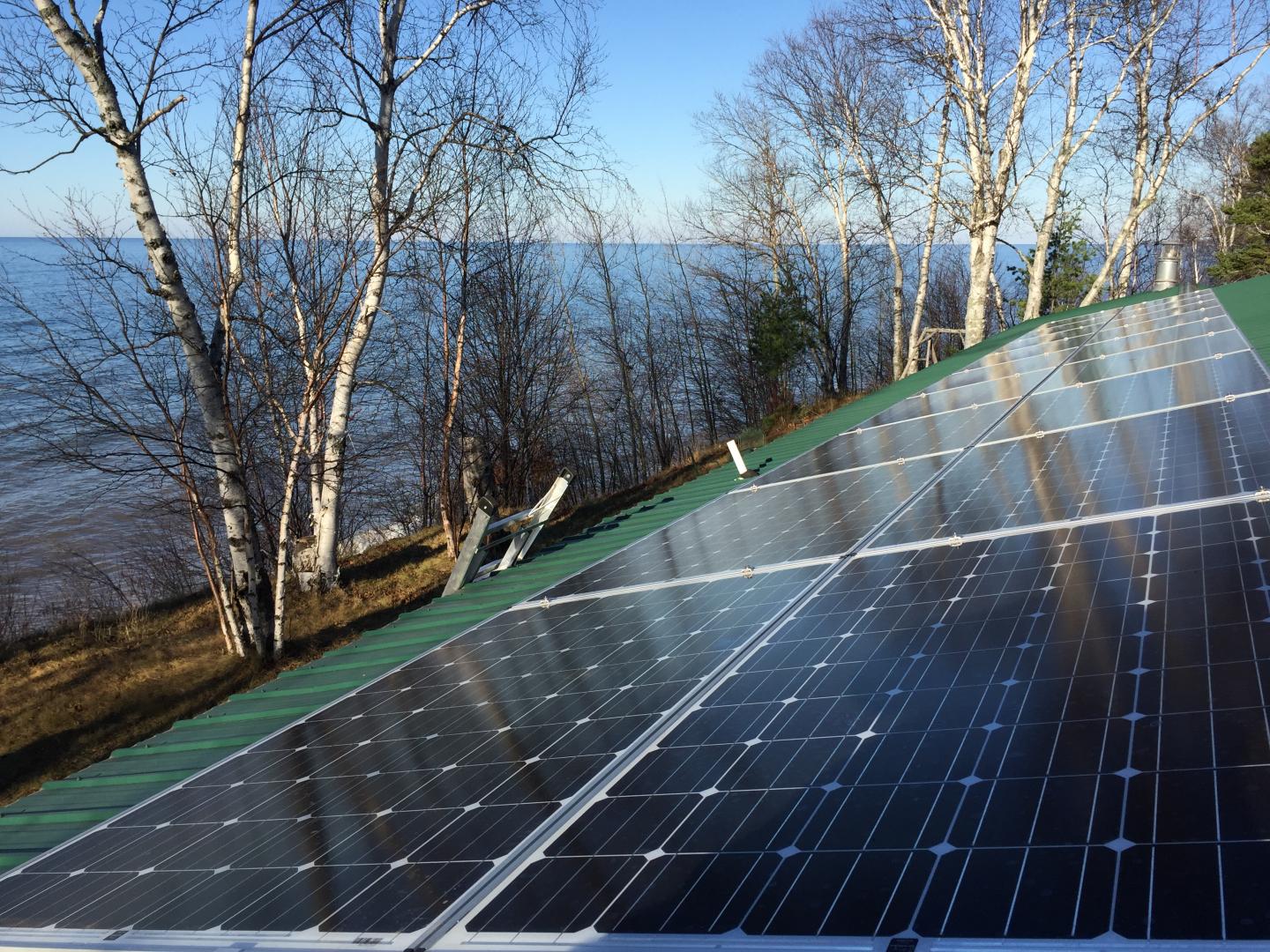
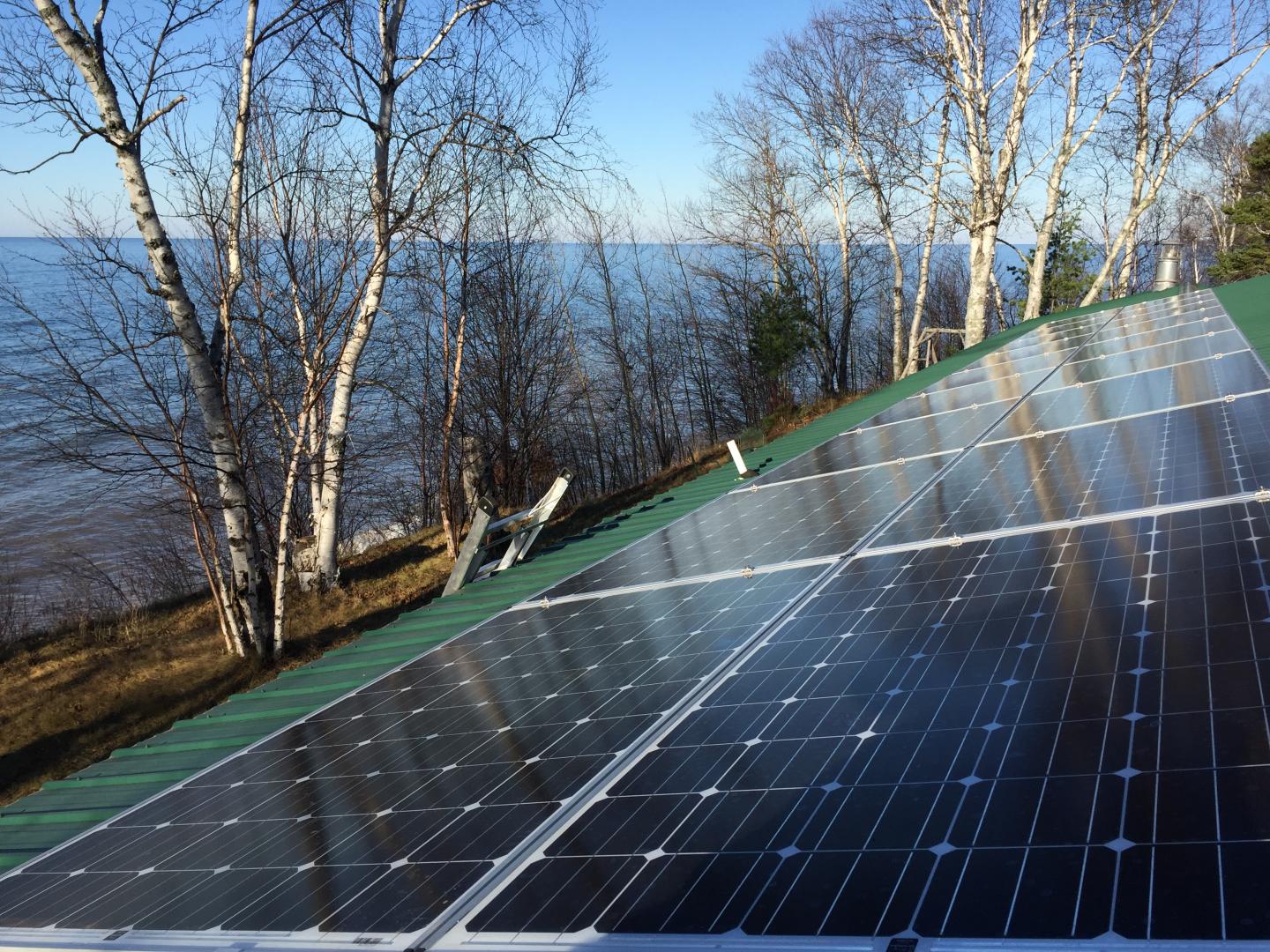
Known for snow rather than sun, Michigan's Upper Peninsula could still support a significant network of solar photovoltaic (PV) energy systems. Solar energy alone in the region is seasonally restricted. However, solar coupled with cogeneration and batteries could overcome any cloudy, cold winter day.
Michigan Tech engineers and sociologists explored what this new technology, and the role of demographics, could mean for energy alternatives in the Upper Peninsula in a new study published in Energy Policy. Their analysis found that by 2020, leaving the electrical grid is a viable economic option for the majority of seasonal households (92 percent) as well as single-family owner-occupied households (65 percent).
Cogeneration systems are small-scale combined heat and power (CHP) systems, which usually run on natural gas and produce heat as they generate electricity. They can function year-round and are most effective in the winter when solar production is low. Along with improved battery storage, these hybrid systems would not require being tied into the electrical grid. The costs of CHP systems are coming down and are projected to keep decreasing.
"The costs of centralized energy distribution, on the other hand, are going to be higher than they are today," says Joshua Pearce, an associate professor of electrical and computer engineering as well as materials science and engineering at Michigan Tech. He co-authored the study looking at the economics behind solar-hybrid systems.
"With these new technologies," Pearce says, "you can put the CHP in your basement, the battery bank in your garage, and solar on your roof–this could actually work for regular people."
Richelle Winkler, an associate professor of sociology and demography at Michigan Tech, led the demographic analysis. She used utility data on electric rates, data from the 2010 census and income estimates from the American Community Survey. In general, utility rates across the Upper Peninsula vary between average to some of the highest in the nation. Winkler also looked at the number and size of households in each utility service area in the Upper Peninsula along with how many homes are seasonal and year-round residences.
Together, the data enabled the team to make several estimates. First, they calculated the electricity demand by household size and type. Second, they compared costs of conventional grid electricity to an off-grid solar-hybrid system. Finally, they assessed how many households could afford to invest in a solar-hybrid system.
"It is the people living with the highest rates for whom it is economically viable to get off the grid very soon," Winkler says. "The study shows that even here in the Upper Peninsula, where solar is not as productive as other regions and with a high proportion of relatively low income people, it is starting to be economically viable to get off the grid using a solar-hybrid system."
To Pearce, the Upper Peninsula is an extreme example of potential grid defection, but represents a challenge for utilities across the country trying to figure out how to incorporate distributed energy production. Besides the potential for CHP on a home-scale, there are also neighborhood, community and municipal models being proposed.
"For everyone else in America, the Upper Peninsula's situation indicates that distributed energy is in play and it's up to the utilities," Pearce says, explaining that if utilities prevent grid-tied solar with rate manipulation, then customers could simply leave the grid. "Solar hybrid systems are a very different way to operate–it's literally giving power to the people."
###
Media Contact
Joshua Pearce
[email protected]
906-487-1466
@michigantech
http://www.mtu.edu