The exploration of non-pharmaceutical interventions for mental health issues has gained traction in recent years, particularly in populations burdened by chronic illnesses like Parkinson’s disease. A novel study, poised to be published in BMC Complementary Medicine and Therapies, adds to this growing body of literature by examining the effects of laughter yoga on anxiety and depression among patients with Parkinson’s disease. The researchers, led by Xu et al., embarked on a rigorous randomized controlled trial to investigate this innovative therapy.
Parkinson’s disease is a progressive neurodegenerative disorder that not only affects motor skills but also has significant psychological ramifications. Patients often grapple with heightened levels of anxiety and depression, factors that can severely diminish their quality of life. Traditional treatment strategies primarily focus on medication and physical therapies, but these approaches do not always address the psychosocial dimensions of the disease. This is where complementary therapies like laughter yoga come into play, providing a holistic avenue for symptom management.
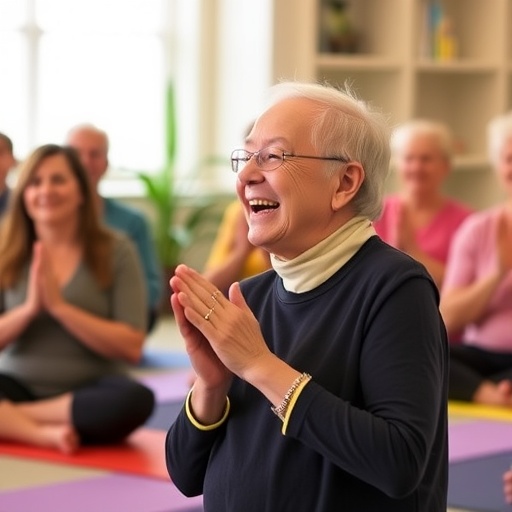
Laughter yoga, a technique combining voluntary laughter exercises with yoga breathing practices, promotes joyfulness while engaging both mind and body. Through laughter, participants may experience reductions in stress hormones, which can play a crucial role in alleviating symptoms of anxiety and depression. Furthermore, laughter is known to stimulate the production of endorphins—our body’s natural feel-good chemicals—leading to improved mood levels. This study endeavors to investigate these underlying mechanisms in the context of Parkinson’s disease.
The randomized controlled trial methodology employed by Xu and colleagues adds rigor to their findings. Participants were randomly assigned to either a laughter yoga group or a control group receiving standard care. Each laughter yoga session consisted of guided laughter exercises coupled with deep breathing, fostering an environment that encouraged laughter as a form of self-expression and emotional release. The trial ran for a specified duration—sufficient to observe potential changes in psychological well-being.
In assessing the results, the researchers utilized validated scales that measure levels of anxiety and depression. These scales not only provide a quantitative framework for understanding participant experiences but also rigorously track changes over time. Such comprehensive data collection is essential for evaluating the efficacy of laughter yoga in altering the psychological landscape of those living with Parkinson’s disease.
Initial findings from the study are promising. Participants in the laughter yoga group reported significant reductions in both anxiety and depression scores compared to their counterparts in the control group. The emotional benefits experienced by these individuals highlight the interplay between physical exercises, social interaction, and mental health. Laughter yoga facilitated a communal atmosphere where participants could bond over shared experiences, further enhancing the therapeutic effect of the intervention.
Moreover, the physiological benefits associated with laughter cannot be overlooked. Engaging in laughter yoga not only promotes cardiovascular health through increased heart rate but also elicits relaxation responses in the body that counteract the adverse physiological impacts of stress. This bi-directional relationship between physical well-being and mental health underscores the multifaceted benefits of laughter yoga, particularly for individuals coping with chronic health conditions.
The implications of this study extend beyond mere statistical significance; they resonate within clinical practice and patient care frameworks. By integrating laughter yoga into existing treatment plans, healthcare professionals could enhance the quality of life for patients battling the psychological ramifications of Parkinson’s disease. Moreover, this study sets a precedent for future research, inviting further exploration into laughter yoga as a therapeutic modality for other chronic disorders characterized by high anxiety and depression rates.
While excitement surrounds the findings, it is crucial to approach them with caution. As with many alternative therapies, there exists a spectrum of individual responses to laughter yoga. Future investigations should aim to identify factors that may influence these responses, such as the severity of Parkinson’s symptoms, age, or pre-existing mental health conditions. These nuances can inform personalized treatment approaches, ultimately leading to more effective interventions tailored to individual patient needs.
In conclusion, the research led by Xu et al. signals a pivotal step forward in understanding the mental health landscapes of patients with Parkinson’s disease. As laughter yoga emerges as a viable complementary therapy, it opens doors to holistic care practices that recognize the importance of psychological well-being alongside physical health. The study not only contributes to the academic discourse surrounding innovative therapies but also inspires hope for patients seeking relief in non-traditional ways.
As the world increasingly acknowledges the link between laughter, health, and happiness, the outcomes of this randomized controlled trial serve as a reminder of the power of laughter in fostering resilience. As healthcare continues to evolve, embracing laughter as a form of therapy may well reshape our approach to mental health management in chronic illness, illuminating new paths toward holistic healing.
With laughter yoga poised to gain wider acceptance, we may be on the brink of a transformative shift in the manner we address mental health issues in chronic disease populations, particularly Parkinson’s disease. As more practitioners begin to harness the therapeutic benefits of laughter, the overarching goal remains clear: enhancing the quality of life for those navigating the complexities of chronic illness, one laugh at a time.
Research on laughter yoga positioned within clinical contexts may ultimately bolster a wider acceptance of mind-body therapies in traditional medical care. In a world where mental health challenges are rampant, incorporating such interventions could provide patients with the tools they need to thrive both mentally and emotionally. As laughter emerges as an ally against anxiety and depression, the journey towards mental wellness for individuals with Parkinson’s disease takes on a new tone marked by hope, community, and resilience.
As we await the formal publication of this pivotal study in BMC Complementary Medicine and Therapies, the discourse surrounding laughter as a therapeutic avenue surely ignites further inquiry into similar holistic practices that could benefit countless individuals wrestling with the complexities of mental health in chronic illness landscapes.
Subject of Research: The effects of laughter yoga on anxiety and depression in individuals with Parkinson’s disease.
Article Title: Effect of laughter yoga on anxiety and depression in people with Parkinson’s disease: a randomized controlled trial.
Article References:
Xu, Q., Nian, X., Pan, Y. et al. Effect of laughter yoga on anxiety and depression in people with Parkinson’s disease: a randomized controlled trial. BMC Complement Med Ther (2025). https://doi.org/10.1186/s12906-025-05225-x
Image Credits: AI Generated
DOI:
Keywords: Parkinson’s disease, laughter yoga, mental health, anxiety, depression, randomized controlled trial, holistic therapy.
Tags: anxiety and depression in chronic illnessbenefits of laughter yoga therapycomplementary therapies for Parkinson’s diseaseholistic approaches to anxiety managementimpact of laughter on mental healthimproving quality of life through laughterinnovative therapies for Parkinson’s carelaughter yoga for Parkinson’s patientsnon-pharmaceutical interventions for mental healthpsychological effects of Parkinson’s diseaserandomized controlled trial on laughter yogastress reduction techniques for neurodegenerative disorders