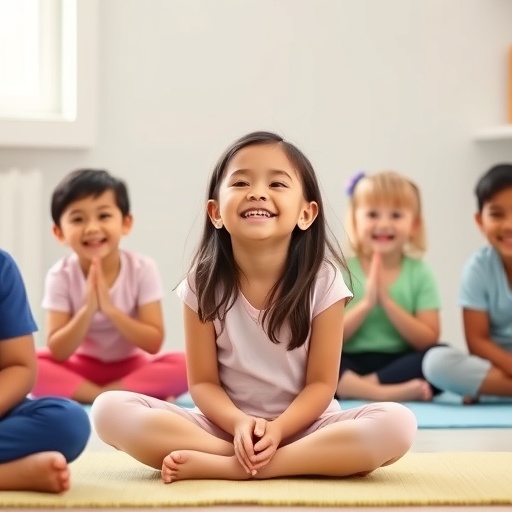
Laughter, often considered the best medicine, has an intriguing new frontier in pediatric health through laughter yoga. This therapeutic blend of laughter and traditional yoga exercises has garnered growing attention for its potential to enhance emotional and physical well-being in children. Recent research, spearheaded by a team of experts, sheds light on the efficacy and broader implications of laughter yoga, offering promising insights into its role as a beneficial intervention in pediatric healthcare.
The study, a systematic review conducted by Dur, Erkin, and Çetin, delves into existing literature on laughter yoga, emphasizing its unique capacity to induce laughter as an essential component of emotional healing. Traditional pediatric healthcare often focuses on medication and medical procedures, yet these approaches may overlook the gentle power of humor and laughter in facilitating recovery. The authors advocate for an integrated approach that seamlessly incorporates laughter as a means to alleviate various pediatric ailments, both psychological and physical.
Laughter yoga, a practice developed by Dr. Madan Kataria in 1995, combines laughter exercises with yogic breathing techniques. The synthesis of these activities creates an uplifting environment, fostering connection and community among participants. Studies indicate that even simulated laughter can evoke genuine feelings of joy, triggering the release of endorphins—the body’s natural painkillers. This biological response could prove beneficial, especially in pediatric populations that often experience anxiety due to hospital stays or medical interventions.
A salient outcome of laughter yoga, noted in the review, is its impact on stress reduction. Children undergoing medical treatments frequently experience heightened levels of anxiety and fear. By integrating laughter yoga into their care protocols, healthcare providers can potentially alleviate these emotional burdens, creating a more positive healthcare experience. The systematic review presents numerous cases where laughter yoga has significantly reduced stress levels in pediatric patients, fostering a conducive environment for healing.
Moreover, the social aspect of laughter yoga cannot be overlooked. Children often thrive in communal settings, engaging with peers to share experiences and emotional support. Laughter yoga sessions typically involve groups, enhancing social interactions and fostering camaraderie among participants. This collective experience not only amplifies the joy derived from laughter but also promotes a sense of belonging—an essential aspect of emotional health in children.
The research outlined in the systematic review also underscores the physiological benefits associated with laughter yoga. Engaging in laughter exercises has been shown to improve respiratory function, increase oxygenation in the body, and elevate overall energy levels. For children with chronic illnesses or those recovering from surgery, these physiological benefits can be invaluable, as they contribute to improved healing and recovery rates. The synergistic effect of laughter with traditional medical treatments can lead to a holistic boost in health outcomes.
Additionally, laughter yoga offers a creative outlet for children, encouraging imaginative play and expression. This is particularly relevant in pediatric settings where standardized forms of therapy may not resonate with younger patients. Laughter yoga allows children to engage in an enjoyable activity, reducing the stigma associated with traditional therapies. By facilitating joy and playfulness, laughter yoga can make therapeutic experiences less daunting for children, encouraging greater participation and adherence.
Interestingly, laughter yoga also demonstrates promise in addressing chronic pain management in pediatric populations. The systematic review explores cases where laughter yoga reduced the perception of pain in children suffering from conditions such as juvenile arthritis. The distraction provided by laughter, coupled with its physiological effects, may pave the way for innovative treatments in pain management, challenging conventional paradigms that rely heavily on pharmacological solutions.
Furthermore, the implications of laughter yoga extend beyond individual therapeutic benefits. For pediatric healthcare providers, incorporating laughter as a formal component of treatment protocols can enhance hospital environments. A cheerful, welcoming atmosphere bolstered by laughter may significantly improve interactions between healthcare staff and young patients, fostering empathy and understanding. The adoption of laughter yoga could thus serve as a transformative shift in the pediatric healthcare landscape, elevating patient experiences.
Culturally, laughter yoga presents an interesting convergence of health and wellness perspectives. In many cultures, laughter has been intimately connected to social bonds and traditional healing practices. By integrating these cultural nuances into modern Western healthcare settings, practitioners can embrace holistic approaches that respect diverse backgrounds while promoting effective healing practices. The study encourages healthcare professionals to adopt strategies that resonate with the holistic healing traditions present in their communities.
The review also highlights the need for further research into the long-term effects of laughter yoga in pediatric health. Although current findings are promising, there remains a gap in understanding how sustained engagement with laughter yoga can consistently influence health trajectories over time. Future studies should aim to elucidate these relationships, possibly leading to standardized laughter yoga programs tailored for pediatric healthcare facilities.
In summary, the systematic review by Dur, Erkin, and Çetin offers a compelling case for the integration of laughter yoga into pediatric healthcare. With its multifaceted benefits—spanning psychological, physiological, and social dimensions—laughter yoga stands out as an innovative approach to holistic healing. By embracing laughter as a therapeutic tool, healthcare providers can enhance the well-being of young patients, fostering resilience and joy amid the challenges of illness. As the healthcare community increasingly recognizes the importance of mental health and emotional support, laughter yoga serves as an invaluable resource in creating a nurturing, healing environment for children.
Subject of Research: The efficacy of laughter yoga in pediatric health.
Article Title: Healing with laughter: the therapeutic power of laughter yoga in pediatric health – a systematic review.
Article References:
Dur, Ş., Erkin, Ö. & Çetin, R.C. Healing with laughter: the therapeutic power of laughter yoga in pediatric health – a systematic review.BMC Pediatr 26, 2 (2026). https://doi.org/10.1186/s12887-025-06151-0
Image Credits: AI Generated
DOI: https://doi.org/10.1186/s12887-025-06151-0
Keywords: Laughter yoga, pediatric health, stress reduction, holistic healing, pain management, emotional well-being.
Tags: community building through laughterDr. Madan Kataria laughter yogaemotional healing through laughterenhancing child well-being with laughterintegrating laughter into healthcarelaughter as medicine for kidslaughter exercises for emotional healthlaughter yoga benefits for childrenpediatric health interventionspsychological benefits of laughtersystematic review on laughter yogatherapeutic yoga for children