


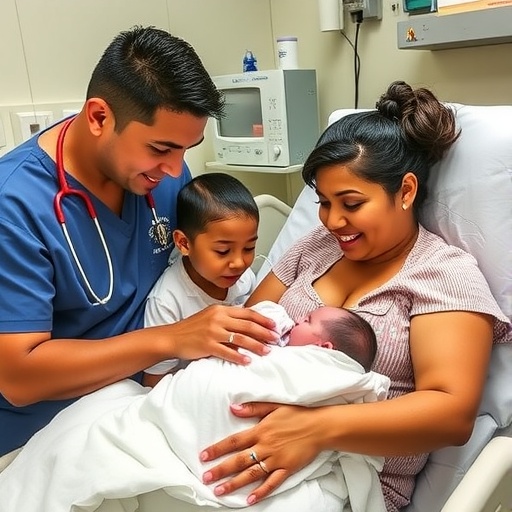
In recent years, the healthcare system has placed a significant focus on understanding the experiences of diverse cultural groups. One such demographic that has been underrepresented in this research is Latino families, particularly those with newborns in Neonatal Intensive Care Units (NICUs). A groundbreaking study led by researchers Ondusko, Underwood Carrasco, and Platteau aims to illuminate the nuanced experiences of Latino families navigating the complexities of neonatal care. Their work, published in BMC Health Services Research, comes at a crucial time as healthcare providers seek to become more culturally competent and sensitive to the needs of their patients.
The study engages with a poignant topic that resonates not only with healthcare professionals but also with policymakers and community organizations. Latino families often face barriers related to language, cultural perceptions of healthcare, and socioeconomic disparities. The dynamics of these barriers are explored in depth within the context of NICUs, where families experience high stress and vulnerability. The researchers employed qualitative methodologies to gather firsthand accounts, emphasizing the importance of personal narratives in understanding the multifaceted challenges faced by these families.
In their research, the authors aimed to shed light on how language barriers can create additional layers of stress for Latino families. Many families reported struggles with communication, citing a lack of bilingual healthcare providers and translated materials. This challenge exacerbates the emotional distress experienced during a critical time in their newborn’s life. The lack of effective communication not only affects clinical outcomes but can also diminish the family’s ability to participate in decisions regarding their child’s care. The researchers argue that addressing these barriers is not merely a logistical issue but a moral imperative to provide equitable healthcare.
Additionally, cultural perceptions surrounding healthcare play a significant role in how families interact with NICU staff. Latino families often come from backgrounds where familial involvement in decision-making is paramount. Thus, the researchers found that when healthcare providers did not actively include family members in treatment discussions, it led to feelings of alienation and frustration. The study highlights the crucial need for healthcare professionals to foster an inclusive environment that considers these cultural values as part of patient care practices.
Moreover, the intersectionality of socio-economic status with healthcare access cannot be overlooked. Families with limited financial resources often face hurdles that extend beyond the walls of the hospital. The study’s findings indicate that economic instability can prevent families from adequately supporting their newborns in the NICU. Travelling long distances for care, missing work, and affording necessary accommodations are just a few of the financial burdens that may significantly impact these families’ experiences in the NICU.
Throughout their analysis, the researchers provided valuable insights into how the emotional landscape of these families is formed by both their immediate circumstances and broader cultural factors. Feelings of anxiety, helplessness, and frustration were common themes among the interviews conducted. As the families navigated through this challenging period, the importance of emotional support became increasingly evident. The study advocates for mental health resources and support systems tailored specifically for Latino families in NICUs to help alleviate some of the emotional burdens they face.
The resilience exhibited by these families emerged as another significant finding of the research. Despite facing numerous challenges, many interviewees spoke about their determination and hope. This resilience often stemmed from strong family ties, faith, and community support. The researchers assert that healthcare professionals can leverage these strengths by involving family members and community resources in developing care plans, thus fostering a holistic approach to treatment.
Interprofessional collaboration was highlighted as a key element in enhancing care experiences for Latino families. The study found that when teams composed of diverse medical professionals work together, they can create a more supportive and understanding environment for these families. Nurses, social workers, and physicians must align their goals to ensure that patient-centered care is not just a buzzword but a tangible reality in NICUs.
Understanding the unique experiences of Latino families also has implications for training programs within healthcare institutions. The authors strongly recommend that medical education curricula include modules focused on cultural competence and sensitivity. By equipping future healthcare providers with the knowledge and skills necessary to understand and cater to diverse backgrounds, the system can begin to address systemic inequities that persist within healthcare delivery.
Ultimately, this research presents a call to action for healthcare institutions to reassess their practices and policies. The voices of Latino families must be integrated into the redesign of NICU protocols and support frameworks to ensure they are truly reflective of and responsive to the needs of diverse patient populations. The authors hope that their findings will spark conversations leading to meaningful changes, enhancing the quality of care and patient experience for Latino families.
In summary, the exploration of Latino families’ experiences in NICUs illuminates a pressing need for culturally informed healthcare practices. By recognizing and addressing the multi-layered challenges faced by these families—ranging from language barriers to economic disparities and emotional distress—healthcare providers can make strides towards more equitable care. The study’s implications extend far beyond the NICU, highlighting the necessity of inclusive practices that honor the cultural contexts of all patients.
Such dedicated research underscores the importance of listening to patient narratives as a foundational component of healthcare improvement. It is not merely about treating a condition; it is about treating individuals within the complex social and cultural landscapes they navigate. As this critical area of research continues to evolve, one can hope that it will foster systemic changes that benefit families everywhere, enabling them to receive compassionate, culturally congruent care when it matters most.
Subject of Research: Experiences of Latino families in neonatal intensive care units
Article Title: The explored experiences of Latino families in the neonatal intensive care unit.
Article References: Ondusko, D.S., Underwood Carrasco, V.I., Platteau, A. et al. The explored experiences of Latino families in the neonatal intensive care unit. BMC Health Serv Res (2026). https://doi.org/10.1186/s12913-025-13947-4
Image Credits: AI Generated
DOI:
Keywords: Latino families, Neonatal Intensive Care Units, cultural competence, healthcare disparities, emotional support.
Tags: barriers to healthcare access for minoritiescommunity support for NICU familiescultural competence in healthcarelanguage barriers in medical settingsLatino families in neonatal intensive careneonatal care challenges for Latino familiespersonal narratives in healthcare experiencespolicymaking for diverse family needsqualitative research in NICUssocioeconomic disparities in neonatal carestress and vulnerability in neonatal unitsunderstanding cultural perceptions of healthcare



