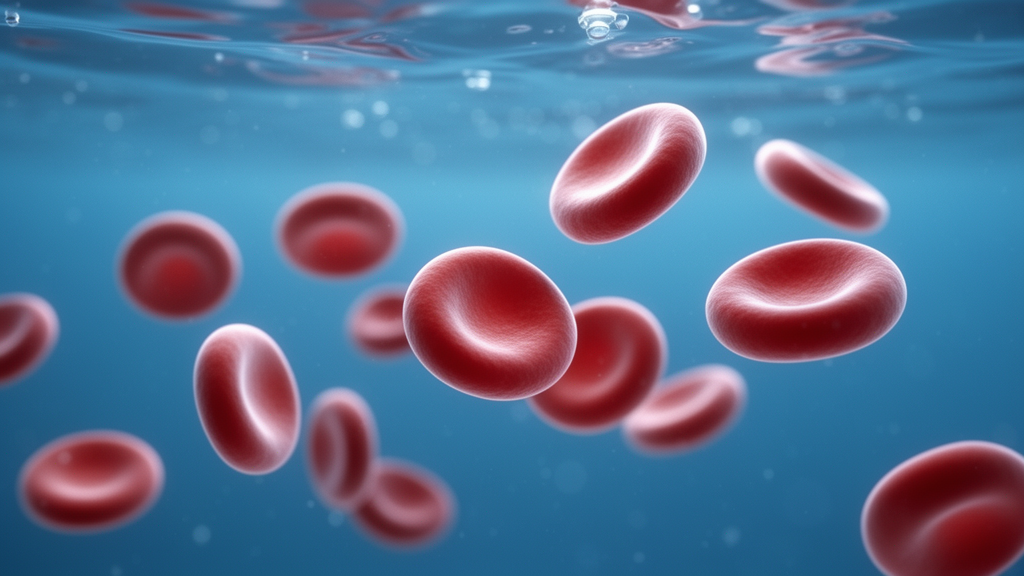
In a controlled laboratory evaluation using an animal model, balanced crystalloid solutions preserved the structural membrane integrity and functional oxygen delivery capacity of salvaged red blood cells significantly better than conventional normal saline. The comparative investigation, published in BMC Anesthesiology by researcher Liu Han and colleagues, evaluated how different washing solutions influence erythrocytes during simulated intraoperative cell salvage procedures. According to the research team’s reported findings, washing salvaged red blood cells with balanced crystalloids—specifically Lactated Ringer’s solution and Acetated Ringer’s solution—helped maintain cellular morphology, limited osmotic fragility, and protected critical membrane-bound enzyme activities compared to the standard use of normal saline. Among the tested solutions, Lactated Ringer’s solution demonstrated the most pronounced protective effects across multiple physiological and biochemical measures.
Clinically, normal saline serves as the standard washing agent for salvaged erythrocytes, yet the researchers noted that its nonphysiological ionic composition and limited buffering capacity present notable drawbacks that may negatively impact erythrocyte viability and function. To address these potential physiological limitations, the investigators designed an in vitro comparative study to determine whether balanced crystalloid solutions could offer superior preservation. Specifically, the study systematically compared normal saline against two balanced alternatives: Acetated Ringer’s solution and Lactated Ringer’s solution, tracking their comparative effects on the functional and membrane properties of salvaged red blood cells.
To evaluate these washing solutions under controlled experimental conditions, the research team utilized red blood cells harvested from male Wistar rats. The experimental protocol assigned the biological samples into distinct experimental cohorts comprising six rats per group (n = 6 per group). The gathered erythrocytes were subjected to a standardized simulated salvage protocol and subsequently washed with five times the volume of their designated crystalloid solution, establishing a strict blood-to-washing-solution volume ratio of 1:5.
Following the washing procedures, the investigators conducted a broad series of laboratory evaluations to capture both the functional capacity and structural status of the salvaged cells. Additionally, the researchers analyzed intracellular and extracellular pH levels alongside the oxygen dissociation characteristics of the processed red blood cells.
The quantitative results revealed that basic cellular recovery metrics were comparable across all three washing conditions. Specifically, the researchers reported that hematocrit values, hemolysis rates, and 2,3-diphosphoglycerate concentrations did not differ significantly among the normal saline, Acetated Ringer’s, and Lactated Ringer’s cohorts.
Significant disparities emerged, however, when the team evaluated membrane stability and enzymatic performance across the cohorts. Red blood cells washed with Acetated Ringer’s solution and Lactated Ringer’s solution exhibited superior preservation of erythrocyte morphology and displayed significantly lower osmotic fragility than cells washed with normal saline. Across all structural and enzymatic assessments, the most pronounced improvements over normal saline were consistently observed in the group treated with Lactated Ringer’s solution.
The experimental data also identified distinct differences in cellular acid-base status and oxygen dissociation dynamics. In addition, red blood cells washed with Lactated Ringer’s solution exhibited a noticeable rightward shift in their oxygen dissociation curve.
Based on these findings, the study authors concluded that balanced crystalloid solutions, particularly Lactated Ringer’s solution, achieved superior preservation of several functional and membrane properties of salvaged erythrocytes compared with conventional normal saline. The researchers underscored, however, that these results were derived entirely within an in vitro rat model under simulated salvage conditions, meaning they cannot be directly extrapolated to human clinical efficacy or in vivo transfusion outcomes. Given these preliminary laboratory observations, the investigators emphasized that further in vivo research and formal clinical evaluations are warranted to establish whether Lactated Ringer’s solution represents a viable, clinically effective alternative washing fluid for intraoperative cell salvage in human medical practice.
Subject of Research: Comparative effects of crystalloid washing solutions on salvaged rat erythrocyte properties
Article Title: Effects of washing with different crystalloid solutions on the oxygen delivery capacity and membrane integrity of salvaged erythrocytes: a comparative study in a rat model
Article References: Han, L., Zhang, Y., Zhao, S., Wang, S., & Zhao, J. (2026). Effects of washing with different crystalloid solutions on the oxygen delivery capacity and membrane integrity of salvaged erythrocytes: a comparative study in a rat model. BMC Anesthesiology. https://doi.org/10.1186/s12871-026-04361-2
Image Credits: AI Generated
DOI: 10.1186/s12871-026-04361-2
Keywords: intraoperative cell salvage, salvaged erythrocytes, normal saline, lactated ringer's solution, acetated ringer's solution, balanced crystalloids, membrane integrity, oxygen delivery capacity, osmotic fragility, Na⁺-K⁺-ATPase, Ca²⁺-Mg²⁺-ATPase, 2,3-diphosphoglycerate, oxygen dissociation curve, P50, intracellular pH, hemolysis, hematocrit, Wistar rats
News Source: Ophelia Keating. (November 11, 2026). Lactated Ringer’s Solution Better Preserves Salvaged Rat Erythrocytes Than Normal Saline. Scienmag.