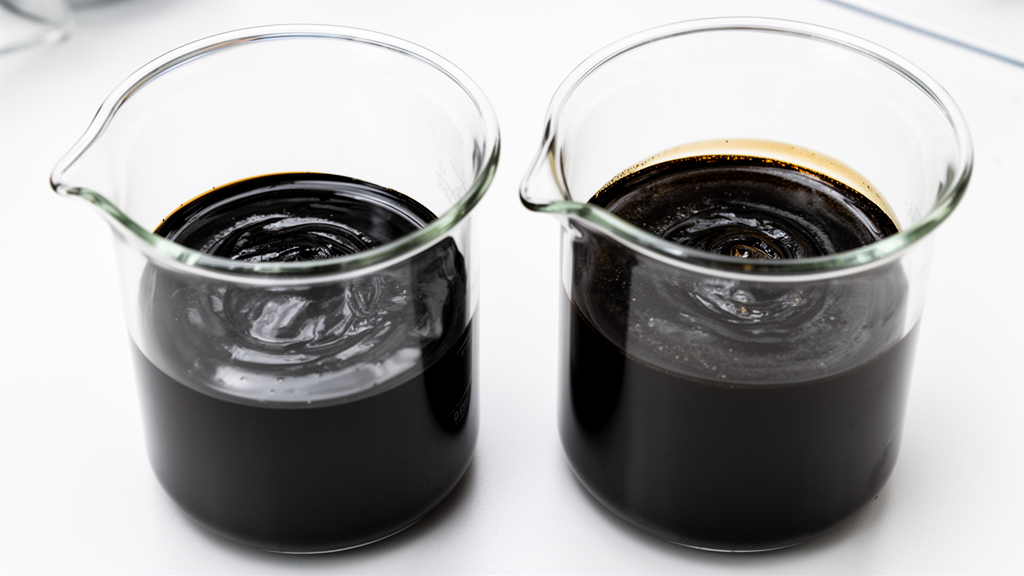
A comprehensive laboratory investigation has demonstrated that oxidative aging exerts fundamentally contrasting effects on the elastic recoverability of conventional unmodified bitumen and polymer-modified bitumen. While unmodified binders exhibit steady, continuous improvements in elastic recovery as aging severity increases, polymer-modified bitumen displays an initial improvement followed by a marked decline under extended oxidation. This divergence stems from two competing mechanisms that operate simultaneously within polymer-modified systems: the physical hardening of the underlying bituminous matrix and the chemical degradation of the elastomeric polymer network. These findings provide critical mechanistic clarity regarding the durability and deformation resistance of road surfacing materials subjected to environmental weathering.
Asphalt pavement infrastructure forms the backbone of global transportation networks, currently encompassing more than 32 million kilometres of roadways worldwide. Long-term infrastructure projections indicate that an additional 25 million kilometres of roads will be constructed by the year 2050, representing an estimated 60 percent expansion over the global network measured in 2010. Facing increasing traffic volumes and the intensifying impacts of climate change, highway agencies require pavement materials that offer enhanced durability, sustainability, and resilience against premature structural distress. Modifying bitumen with functional additives such as styrene-butadiene-styrene, ethylene-vinyl acetate, crumb rubber, sulfur, lignin, and bio-waste oils has become an established strategy to enhance engineering performance and reduce petroleum consumption. Among these additives, styrene-butadiene-styrene copolymer is widely regarded as the most effective modifier because it simultaneously improves rutting resistance at elevated service temperatures and thermal cracking resistance at low temperatures.
Bitumen consists of organic compounds that react readily with atmospheric oxygen and reactive oxygen species, triggering oxidative hardening and chemical evolution that degrade asphalt pavement performance over time. In neat binders, oxidative aging has traditionally been understood to enhance high-temperature stiffness and deformation resistance while compromising low-temperature relaxation and fatigue life. Conversely, in polymer-modified bitumen, long-term high-temperature performance does not always improve following field exposure, leading to persistent controversy and conflicting observations across previous investigations. To resolve these discrepancies, researchers systematically evaluated the rheological evolution of two unmodified bitumens with penetration grades of 40/60 and 70/100 alongside an elastomeric styrene-butadiene-styrene modified bitumen across progressive laboratory aging stages.
To simulate environmental weathering under rigorous laboratory controls, all binder samples were subjected to standardized short-term and extended long-term aging protocols. To evaluate deeper stages of oxidative distress and examine binder performance under severe aging conditions, the researchers extended the pressure aging vessel exposure durations beyond standard specifications to include 30-hour and 40-hour aging intervals.
The evaluation of elastic recoverability relied on three dynamic shear rheometer protocols, offering a modern, precise alternative to conventional ductilometer testing governed by ASTM D6084-21. Traditional ductilometer methods require large quantities of binder and are susceptible to manual operational errors, creating substantial obstacles when evaluating field-recovered or heavily aged materials. The primary monotonic elastic recovery testing was performed at 25 degrees Celsius using an 8-millimeter parallel plate geometry with a 2-millimeter gap. Specimens were conditioned for 10 minutes before undergoing monotonic shearing at a constant strain rate of 2.315 percent per second for two minutes to reach a peak strain of 277.78 percent, followed by a 30-minute zero-strain recovery period to calculate the ratio between peak and recovered strain.
The experimental campaign also integrated binder yield energy testing based on the newly released AASHTO T418-24 standard, which formally replaces provisional standard AASHTO TP123. Operating at 25 degrees Celsius with an 8-millimeter plate geometry and a 2-millimeter gap, the binder yield energy protocol applies continuous monotonic shear at a strain rate of 2.315 percent per second over 30 minutes, producing a total cumulative strain of 4167 percent while collecting shear stress and shear strain values every two seconds. The binder yield energy represents the integrated area under the stress-strain curve from zero strain up to the point of maximum shear stress, defining the energy required to induce irreversible plastic flow. In parallel, multiple stress creep and recovery testing was conducted at 70 degrees Celsius using a 25-millimeter plate geometry and a 1-millimeter gap in accordance with ASTM D7405-24, applying 10 cycles of one-second creep loading and nine-second recovery at stress levels of 0.1 kilopascals and 3.2 kilopascals.
Results from monotonic shear testing revealed that the elastic recovery of both penetration grade 40/60 and 70/100 neat bitumens increased continuously and progressively with aging severity. This monotonic improvement is driven by the ongoing formation and concentration increase of asphaltenes during oxidative exposure. As lighter, volatile components evaporate, asphaltenes assemble into larger molecular clusters and dense aggregates that restrict internal molecular mobility and transform the binder from a viscous-dominated fluid into an increasingly elastic matrix. Because elastic recoverability correlates positively with bituminous self-healing capability, this oxidative restructuring simultaneously enhances the intrinsic elastic response and self-healing tendencies of neat binders, improving their capacity to resist permanent deformation under applied monotonic shear.
In sharp contrast, polymer-modified bitumen demonstrated a non-monotonic elastic recovery trend when subjected to extended oxidative exposure. While short-term aging produced a slight increase in elastic recovery mirroring neat binder behavior, prolonged pressure aging vessel durations triggered a progressive decrease in recovery capacity. This deterioration is governed by the vulnerability of the styrene-butadiene-styrene modifier to oxidative attack. The unsaturated carbon-carbon double bonds within polybutadiene blocks react readily with oxygen-containing species, precipitating molecular chain scission, crosslinking, and oxidative hardening. As polybutadiene segments break and molecular weight decreases, the three-dimensional elastomeric network—originally anchored by physical polystyrene cross-links—loses structural continuity, diminishing the polymer’s elasticity and decreasing compatibility between the polymer modifier and the surrounding bituminous matrix.
The binder yield energy measurements further highlighted the distinct structural transformations occurring across the different binder formulations. For neat bitumens, binder yield energy increased consistently with aging severity, with stiffer penetration grade 40/60 binders exhibiting higher yield energies than softer 70/100 binders across all states. In stress-strain curves, unaged neat binders yielded at low stress levels, whereas long-term aged binders sustained substantially higher stresses and showed a rightward shift in yield strain, confirming an enhanced load-bearing capacity before plastic deformation. In polymer-modified bitumen, however, yield strain and binder yield energy exhibited irregular, non-monotonic trends across extended aging durations. Although short-term aged modified binder achieved the highest yield strain—exceeding 3500 percent—severe aging induced microstructural heterogeneities and localized defects that disrupted mechanical consistency, even though polymer-modified binders maintained higher overall yield energy than neat binders.
Multiple stress creep and recovery testing further underscored the functional differences between binder types while exposing significant methodological limitations within standard testing specifications. In neat bitumens tested at 0.1 kilopascals, recovery percentages increased steadily with aging as the material transitioned from a predominantly viscous state to a more elastic regime. At the higher stress level of 3.2 kilopascals, virgin and short-term aged neat binders exhibited negative recovery values that were recorded as zero under ASTM D7405-24 specifications, with measurable recovery appearing only after long-term aging. For polymer-modified bitumen, virgin samples displayed near-total recovery at 0.1 kilopascals, but recovery percentages dropped noticeably following long-term oxidation due to polymer chain cleavage and matrix stiffening.
Crucially, the multiple stress creep and recovery findings demonstrated that the standard protocol is structurally inadequate for evaluating highly modified binders. In virgin and lightly aged polymer-modified bitumen, strain accumulation curves exhibited irregular cycling behaviors, including instances where fifth-cycle recovery strains were lower than earlier cycles. Because the incorporation of styrene-butadiene-styrene imparts extreme elasticity combined with elevated viscosity, the standard nine-second zero-stress rest period is insufficient for delayed molecular relaxation and complete elastic recovery. This temporal constraint causes standard multiple stress creep and recovery procedures to artificially underestimate the true elastic capacity of modified binders, creating a substantial risk of misclassifying high-performing materials under AASHTO M332 grading criteria.
Correlation analyses among the three testing methods showed that monotonic elastic recovery and multiple stress creep and recovery correlated strongly, achieving coefficient of determination values above 0.90 across both stress levels despite substantial testing temperature differences. Conversely, the weakest correlation appeared between multiple stress creep and recovery at 0.1 kilopascals and binder yield energy, reflecting fundamental differences between linear viscoelastic behavior at 70 degrees Celsius and nonlinear plastic damage accumulation at 25 degrees Celsius. The study authors concluded that future specification frameworks must adapt standard recovery durations to accurately characterize elastomeric binders, while calling for subsequent investigations across broader binder sources, varying strain rates, and low-temperature cracking regimes.
Subject of Research: Elastic recoverability and rheological behavior of aged asphalt binders
Article Title: Evaluating the elastic recoverability of bitumen during ageing process
Article References: Liu, J., Hu, Y., & Sreeram, A. (2025). Evaluating the elastic recoverability of bitumen during ageing process. Journal of Materials Science: Composites, 6(1), Article 4. https://doi.org/10.1186/s42252-025-00069-7
Image Credits: AI Generated
DOI: 10.1186/s42252-025-00069-7
Keywords: bitumen aging, polymer modified bitumen, styrene butadiene styrene, elastic recovery, dynamic shear rheometer, binder yield energy, multiple stress creep recovery, asphalt pavement, asphaltenes, rheological testing, pavement durability, AASHTO T418, ASTM D7405, polybutadiene degradation, linear viscoelasticity, permanent deformation
News Source: Beatrice Stafford. (November 21, 2026). Laboratory Study Reveals How Aging Differently Impacts Neat and Polymer-Modified Bitumen. Scienmag.