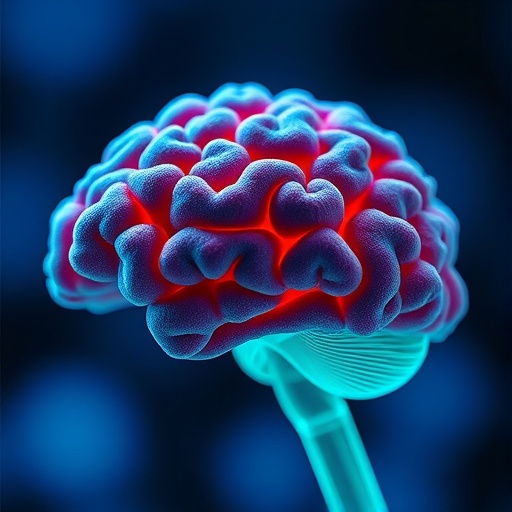
In an era defined by relentless technological advancement, a groundbreaking paradigm is emerging at the crossroads of biology and computation, poised to revolutionize our understanding of both fields. The nascent discipline of biocomputing, which harnesses living neural tissue to perform computational tasks, is capturing the imagination of researchers worldwide. This pioneering approach leverages the inherent complexity and adaptability of human brain cells, cultivated as organoids, to transcend conventional silicon-based computing limitations.
At the core of biocomputing lies the cultivation of neural organoids—three-dimensional miniaturized and simplified versions of the brain, grown from human stem cells. These organoids mimic the cellular structure and functional characteristics of actual neural tissue, offering a living substrate upon which computational models can be built. By integrating these organoids with multi-electrode arrays embedded within specialized hardware, scientists can interface biological neurons directly with electronic circuits. This hybrid system allows for the real-time recording and stimulation of neural activity, transforming living cells into computational nodes.
The potential applications of biocomputing are as vast as they are profound. One of the most exciting frontiers is the facilitation of remote experimentation. Companies such as Cortical Labs and FinalSpark are pioneering cloud-based platforms that provide researchers worldwide with access to biocomputing systems housed in dedicated laboratories. This remote access model democratizes experimentation, enabling scientists to design, run, and monitor complex neural computations without the need for direct physical interaction with the biological hardware—ushering in a new era of distributed, high-throughput research capabilities.
Energy efficiency represents another revolutionary advantage of biocomputing over traditional artificial neural networks. Biological neurons operate via complex electrochemical signaling processes that inherently consume significantly less energy compared to the extensive computational resources demanded by digital processors. According to Brett Kagan, PhD, Chief Scientific Officer at Cortical Labs, these systems excel in learning and adapting from smaller, more chaotic datasets, a feat that challenges contemporary artificial intelligence models requiring vast volumes of clean, labeled data.
The biomedical research community is particularly interested in the role of biocomputers as advanced drug discovery platforms. By subjecting brain organoids to various pharmaceutical compounds within the biocomputing hardware, researchers can observe nuanced changes in neural behavior and learning capacity. This approach offers an unprecedented window into drug effects on human neural tissue, promising more accurate predictions of therapeutic efficacy and potential side effects, thereby accelerating the drug development pipeline and reducing reliance on animal models.
Beyond immediate biomedical applications, biocomputing serves as a conceptual and technological bridge toward neuromorphic engineering—the design of artificial systems that emulate the brain’s architecture at a cellular level. As noted by Thomas Hartung, MD, PhD, of Johns Hopkins University, understanding the dynamics of living neural networks through biocomputing inspires the creation of artificial neurons and synapses that mimic biological properties, potentially leading to far more efficient and adaptable AI hardware architectures.
Nevertheless, the ethical landscape surrounding biocomputing is intricate and demands careful scrutiny. The use of human-derived brain organoids raises profound questions concerning the moral status of these living models, particularly as their complexity and functionality increase. Could advanced organoids achieve rudimentary forms of consciousness? Ethical frameworks must be developed collaboratively by scientists, ethicists, and policymakers to navigate consent from tissue donors, intellectual property rights, and commercialization issues, ensuring responsible development of this transformative technology.
The unpredictability inherent in biological neural systems is a formidable challenge that currently limits the scalability and reliability of biocomputing devices. Unlike conventional silicon chips with deterministic outputs, organoid-based computations exhibit fluctuations and variability that complicate training algorithms and system optimization. However, ongoing research focused on enhancing the controllability and stability of neural organoids promises to unlock more consistent operational paradigms, potentially enabling widespread adoption in computational neuroscience and beyond.
Looking forward, the trajectory of biocomputing signals a paradigm shift where computation is no longer confined to silicon wafers but is distributed across living, adaptive biological substrates. This emerging field synthesizes bioengineering, computational science, neuroscience, and ethics, fostering interdisciplinary collaboration critical for overcoming technical hurdles and addressing societal implications. The convergence of these domains could redefine computational methodologies and accelerate discovery across numerous scientific frontiers.
Biocomputing heralds an era where machines are not merely designed to simulate life but to integrate living systems directly, leveraging nature’s own computational prowess. This fusion embodies an elegant synergy—melding the plasticity and energy efficiency of biological networks with the speed and precision of digital electronics. As understanding deepens and technologies mature, biocomputers may form the backbone of future hybrid intelligence architectures, fundamentally altering how we compute, learn, and interact with machines.
Cultivating a robust biocomputing infrastructure demands advances in stem cell biology, microfabrication, and neuroengineering. Sophisticated organoid culture techniques must be refined to produce neural tissues with reproducible characteristics and enhanced functionality. Concurrently, the development of advanced multi-electrode arrays capable of high-resolution monitoring and stimulation is essential to interface effectively with biological neurons. These innovations collectively support the realization of complex biocomputing networks capable of executing meaningful tasks.
Moreover, integrating machine learning algorithms with living neural systems introduces novel computational paradigms. Unlike traditional AI models, these hybrid systems can potentially self-organize and adapt through biological plasticity mechanisms, offering resilience and generalization capabilities unmatched by existing technologies. Exploring these synergies opens possibilities for developing autonomous systems that learn in more human-like ways, blending synthetic and organic intelligence.
As biocomputing gradually moves from the laboratory to practical application, fostering open collaboration and transparent discourse within the scientific community and broader public will be critical. Ethical governance models must evolve in tandem with technological progress to safeguard human rights and dignity while harnessing biocomputing’s transformative potential. This balanced approach is vital for cultivating trust and ensuring equitable access to the benefits of this revolutionary technology.
In conclusion, biocomputing represents a bold leap beyond the conventional confines of computational science, drawing directly on life’s molecular intricacy to create new paradigms of information processing. While challenges remain, the promise of this technology to innovate across research, healthcare, and artificial intelligence domains is immense. As we stand at this exciting frontier, the fusion of biology and computing calls for visionary science, ethical stewardship, and creative engineering to unlock a future where machines not only mimic life but embody it.
Subject of Research: People
Article Title: Biocomputing: Beyond the Hype
News Publication Date: 28-May-2026
Web References: http://dx.doi.org/10.2196/100949
References: Spichak S. Biocomputing: Beyond the Hype. J Med Internet Res 2026;28:e100949
Keywords
Biocomputing, Neural Organoids, Multi-Electrode Arrays, Cloud-Based Biocomputing, Energy-Efficient Computing, Drug Discovery, Neuromorphic Engineering, Ethical Considerations in Biotech, Hybrid Intelligence, Stem Cell Research, Neuroengineering, Computational Neuroscience
Tags: biocomputer technology advancementsbiohybrid computational nodesbrain-inspired computing platformscloud-based biocomputing accesshuman stem cell brain modelshybrid biological-electronic systemslab-grown brain organoidsliving neural tissue computingmulti-electrode arrays in neuroscienceneural organoids for computationreal-time neural activity recordingremote experimentation with brain organoids