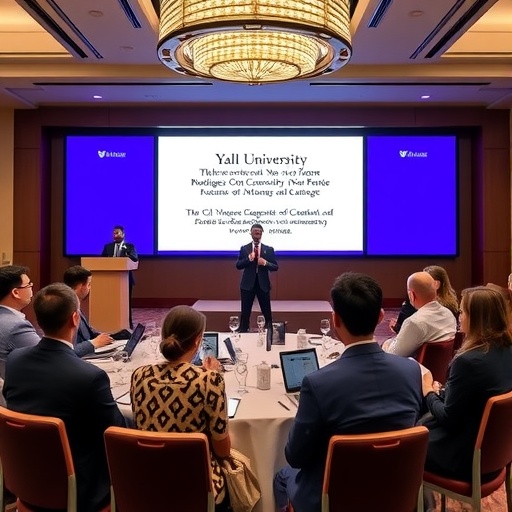
On October 28th, an illuminating joint forum on ‘Basic and Clinical Neuroscience’ took place at Korea University’s College of Medicine, specifically in lecture room 320 of the main building. This landmark event was hosted in collaboration with Yale University, symbolizing a significant milestone in the evolving partnership between these two prestigious institutions. Gathering a distinguished assembly of neuroscientists, clinicians, and academic leaders, the forum represented a dedicated effort to propel the boundaries of neuroscience research and education through global cooperation.
The occasion was intricately tied to a larger celebration—the 120th anniversary of Korea University—marking a century-plus of academic excellence and innovation. Unlike the previous year’s focus on medical informatics, this session pivoted towards the complex discipline of neuroscience, underscoring its critical role in advancing precision medicine. The forum aimed to carve a clear roadmap for future joint research endeavors, expanding the scientific horizons for both universities while reinforcing their commitment to nurturing leading physician-scientists.
Representatives from Yale University included notable figures such as Nancy J. Brown, Yale’s Dean of Medicine, whose administrative acumen shapes one of the world’s foremost medical schools. The delegation also featured Deputy Dean for Research Anthony Koleske, and Stephen M. Strittmatter, director of the prestigious Kavli Institute for Neuroscience. Their presence was complemented by clinical leaders like Emily J. Gilmore, head of Neurocritical Care and Emergency Neurology, along with expert neuroscientists Nenad Sestan and Janghoo Lim, who have pioneered advancements in genomics and genetics. Korea University was represented by its President Kim Dong-Won and a cadre of eminent faculty members specializing in physiology, neurology, neuroscience, and anatomy, collectively personifying the institution’s scientific vigor.
Structurally, the forum unfolded across three dynamic sessions, each methodically designed to traverse a comprehensive spectrum of contemporary neuroscience themes. The symposium commenced with opening remarks by Professor Park Hyun-mi, setting an academic tone that was warmly reinforced by congratulatory speeches from Presidents Kim Dong-Won and Yoon Eul-Sik, followed by Dean Brown’s keynote address. This inaugural session critically emphasized the transformation of medical education into an inquiry-driven process, where students cultivate the skills to interrogate and explore rather than passively receive knowledge. Dean Brown advocated for robust clinical and research training programs necessary for nurturing the next generation of physician-scientists, a foundational approach vital to driving clinical innovations.
The second session delved deeply into the clinical neuroscience terrain, featuring presentations from both Korean and Yale researchers. Key topics included neurodegenerative diseases and epilepsy, critical neurological disorders that demand sophisticated diagnostic and therapeutic approaches. Professors Kang Sung-Hoon and Roh Ji-hoon, alongside Deputy Directors and clinicians like Stephen M. Strittmatter and Emily J. Gilmore, showcased cutting-edge research and clinical trials addressing disease pathology and therapeutic stratagems. Their collective insights illuminated progress in understanding the molecular and cellular underpinnings of these brain disorders, employing innovative methodologies such as neuroimaging, genetic profiling, and electrophysiological monitoring.
Transitioning into the third session, basic neuroscience research was foregrounded, focusing on synaptic circuitry, molecular targets implicated in brain disease, and the application of brain organoid models. Deputy Dean Anthony Koleske and Executive Director Nenad Sestan led discussions on how molecular biophysics and genome editing techniques are unraveling the complexities of neuronal connectivity and plasticity. The exploration of brain organoids — three-dimensional clusters of neural cells cultivated in vitro to mimic aspects of brain tissue — represents a transformative approach to studying neurodevelopmental processes and disease modeling. This session facilitated in-depth deliberation on how such foundational research informs clinical applications, creating synergies between bench science and bedside care.
Before the public forum, a working-level meeting solidified a strategic vision for ongoing collaboration, including an agreement to host this joint neuroscience forum annually. Preparations have already commenced for the 2028 event, aligning with Korea University’s forthcoming centennial milestone for its College of Medicine. Additionally, a key initiative involves dispatching a Yale University professor responsible for the Physician Scientist Training Program to Korea University, ensuring that insights and best practices regarding training systems for physician-scientists are effectively shared and adapted. This programmatic exchange reflects a deep commitment to cultivating medical researchers whose integrated expertise bridges laboratory and clinical realms.
Further enriching the forum were scientific short talks by Korean experts such as Professors Park Jin-Woo, Kim Chi-Kyung, Baek Seol-Hee, and Kim Eun-Ha, who presented recent advancements in neuroscience research underpinning potential collaborative endeavors with Yale’s School of Medicine. These presentations covered emerging topics within neurophysiology, neurogenetics, and innovative clinical methodologies, illustrating a fertile ground for cross-institutional projects and the translation of discoveries into therapeutic innovations.
Throughout the event, Dean Pyun Sung-Bom of Korea University’s College of Medicine emphasized the critical duality of neuroscience in linking fundamental biological discovery with clinical practice. He highlighted neuroscience as a cornerstone discipline for future precision medicine initiatives, underscoring the potential of the joint forum to catalyze an expanded global network of research and educational exchange. This nexus between basic science and clinical application is poised to accelerate breakthroughs in diagnosing, understanding, and treating complex neurological conditions.
The interdisciplinary nature of the forum reflected a convergence of diverse scientific fields, including molecular neuroscience, cellular neuroscience, and clinical neuroscience. By integrating expertise from these domains, the forum fostered a holistic approach to addressing intricate challenges such as synaptic dysfunction, neurodegeneration, and neural circuit remodeling. Cutting-edge technologies, including genome editing and organoid cultures, were central to these discussions, illustrating how modern tools are revolutionizing neuroscience research and opening new frontiers in biomedical science.
Importantly, the forum also emphasized the cultivation of the next generation of neuroscientists with cross-disciplinary skill sets. The collaboration between Korea University and Yale University seeks to establish robust educational frameworks that foster scientific curiosity, critical thinking, and translational research capabilities. This approach aligns with the emerging paradigm in medical education that prioritizes integrative and experiential learning, preparing trainees to lead future innovations at the intersection of neuroscience research and clinical care.
Reflecting on the event’s outcomes, the joint forum signaled a pivotal commitment to sustained global collaboration, leveraging complementary strengths of each institution. By formalizing annual meetings and targeted exchanges in education and research training, Korea University and Yale University are laying the foundation for a vibrant international neuroscience community. This partnership models how academic alliances can harness collective expertise to confront pressing neurological disorders with unprecedented depth and nuance.
The discussions at the forum underscored neuroscience’s transformative potential in shaping personalized therapeutic strategies, particularly through precision medicine frameworks that tailor interventions based on molecular and genetic profiles. As advances continue in imaging, molecular biology, and neuroinformatics, the synergy between basic neuroscience and clinical practice cultivated by this forum will be instrumental in steering future breakthroughs from conceptual discovery to clinical reality.
In summary, the Korea University-Yale University Joint Forum on Basic and Clinical Neuroscience was a landmark event that showcased the power of international collaboration and interdisciplinary research. By bridging fundamental and translational neuroscience, fostering innovative education programs, and committing to sustained partnership, the forum exemplifies a forward-looking model essential for navigating the complexities of brain science in the 21st century.
Subject of Research: Neuroscience, including clinical and basic research on neurodegenerative diseases, epilepsy, synaptic circuits, brain molecules, and brain organoids.
Article Title: Korea University and Yale University Forge a Groundbreaking Partnership in Basic and Clinical Neuroscience
News Publication Date: October 28, 2024
Web References:
https://mediasvc.eurekalert.org/Api/v1/Multimedia/840a9b26-8419-48e3-8288-5242800f8fc6/Rendition/low-res/Content/Public
Image Credits: KU Medicine
Keywords: Neuroscience, Clinical neuroscience, Cellular neuroscience, Molecular neuroscience
Tags: 120th anniversary of Korea Universityacademic excellence in medicineBasic and Clinical Neuroscience forumeducational milestones in medicineglobal cooperation in neuroscience researchjoint research endeavors in neuroscienceKorea University College of Medicineneuroscientists and clinicians gatheringpartnership between top medical institutionsphysician-scientist developmentPrecision Medicine AdvancementsYale University neuroscience collaboration