Credit: Juan Osorno
Pinto beans are good for us. They are nutritious, packed with protein and fiber. They also contain a host of micronutrients like B vitamins and folate.
But being good isn’t enough for pinto beans. They also need to look good.
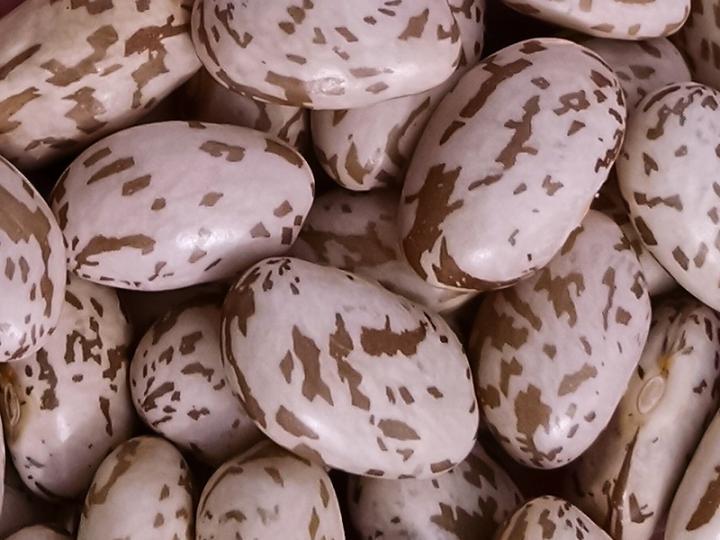
Typically, pinto beans have a striking mottled pattern of dark and light brown. However, the beans can darken after harvesting.
Consumers perceive pinto beans with darker colors to be older, harder to cook, and less nutritious than lighter beans.
“We eat with our eyes,” says Juan Osorno. Osorno is a researcher at North Dakota State University.
And it’s not only consumers who are skeptical about dark pinto beans. “Farmers see darker pinto bean seeds as being of poorer quality,” says Osorno. “And when farmers try to sell darker beans, they often have to accept discounted prices.”
That’s a big deal because pinto beans are the most common type of dry bean grown and consumed in the United States.
In the recent study, Osorno and colleagues describe the process of developing a promising new variety of slow-darkening pinto bean. “The study found no major differences in the agronomic performance of regular versus the slow-darkening pintos,” says Osorno.
He believes these slow-darkening pinto beans can be a good alternative for the existing pinto bean value chain. “Both farmers and consumers will benefit from it in many ways,” he says.
For example, the slow-darkening beans cooked faster than regular beans. Needing less time to cook can be a great benefit in areas where cooking fuel is scarce.
The key advancement has been improving agronomic performance – such as yield and bean size – of the slow-darkening beans. That’s huge progress, because past plants with the slow darkening gene have had many issues associated with agronomic performance.
For example, one older variety of slow-darkening pinto beans has low yields. Another won’t flower under farming conditions in the United States. Yet another grows in such a way that it makes mechanical harvesting of the beans difficult.
At the root of these difficulties lies pinto bean genetics. Physical characteristics, such as yield, bean size, or rate of darkening, are all affected by one or more genes.
Turns out, a single gene – aptly named slow darkening or SD – controls how quickly pinto beans darken after harvesting. Researchers can breed this gene into new pinto bean varieties fairly easily without creating a genetically modified organism (GMO).
But whenever they incorporated this gene in the past, other genes responsible for lower yields or smaller beans would come along with the slow darkening gene.
Osorno and colleagues tested several varieties of slow-darkening and regular pinto beans over the past decade. The tests were carried out in research plots in Washington and North Dakota.
The researchers compared traits such as seed weight, yield, and cooking time between slow-darkening and regular pinto beans.
The initial tests – from 2010 to 2012 – did not yield encouraging results. The slow-darkening beans performed poorly compared to regular pinto beans.
But the latest round of field trials using slow-darkening pinto beans was more promising. According to the 2018 tests, the newer slow-darkening pinto bean varieties are catching up to regular varieties in yield and bean size.
In fact, a second generation of slow-darkening pinto beans is already showing higher yields compared to the previous generation.
Osorno is encouraged but says there’s still work to be done. “Remember that breeding yields gains in a stepwise manner rather than through big jumps,” he says.
###
Read more about this research in Crop Science. This work was funded by Northarvest Bean Growers Association, United States Department of Agriculture National Institute of Food and Agriculture, United States Department of Agriculture Agricultural Marketing Service, and the North Dakota Department of Agriculture.
Media Contact
Rachel Schutte
[email protected]
Related Journal Article
http://dx.