
image:
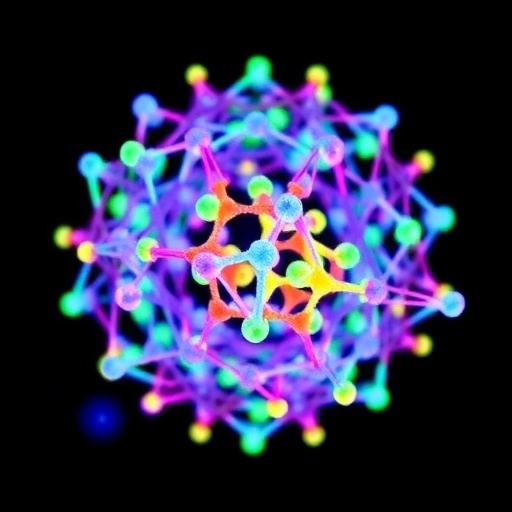
The idea of physically entrapping fluorescent molecules by in-situ formed polymer chains during the microwave-mediated conversion of monomer emulsions into fluorescent polymer nanoparticles (FPNs).
view more
Credit: Nano Research, Tsinghua University Press
Recently, a joint research team from North Minzu University, Xiamen University and Tsinghua University has made progress in the synthesis of fluorescent polymer nanoparticles (FPNs). They have developed a “microwave-assisted rapid synthesis strategy” that fabricates FPNs with physically entrapped fluorophores by initiating the polymerization of monomer emulsions doped with fluorescent dyes via microwave irradiation. This strategy enables precise regulation of the size and fluorescence wavelength of fluorescent nanoparticles and endows them with thermoresponsive properties. The relevant research findings, entitled “Microwave-assisted synthesis of polymer nanoparticles with physically entrapped fluorophores”, have been published in the renowned journal Nano Research on April 20, blazing a new trail for the large-scale preparation and practical application of functional fluorescent nanomaterials.
FPNs hold broad application prospects in bioimaging, coatings, sensing, photonics, electronics and other fields due to their unique physicochemical properties. Conventional preparation methods are often plagued by long reaction times, poor control over particle size distribution and limited tunability of fluorescence performance. Although microwave heating technology has demonstrated high-efficiency advantages in the synthesis of nanomaterials, its application in preparing fluorescent polymer nanoparticles with physically entrapped fluorophores has not been reported previously.
In this study, the research team used monomer emulsions pre-doped with dye molecules as precursors and realized rapid polymerization via microwave irradiation, resulting in the physical entrapment of fluorescent dyes in nanoparticles by polymer chains. The core advantage of this method lies in its high efficiency: microwave-assisted synthesis takes only 35 minutes, in sharp contrast to the 12 hours required for traditional thermal polymerization, representing a 24-fold improvement in reaction efficiency. Moreover, the method can produce nanoparticles with smaller particle sizes under the same raw material conditions.
By systematically modulating parameters such as the concentrations of salt and surfactant, the type and loading of fluorophores, and the monomer species, the team achieved precise control over dye-dye interactions, energy transfer processes and the local microenvironment inside the nanoparticles. This approach not only allows the tuning of FPN particle sizes from approximately 73 nm to 640 nm, but also enables the continuous adjustment of their fluorescence emission wavelengths from 480 nm to 661 nm across the visible to near-infrared region by varying the dye types and ratios.
The team also demonstrated the potential of this synthesis strategy for the “functional customization” of fluorescent nanoparticles. By replacing the monomer with benzyl methacrylate and introducing a crosslinking agent, the prepared FPNs exhibited excellent thermoresponsive fluorescent properties: nanoparticles entrapped with tetramethoxy tetraphenylethylene (TMTPE) showed a significant increase in fluorescence intensity above the glass transition temperature, while those entrapped with Nile Red displayed the opposite trend. Furthermore, the fluorescence performance remained reversible after 5 temperature cycles, laying a foundation for their applications in fields such as nanothermometers.
In addition, the synthesis method features high reproducibility and scalability potential. In experiments, 50 batches of samples prepared repeatedly maintained good stability in fluorescence performance and particle size distribution. A 1-liter scale sample was successfully prepared via a continuous-flow approach without any deterioration in particle size and luminescent properties, meeting the large-scale production requirements for practical applications. Meanwhile, the method adopts commercially available raw materials and eliminates the need for the tedious synthesis of fluorophore-functionalized monomers, thus simplifying the preparation process and reducing costs.
The research team stated that this microwave-assisted synthesis strategy provides a simple, efficient and scalable new method for the preparation of FPNs. By precisely regulating dye-dye interactions and energy transfer, it offers a novel approach for the custom design of functional fluorescent nanomaterials. In the future, the team will further optimize the compatibility between dyes and the polymerization process, enhance the stability of nanoparticles, and achieve higher-precision regulation of their fluorescence behavior and particle size distribution, so as to promote the practical application of these materials in biosensing, smart coatings, optoelectronic devices and other fields.
This research was supported by the National Natural Science Foundation of China and the Natural Science Foundation of Ningxia. Dr. Dan Li and Yingdong Wei from North Minzu University are the co-first authors of the paper, and Dr. Jinzhao Ji from Xiamen University, Professor Yen Wei from Tsinghua University, Professor Shengwei Guo from North Minzu University and other researchers serve as the co-corresponding authors.
DOI Link:
About Nano Research
Nano Research is a peer-reviewed, open access, international and interdisciplinary research journal, sponsored by Tsinghua University and the Chinese Chemical Society, published by Tsinghua University Press on the platform SciOpen. It publishes original high-quality research and significant review articles on all aspects of nanoscience and nanotechnology, ranging from basic aspects of the science of nanoscale materials to practical applications of such materials. After 18 years of development, it has become one of the most influential academic journals in the nano field. Nano Research has published more than 1,000 papers every year from 2022, with its cumulative count surpassing 8,000 articles. In 2025 InCites Journal Citation Reports, its 2025 IF is 9.4 (8.3, 5 years), and it continues to be the Q1 area among the four subject classifications. Nano Research Award, established by Nano Research together with TUP and Springer Nature in 2013, and Nano Research Young Innovators (NR45) Awards, established by Nano Research in 2018, have become international academic awards with global influence.
Journal
Nano Research
DOI
10.26599/NR.2026.94908583
Article Title
Joint Research Team Develops Microwave-Assisted Rapid Synthesis Strategy for Fluorescent Polymer Nanoparticles
Article Publication Date
20-Apr-2026
Media Contact
Mengdi Li
Tsinghua University Press
Office: 86-108-347-0580
Journal
Nano Research
DOI
10.26599/NR.2026.94908583
Article Title
Joint Research Team Develops Microwave-Assisted Rapid Synthesis Strategy for Fluorescent Polymer Nanoparticles
Article Publication Date
20-Apr-2026