

• HOME
  • NEWS
  • EXPLORE
    • CAREER
      • Companies
      • Jobs
    • EVENTS
    • iGEM
      • News
      • Team
    • PHOTOS
    • VIDEO
    • WIKI
  • BLOG
  • COMMUNITY
    • FACEBOOK
    • INSTAGRAM
    • TWITTER
Wednesday, April 1, 2026
BIOENGINEER.ORG
No Result
View All Result
  • Login
  • HOME
  • NEWS
  • EXPLORE
    • CAREER
      • Companies
      • Jobs
        • Lecturer
        • PhD Studentship
        • Postdoc
        • Research Assistant
    • EVENTS
    • iGEM
      • News
      • Team
    • PHOTOS
    • VIDEO
    • WIKI
  • BLOG
  • COMMUNITY
    • FACEBOOK
    • INSTAGRAM
    • TWITTER
  • HOME
  • NEWS
  • EXPLORE
    • CAREER
      • Companies
      • Jobs
        • Lecturer
        • PhD Studentship
        • Postdoc
        • Research Assistant
    • EVENTS
    • iGEM
      • News
      • Team
    • PHOTOS
    • VIDEO
    • WIKI
  • BLOG
  • COMMUNITY
    • FACEBOOK
    • INSTAGRAM
    • TWITTER
No Result
View All Result
Bioengineer.org
No Result
View All Result
Home NEWS Science News Health

Johns Hopkins Medicine’s Center for Inherited Disease Research renews 7-year award for up to $98 million

by
July 24, 2024
in Health
Reading Time: 2 mins read
0
CIDR
Share on FacebookShare on TwitterShare on LinkedinShare on RedditShare on Telegram

FOR IMMEDIATE RELEASE
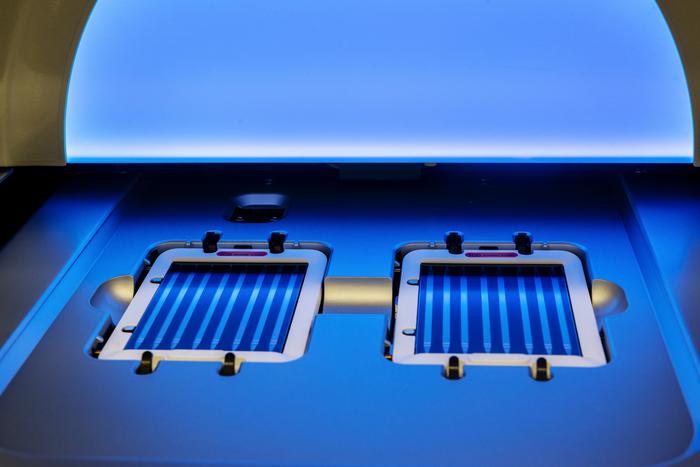
CIDR

Credit: Tameka Shelford, Johns Hopkins Medicine

FOR IMMEDIATE RELEASE

With renewed funding of up to $98.8 million for seven years, Johns Hopkins Medicine scientists will continue to be a worldwide resource for discovering the genes and their variations that contribute to human disease.

Leaders of the Johns Hopkins Center for Inherited Disease Research, established in 1996, received the fourth consecutive renewal for up to $98,880,900 in funds from a consortium of 10 institutes at the National Institutes of Health. The seven-year award is divided between over $20.2 million in base funding and up to an additional $78.6 million in project-specific funding.

“The Center has been vital to keeping Johns Hopkins at the forefront of human genetics research and advancing the efforts of genome-wide studies with technologies that scale to whole population levels,” says Kimberly Doheny, Ph.D., director of the Center for Inherited Disease Research and associate professor of genetic medicine and pathology at the Johns Hopkins University School of Medicine.

Since its inception, the Johns Hopkins center has completed more than 1,500 studies with more than 420 principal investigators worldwide. The center’s experts use the most advanced genomic technology to help scientists conduct and analyze genomic sequencing data from large populations to understand how variations in the genome accumulate and contribute to disease. Recent studies have explored cancer risk, eye disease, cleft lip and palate conditions, oral health, environmental influences on children’s health, attention deficit and hyperactivity disorder, structural brain disorders, obesity, alcohol use disorder and aging.

“The incredible resources provided by this award will continue to help us bring genetic medicine advances to all populations,” says Ambroise Wonkam, M.D., Ph.D., professor and director of the Department of Genetic Medicine and the McKusick-Nathans Institute at the Johns Hopkins University School of Medicine. “We are thrilled that the Center successfully competed for this renewal and are proud of the Center’s accomplishments through Dr. Doheny’s leadership.”

In addition to serving the global research community, technology and informatics experts at the Center for Inherited Disease Research support clinical genomics testing for patients at The Johns Hopkins Hospital and collaborate with Johns Hopkins scientists on genomic studies.

Experts working in the center include Hua Ling, Ph.D., Christopher Gocke, M.D., Michelle Mawhinney, M.S., Elvin Hsu, Sean Griffith, Beth Marosy, M.S., and Marcia Adams, M.S.

Share12Tweet8Share2ShareShareShare2

Related Posts

Dorsoventral Hippocampus Reactivates After Aversive Sleep

April 1, 2026

ALDH1L2 Controls ROS and Pancreatic Cell Changes

April 1, 2026

Tim-3 Agonist Limits ILC2, Eases Airway Reactivity

April 1, 2026

Phages Modify Cytosine via Hydroxylation and Arabinofuranosylation

April 1, 2026

POPULAR NEWS

  • blank

    Revolutionary AI Model Enhances Precision in Detecting Food Contamination

    96 shares
    Share 38 Tweet 24
  • Imagine a Social Media Feed That Challenges Your Views Instead of Reinforcing Them

    1006 shares
    Share 398 Tweet 249
  • Promising Outcomes from First Clinical Trials of Gene Regulation in Epilepsy

    51 shares
    Share 20 Tweet 13
  • Popular Anti-Aging Compound Linked to Damage in Corpus Callosum, Study Finds

    43 shares
    Share 17 Tweet 11

About

We bring you the latest biotechnology news from best research centers and universities around the world. Check our website.

Follow us

Recent News

Dorsoventral Hippocampus Reactivates After Aversive Sleep

ALDH1L2 Controls ROS and Pancreatic Cell Changes

Tim-3 Agonist Limits ILC2, Eases Airway Reactivity

Subscribe to Blog via Email

Enter your email address to subscribe to this blog and receive notifications of new posts by email.

Join 78 other subscribers
  • Contact Us

Bioengineer.org © Copyright 2023 All Rights Reserved.

Welcome Back!

Login to your account below

Forgotten Password?

Retrieve your password

Please enter your username or email address to reset your password.

Log In
No Result
View All Result
  • Homepages
    • Home Page 1
    • Home Page 2
  • News
  • National
  • Business
  • Health
  • Lifestyle
  • Science

Bioengineer.org © Copyright 2023 All Rights Reserved.