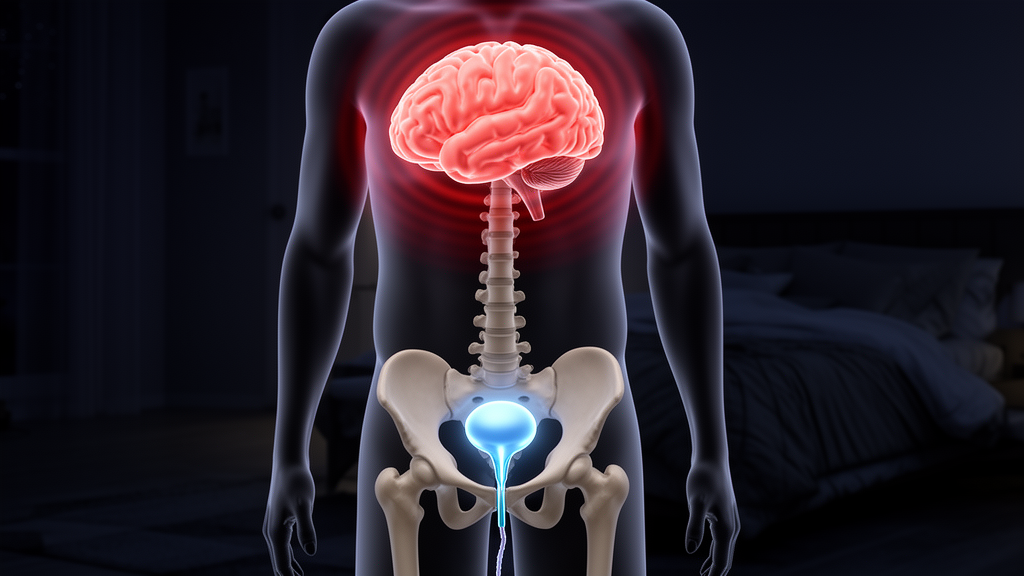
In a community-based cross-sectional study of 2,148 residents aged 45 to 89 in Tsukuba City, Japan, each additional nocturnal void was independently associated with higher odds of subjective sleep dissatisfaction (odds ratio, 1.61; 95% confidence interval, 1.40–1.85; p < 0.001). Published in BMC Primary Care, the investigation evaluated data collected from a 2022 postal survey sent to 10,000 randomly selected adults. In multivariable logistic regression adjusted for demographic, lifestyle, psychological, and clinical covariates, nocturia remained an independent factor alongside shorter sleep duration, longer sleep onset latency, and lower levels of happiness.
The study observed diverging age-related patterns between nocturnal urination and subjective sleep dissatisfaction. The prevalence of nocturia increased steadily across the cohort, rising from 8.3 percent among participants in their 40s to 67.9 percent among those in their 80s. In contrast, subjective sleep dissatisfaction peaked at 64.2 percent among individuals in their 50s and did not increase in parallel with chronological age, indicating that sleep dissatisfaction does not follow a simple linear trajectory across later adulthood.
To assess the relative importance, direction, and age-related heterogeneity of predictive variables, researchers paired an eXtreme Gradient Boosting (XGBoost) machine learning model with SHapley Additive exPlanations (SHAP). SHAP dependence plots indicated age-related patterns in model predictions, prompting exploratory subgroup analyses stratified at age 65. The mean absolute SHAP value for nocturia was numerically higher in the older subgroup model than in the younger subgroup model (0.139 versus 0.037), although the authors noted that this difference was not formally tested for statistical significance.
Further inspection of the SHAP dependence plots showed that the model’s age-related shift toward lower predicted sleep dissatisfaction appeared less pronounced among older adults who reported more frequent nocturnal urination. The authors concluded that assessing nocturnal voiding frequency offers a feasible and clinically relevant element of sleep evaluations in primary care, particularly for older adults presenting with sleep-related complaints, and may help guide subsequent urinary symptom assessments or specialist referrals.
Subject of Research: Association between nocturia and sleep dissatisfaction in Japanese adults
Article Title: Nocturia and factors associated with sleep dissatisfaction: a community-based cross-sectional study using explainable machine learning
Article References: Nonaka, H., Suzuki, S., Negoro, H., Tanaka, T., Kandori, S., Shibuya, K., Yoon, J., Okura, T., & Nishiyama, H. (2026). Nocturia and factors associated with sleep dissatisfaction: a community-based cross-sectional study using explainable machine learning. BMC Primary Care. https://doi.org/10.1186/s12875-026-03643-5
Image Credits: AI Generated
DOI: 10.1186/s12875-026-03643-5
Keywords: nocturia, sleep dissatisfaction, cross-sectional study, explainable machine learning, XGBoost, SHAP, primary care, Tsukuba City, factors, associated, sleep, dissatisfaction
News Source: Ophelia Keating. (November 7, 2026). Japanese Cross-Sectional Study Links Nocturia With Higher Sleep Dissatisfaction. Scienmag.