• HOME
  • NEWS
  • EXPLORE
    • CAREER
      • Companies
      • Jobs
    • EVENTS
    • iGEM
      • News
      • Team
    • PHOTOS
    • VIDEO
    • WIKI
  • BLOG
  • COMMUNITY
    • FACEBOOK
    • INSTAGRAM
    • TWITTER
Saturday, February 7, 2026
BIOENGINEER.ORG
No Result
View All Result
  • Login
  • HOME
  • NEWS
  • EXPLORE
    • CAREER
      • Companies
      • Jobs
        • Lecturer
        • PhD Studentship
        • Postdoc
        • Research Assistant
    • EVENTS
    • iGEM
      • News
      • Team
    • PHOTOS
    • VIDEO
    • WIKI
  • BLOG
  • COMMUNITY
    • FACEBOOK
    • INSTAGRAM
    • TWITTER
  • HOME
  • NEWS
  • EXPLORE
    • CAREER
      • Companies
      • Jobs
        • Lecturer
        • PhD Studentship
        • Postdoc
        • Research Assistant
    • EVENTS
    • iGEM
      • News
      • Team
    • PHOTOS
    • VIDEO
    • WIKI
  • BLOG
  • COMMUNITY
    • FACEBOOK
    • INSTAGRAM
    • TWITTER
No Result
View All Result
Bioengineer.org
No Result
View All Result
Home NEWS Science News Biology

It takes a village…

Bioengineer by Bioengineer
July 9, 2018
in Biology
Reading Time: 2 mins read
0
Share on FacebookShare on TwitterShare on LinkedinShare on RedditShare on Telegram
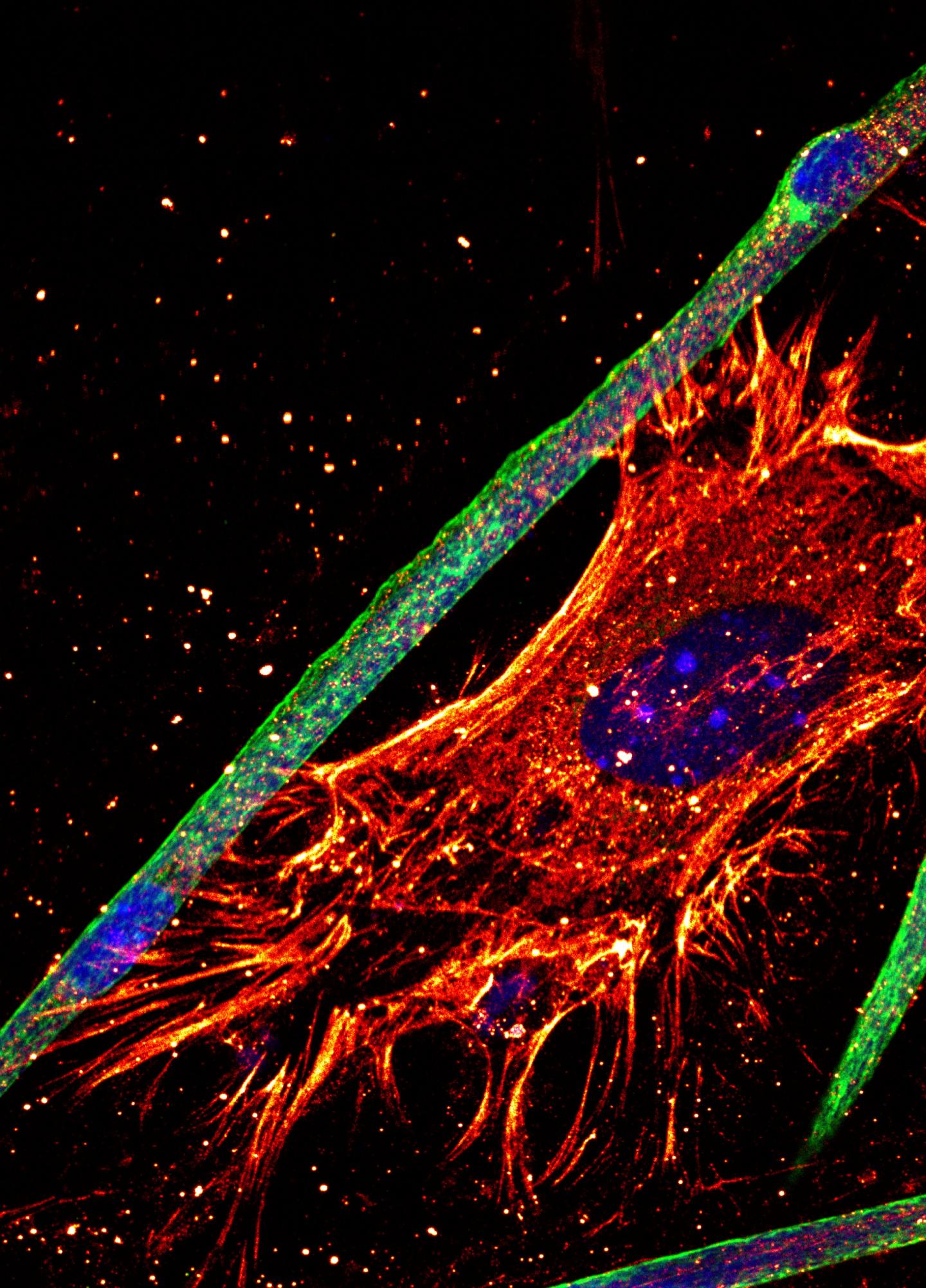
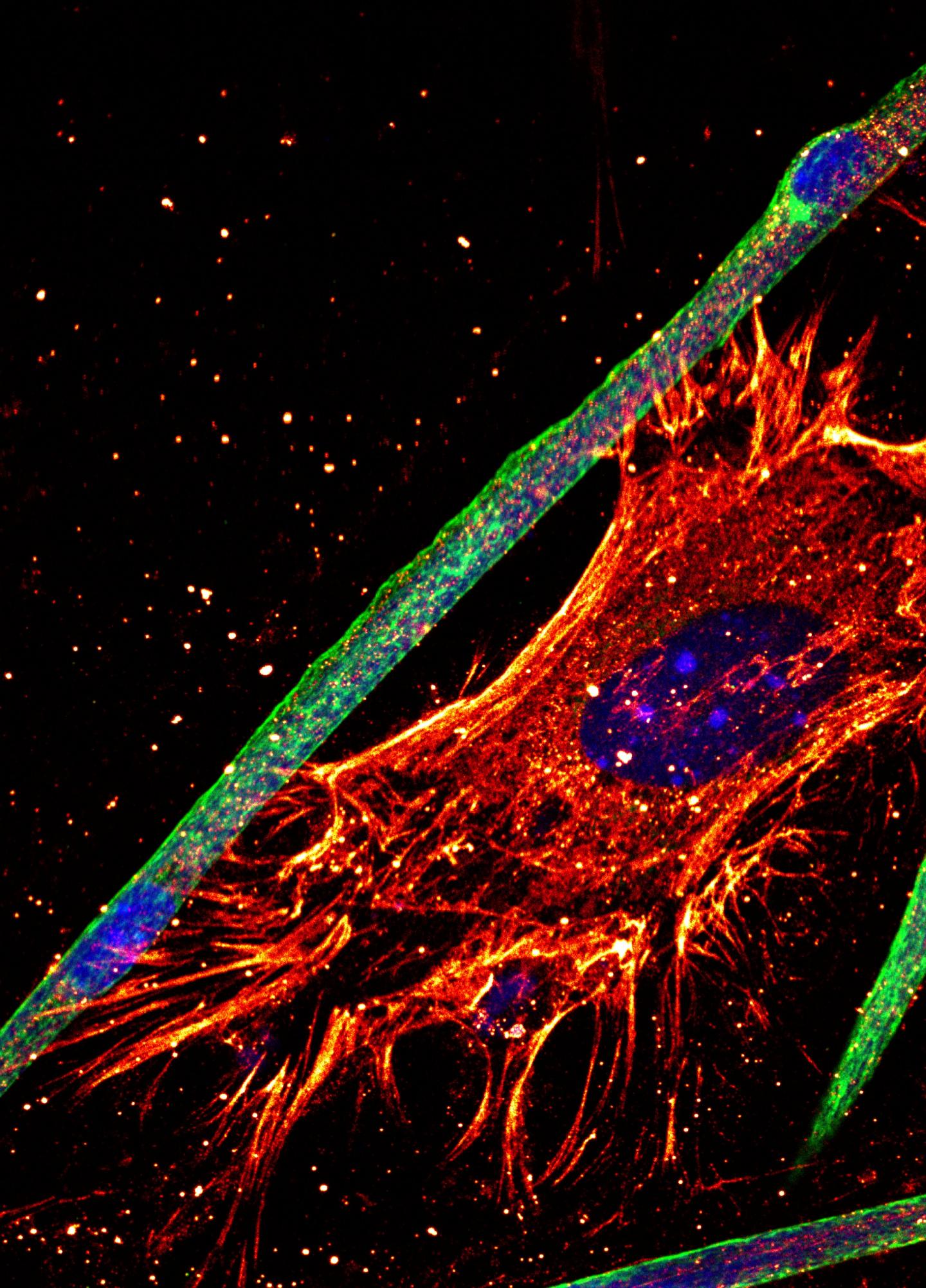
IMAGE

Credit: João Martins, iMM

A group of researchers led by Edgar Gomes, Group Leader at Instituto de Medicina Molecular João Lobo Antunes (iMM; Portugal) identifies in muscle cells a new mechanism that activates locally the movement of the nucleus to its correct position. This discovery, published in the scientific journal Developmental Cell, can have important implications in therapeutic strategies to treat muscular diseases.

A hallmark of muscle cells is the unique position of their nuclei at the cellular periphery. In multiple muscle diseases, as a result of aging, sports injuries, or genetic disorders this nuclear positioning fails to occur. Consequently, patients experience a gradual loss of muscle function that leads to a loss of autonomy.

"We have previously shown the molecular mechanisms used by muscle cells to move their own nucleus to the correct position at the periphery of the cell, but we still know very little about how this movement is activated", says Edgar Gomes, adding that "now, we built up on this mechanism and discovered that another type of cells, the myofibroblasts, contribute to the activation of the nuclear movement".

By using a combination of genetics and imaging experiments, the researchers observed that the cells that surround the muscle fiber, the myofibroblasts, locally deposit fibronectin, a component of the external cell's skeleton. "We observed a local accumulation of fibronectin at the vicinity of the muscle cells, in areas where the myofibroblasts were in contact with the muscle. It was exciting to see that this was accompanied by the movement of the nucleus to the periphery of the muscle cell", explains João Martins, co-first author of the study. "It is known that myofibroblasts produce fibronectin during muscle regeneration. We now demonstrate that the fibronectin produced by the myofibroblasts can activate the movement of the nucleus to the correct peripheral position", adds William Roman the other co-author of the study.

"We propose a mechanism by which cells can sense tissue architecture and regulate nuclear positioning in accordance with a local cue. This is of major importance to understand muscle differentiation, functionality and regeneration and might contribute to future therapeutic strategies to treat muscular diseases where the position of the nucleus is impaired", says Edgar Gomes.

###

This study was performed at iMM and funded by the European Research Council, EMBO, AIM France, POR Lisboa 2020 – Programa Operacional Regional de Lisboa, PORTUGAL 2020, and Fundação para a Ciência e a Tecnologia.

Media Contact

Inês Domingues
[email protected]
351-915-456-900

https://imm.medicina.ulisboa.pt/en/

Related Journal Article

http://dx.doi.org/10.1016/j.devcel.2018.05.031

Share12Tweet8Share2ShareShareShare2

Related Posts

Florida Cane Toad: Complex Spread and Selective Evolution

Florida Cane Toad: Complex Spread and Selective Evolution

February 7, 2026
New Study Uncovers Mechanism Behind Burn Pit Particulate Matter–Induced Lung Inflammation

New Study Uncovers Mechanism Behind Burn Pit Particulate Matter–Induced Lung Inflammation

February 6, 2026

DeepBlastoid: Advancing Automated and Efficient Evaluation of Human Blastoids with Deep Learning

February 6, 2026

Navigating the Gut: The Role of Formic Acid in the Microbiome

February 6, 2026
Please login to join discussion

POPULAR NEWS

  • Robotic Ureteral Reconstruction: A Novel Approach

    Robotic Ureteral Reconstruction: A Novel Approach

    82 shares
    Share 33 Tweet 21
  • Digital Privacy: Health Data Control in Incarceration

    63 shares
    Share 25 Tweet 16
  • Study Reveals Lipid Accumulation in ME/CFS Cells

    57 shares
    Share 23 Tweet 14
  • Breakthrough in RNA Research Accelerates Medical Innovations Timeline

    53 shares
    Share 21 Tweet 13

About

We bring you the latest biotechnology news from best research centers and universities around the world. Check our website.

Follow us

Recent News

Florida Cane Toad: Complex Spread and Selective Evolution

Exploring Decision-Making in Dementia Caregivers’ Mobility

Succinate Receptor 1 Limits Blood Cell Formation, Leukemia

Subscribe to Blog via Email

Enter your email address to subscribe to this blog and receive notifications of new posts by email.

Join 73 other subscribers
  • Contact Us

Bioengineer.org © Copyright 2023 All Rights Reserved.

Welcome Back!

Login to your account below

Forgotten Password?

Retrieve your password

Please enter your username or email address to reset your password.

Log In
No Result
View All Result
  • Homepages
    • Home Page 1
    • Home Page 2
  • News
  • National
  • Business
  • Health
  • Lifestyle
  • Science

Bioengineer.org © Copyright 2023 All Rights Reserved.