• HOME
  • NEWS
  • EXPLORE
    • CAREER
      • Companies
      • Jobs
    • EVENTS
    • iGEM
      • News
      • Team
    • PHOTOS
    • VIDEO
    • WIKI
  • BLOG
  • COMMUNITY
    • FACEBOOK
    • INSTAGRAM
    • TWITTER
Sunday, September 27, 2026
BIOENGINEER.ORG
No Result
View All Result
  • Login
  • HOME
  • NEWS
  • EXPLORE
    • CAREER
      • Companies
      • Jobs
        • Lecturer
        • PhD Studentship
        • Postdoc
        • Research Assistant
    • EVENTS
    • iGEM
      • News
      • Team
    • PHOTOS
    • VIDEO
    • WIKI
  • BLOG
  • COMMUNITY
    • FACEBOOK
    • INSTAGRAM
    • TWITTER
  • HOME
  • NEWS
  • EXPLORE
    • CAREER
      • Companies
      • Jobs
        • Lecturer
        • PhD Studentship
        • Postdoc
        • Research Assistant
    • EVENTS
    • iGEM
      • News
      • Team
    • PHOTOS
    • VIDEO
    • WIKI
  • BLOG
  • COMMUNITY
    • FACEBOOK
    • INSTAGRAM
    • TWITTER
No Result
View All Result
Bioengineer.org
No Result
View All Result
Home NEWS Science News Biology

Is the gut biome a heritable trait?

Bioengineer by Bioengineer
August 6, 2020
in Biology
Reading Time: 2 mins read
0
IMAGE
Share on FacebookShare on TwitterShare on LinkedinShare on RedditShare on Telegram

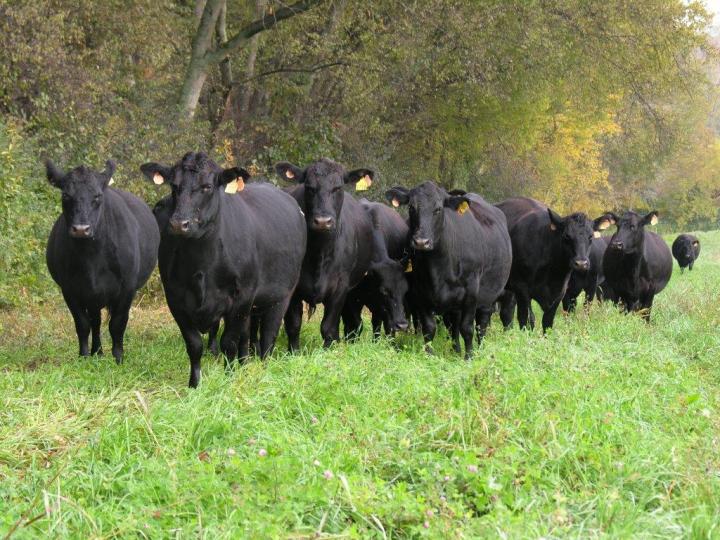
UTIA animal scientists study the question and implications among cattle
IMAGE

Credit: Photo by T. Salvador, courtesy UTIA.

KNOXVILLE, Tenn. — While it’s long been said “you are what you eat,” a team of animal scientists in the University of Tennessee Institute of Agriculture is taking an in-depth look at how what you are is influenced by your ability to eat, at least in cattle.

Phillip Myer, an assistant professor and microbiologist in the Department of Animal Science, is leading a new study to determine how the rumen, the largest compartment of the cattle stomach, and the microbes that inhabit it affect the conversion of low-quality feedstuffs into usable energy for ruminants. Funded by the USDA National Institute of Food and Agriculture, the $500,000 study seeks to identify whether the genetics of a particular cow influences the rumen microbiome and whether that influence can be passed on to future generations. “The overarching hypothesis of this project,” says Myer, “is that host beef cattle genetics are associated with the variation of microbes in the rumen, producing an individualized rumen microbiota among animals.”

Myer believes that if certain microbes are significant for feed efficiency, disease resistance, and other desirable production traits in cattle, then ruminal microbes represent the greatest opportunity to rapidly improve beef cattle nutrition and influence growth to help producers meet future global protein demands.

Specifically, the three-year project seeks to determine the microbes and microbial interactions in the rumen of Angus cattle as well as the microbes’ relation to feed efficiency. The scientists–including Jonathan Beever, director of the UTIA Genomics Center for Advancement of Agriculture; Brynn Voy, also a professor in the UT Department of Animal Science; and Larry Kuehn and James Wells, both with the USDA U.S. Meat Animal Research Center–also seek to estimate the heritability of the rumen microbes and microbial features and to identify host genomic markers that ensure heritability.

The goal is microbiome manipulation to enhance agricultural production. Says Myer, “This project will ultimately provide a means to increase food availability while lowering environmental impacts, develop more sustainable cow-calf production systems, and enhance Angus breeding programs.”

The project will dramatically advance the field of beef production agriculture to sustainably meet the protein requirements of an ever-increasing global population.

The award is one of 23 that NIFA announced last month that should lead to better management strategies for animal production systems, enhance production efficiency, and further develop high quality animal products for human use. Each of the grants is part of NIFA’s Agriculture and Food Research Initiative.

Through its land-grant mission of research, teaching and extension, the University of Tennessee Institute of Agriculture touches lives and provides Real. Life. Solutions. utia.tennessee.edu.

###

Media Contact
Patricia McDaniels
[email protected]

Original Source

https://utianews.tennessee.edu/gut-biome-a-heritable-trait/

Tags: Agricultural Production/EconomicsAgricultureGenesGeneticsGrants/FundingMicrobiology
Share13Tweet8Share2ShareShareShare2

Related Posts

Amino Acids Emerge as Powerful Stress Shields for Farmed Fish

Amino Acids Emerge as Powerful Stress Shields for Farmed Fish

September 27, 2026
Ancient trees are not genetic treasure chests, swamp cypress study suggests

Ancient trees are not genetic treasure chests, swamp cypress study suggests

September 26, 2026

Scientists uncover a stress-triggered molecular switch that drives depression

September 26, 2026

Blocking the Growth Hormone Receptor Extends Mouse Lifespan, Landmark Study Finds

September 26, 2026
Please login to join discussion

POPULAR NEWS

  • Near-Perfect Long Reads Reveal Hidden Mosaicism Left Behind by CRISPR Gene Editing

    29 shares
    Share 12 Tweet 7
  • Machine Learning Meets Forensic DNA: SNPs That Identify Relatives and Separate East Asian Populations

    29 shares
    Share 12 Tweet 7
  • AI-Powered Virtual Screening Uncovers Potent New Dual CDK4/6 Cancer Inhibitor

    29 shares
    Share 12 Tweet 7
  • Oral Wnt-blocking pill plus lenvatinib shows promise in endometrial cancer after immunotherapy fails

    29 shares
    Share 12 Tweet 7

About

We bring you the latest biotechnology news from best research centers and universities around the world. Check our website.

Follow us

Recent News

Near-Perfect Long Reads Reveal Hidden Mosaicism Left Behind by CRISPR Gene Editing

Machine Learning Meets Forensic DNA: SNPs That Identify Relatives and Separate East Asian Populations

AI-Powered Virtual Screening Uncovers Potent New Dual CDK4/6 Cancer Inhibitor

Subscribe to Blog via Email

Success! An email was just sent to confirm your subscription. Please find the email now and click 'Confirm' to start subscribing.

Join 85 other subscribers
  • Contact Us

Bioengineer.org © Copyright 2023 All Rights Reserved.

Welcome Back!

Login to your account below

Forgotten Password?

Retrieve your password

Please enter your username or email address to reset your password.

Log In
No Result
View All Result
  • Homepages
    • Home Page 1
    • Home Page 2
  • News
  • National
  • Business
  • Health
  • Lifestyle
  • Science

Bioengineer.org © Copyright 2023 All Rights Reserved.