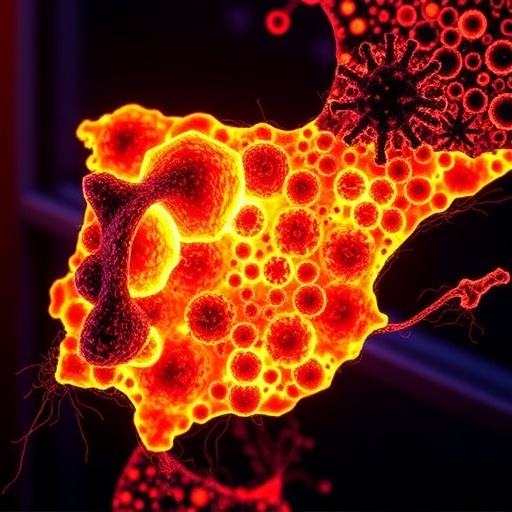
In a groundbreaking advancement for biomedical science, the Institute for Research in Biomedicine (IRB Barcelona) has unveiled Spain’s first fully integrated Spatial Omics Platform, poised to revolutionize how we understand cellular function in complex tissues. Spatial omics, a suite of state-of-the-art technologies, enables scientists to investigate cells within their native tissue microenvironment without disrupting their physical context. Unlike traditional molecular biology methods that analyze isolated cells or homogenized tissues, spatial omics preserves the intricate architecture of biological systems, providing unparalleled insights into cellular interactions, gene expression, and protein dynamics directly in situ.
Traditionally, biologists have been constrained by analytical techniques that sacrifice spatial information, reducing tissues to a mixture of cells where location is lost. This limitation has hindered our comprehension of how cellular neighborhoods influence physiological and pathological states. The emergence of spatial transcriptomics and proteomics now permits high-resolution mapping of RNA and protein molecules inside intact tissues, lending an unprecedented spatial dimension to molecular profiling. Spatial transcriptomics reveals the location-specific gene expression patterns, whereas spatial proteomics identifies the distribution and interplay of functional proteins, thereby elucidating the molecular choreography underlying cellular behavior.
IRB Barcelona’s new platform uniquely integrates multiple core technologies encompassing spatial genomics, proteomics, histopathology, advanced microscopy, and bioinformatics into a seamless workflow designed to generate comprehensive spatially resolved molecular maps. This integrated approach not only enables rigorous sample processing and data acquisition but also incorporates sophisticated computational tools to interpret multilayered datasets. By combining these modalities, researchers can create detailed molecular atlases that reveal how distinct cell types and molecular states coalesce to maintain tissue homeostasis or drive disease progression.
The launch of this platform reflects IRB Barcelona’s longstanding commitment to pioneering technologies that push the boundaries of molecular biology. Over the last two decades, the institute has been a trailblazer in genomic microarrays and single-cell gene expression profiling from minimal samples, establishing itself as a reference center of excellence. Their prior innovations in proteomics, including advanced top-down analysis techniques, and the adoption of light-sheet microscopy for three-dimensional tissue imaging, have laid the foundation for this next leap forward into spatial biology.
This powerful platform facilitates detailed investigation of a wide array of diseases characterized by complex tissue architecture, including cancer, neurodegenerative disorders, cardiovascular ailments, and immune dysfunction. For instance, in oncology, spatial omics can elucidate the cellular heterogeneity within tumors, map the spatial distribution of resistant cell subpopulations, and unravel cellular interactions that influence tumor microenvironment and therapy response. Such spatially-informed molecular data are critical for understanding why certain therapies fail and for identifying novel, spatially targeted therapeutic interventions.
The uniqueness of IRB Barcelona’s initiative lies not only in its technological sophistication but also in its multidisciplinary and collaborative framework. By coordinating expertise from multiple core facilities, the platform delivers an end-to-end pipeline that spans from sample preparation to deep computational analysis. This holistic integration ensures scientific robustness, reproducibility, and the generation of high-resolution spatial datasets that can be cross-compared across studies and over time, accelerating discovery and translational applications.
Moreover, this platform serves as a national hub and a collaborative nexus, opening its infrastructure to the wider scientific community, including academic institutions, hospitals, and industry collaborators. Such open access fosters synergy, drives innovation, and broadens the impact of spatial omics technologies across Spain and internationally. It is envisaged that this initiative will significantly propel precision medicine, enabling patient-specific molecular diagnostics and the development of personalized therapeutic strategies grounded in spatial cellular biology.
A critical aspect of this platform is its integration of advanced computational methods. Spatial omics generates complex, multilayered data that requires novel bioinformatics algorithms to align and co-analyze transcriptomic, proteomic, and phenotypic information within spatial coordinates. IRB Barcelona’s bioinformatics teams are developing and implementing these sophisticated pipelines to construct multidimensional molecular landscapes of tissues. Such atlases not only enhance our understanding of tissue organization and function but also provide invaluable resources for hypothesis generation and mechanistic studies.
The platform is also a testament to successful collaborative funding efforts, having been supported by Spanish and Catalan governmental bodies, Next Generation funds, and prominent foundations such as the Spanish Association Against Cancer, La Caixa Foundation, and the BBVA Foundation. This financial backing underscores the importance and potential impact of spatial omics on public health and biomedical research.
Looking ahead, the integration of spatial omics with other emerging technologies such as single-cell multi-omics and advanced imaging modalities promises to unlock even deeper insights into cellular ecosystems. The ability to spatially resolve multiple biomolecular layers simultaneously will provide a holistic view of biological systems, bridging the gap between molecular detail and tissue physiology. This comprehensive understanding is essential to confront the complexities of human diseases and to develop innovative treatment paradigms.
By enabling researchers to ‘see biology in place’, IRB Barcelona’s Spatial Omics Platform is not merely an incremental technological upgrade but represents a paradigm shift in life sciences. It turns the metaphor of the body as a city into a tangible reality, where cells, genes, and proteins are mapped with neighborhood precision. This spatial perspective is critical for decoding cellular behavior within the rich tapestry of tissue architecture and microenvironmental influences, ultimately advancing both basic biology and precision medicine.
In sum, this pioneering facility positions IRB Barcelona at the forefront of spatial biology, empowering scientists to unlock the spatial dimension of molecular biology that has remained elusive until now. The resulting knowledge is expected to transform our approach to diagnosing, treating, and preventing diseases with unprecedented accuracy and specificity, heralding a new era in biomedical research.
Subject of Research: Spatial Omics, Spatial Transcriptomics, Spatial Proteomics, Integrated Molecular Profiling
Article Title: IRB Barcelona Launches Spain’s First Integrated Spatial Omics Platform Revolutionizing Molecular Mapping in Tissues
News Publication Date: 9 February 2026
Image Credits: IRB Barcelona
Keywords: Genomics, Proteomics, Microscopy, Cancer, Bioinformatics, Health and Medicine
Tags: cellular function in complex tissuescellular interactions in native environmentscomprehensive spatial omics platformgene expression patterns in situhigh-resolution mapping of RNAinnovative biomedical research methodsintact tissue analysis techniquesIRB Barcelona researchmolecular profiling in biologyspatial omics technologyspatial proteomics advancementsspatial transcriptomics applications