In a groundbreaking development that promises to reshape the future of agriculture, a team of international researchers has embarked on creating an advanced artificial intelligence-powered application designed to serve as a digital agronomist accessible anywhere, anytime. This innovative technology aims to empower farmers worldwide by providing expert-level advice on crop pest and disease management via a simple app, potentially revolutionizing how agricultural threats are identified and controlled.
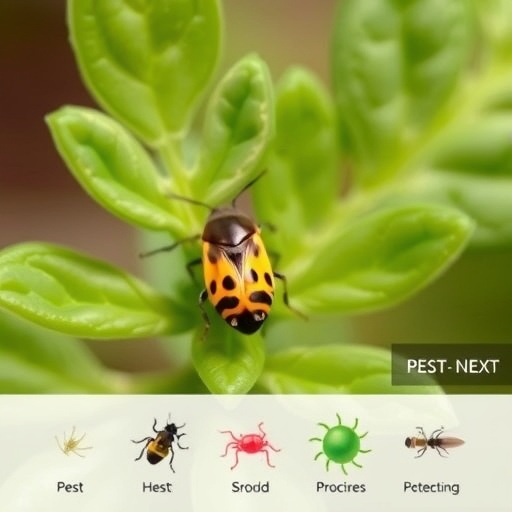
The project, spearheaded by Dr. Arti Singh, an associate professor of agronomy at Iowa State University, leverages deep learning algorithms trained on millions of images of insects, weeds, and disease symptoms. By simply uploading a photo of a problematic pest or disease symptom, farmers receive instant identification alongside targeted, scientifically grounded management recommendations. This instant feedback mechanism can dramatically reduce crop losses and increase yields, especially in regions where access to agricultural experts is limited or non-existent.
At the heart of this transformative effort is the BRIDGE app, an acronym symbolizing the collaborative endeavor’s mission to bridge global agricultural knowledge gaps. While existing tools like the Pest-ID app have successfully analyzed images of insects and weeds, the addition of disease recognition marks a significant breakthrough. Unlike insect and weed identification, disease diagnostics have historically suffered from a lack of extensive and accurately labeled imaging datasets, challenging AI models’ precision and reliability. The BRIDGE project aims to overcome these hurdles by integrating comprehensive international datasets, particularly from Australia, India, and Japan, refining them to meet local agricultural needs through advanced machine learning techniques.
This global-to-local approach ensures that the system is not merely a generic solution but a finely tuned platform capable of adapting to diverse agroecological zones and crop varieties. The AI models use intricate pattern recognition to discern subtle differences in disease manifestation, making it uniquely capable of guiding farmers through region-specific pest and disease spectrums. The anticipated outcome is a universally applicable tool that respects and integrates the intricacies of local farming environments, thus democratizing access to sophisticated agricultural expertise.
Beyond mere identification, the app aims to be an all-encompassing digital advisor. It will provide precise management strategies, considering environmental factors, pest resistance profiles, and sustainable agronomic practices. The system’s recommendations rest on multivariate datasets encompassing pesticide efficacy, crop susceptibility periods, and integrated pest management principles, thus promoting responsible and judicious use of chemical controls. Such an advisory ecosystem is expected to significantly reduce the indiscriminate application of pesticides, fostering both ecological balance and improved crop health.
The project benefits from a substantial two-year, $400,000 grant from the U.S. National Science Foundation (NSF), underpinning an international collaboration involving researchers from the United States, Australia, India, and Japan. This consortium, organized under the AI-ENGAGE initiative, exemplifies a forward-thinking model of global scientific cooperation, aiming not only to innovate but to ensure inclusivity in agricultural advancement. NSF’s broader commitment to AI integration in agriculture underscores the strategic importance of employing next-generation technologies to address food security challenges at a global scale.
Dr. Singh and her colleagues belong to a rich legacy of AI and agricultural research at Iowa State University, which has pioneered the intersection of computer science and agronomy. The existing Pest-ID platform, developed through years of meticulous work by the Soynomics research team, sets a strong foundation for this new endeavor. Its success in accurately identifying pests through computer vision has already made significant strides in reducing crop losses and enhancing farmer decision-making, offering a compelling proof of concept for the disease identification expansion.
The challenges of training AI to recognize crop diseases are non-trivial because unlike pests and weeds, diseases manifest in diverse and often ambiguous symptoms such as leaf spots, discolorations, and wilting patterns that vary widely between species and environmental conditions. The requirement for millions of expertly labeled images for each disease underpins this research’s complexity. To this end, researchers are utilizing innovative data augmentation techniques and transfer learning to maximize the utility of available datasets, while international partnerships enrich the variety and quality of disease imagery.
A critical technical advancement within BRIDGE is its adaptive learning framework that continuously incorporates new data submitted by users, enabling the system to improve over time. This feedback loop not only refines model accuracy but also allows the app to evolve alongside emerging pest species and disease variants, a critical feature given the dynamic nature of global agriculture and climate change-induced pest migration patterns. Hence, the tool is poised to remain agile in the face of ecological and agronomic challenges.
From an end-user perspective, the BRIDGE app’s interface is designed to be intuitive and user-centric, facilitating adoption among farmers with varying degrees of technological literacy. Its chatbot functionality fosters real-time, conversational interactions that simulate consultations with human experts, making complex diagnostic and management information accessible and actionable. These interfaces prioritize clarity and culturally relevant communication, furthering the app’s global applicability.
The implications of this technology extend far beyond individual farm productivity. By enabling early and precise pest and disease detection, the app contributes to broader agricultural sustainability goals: reducing chemical inputs, minimizing environmental contamination, and promoting resilient cropping systems. Its scalable architecture offers a blueprint for integrating AI into other facets of agri-tech, such as soil health monitoring, yield prediction, and climate adaptation strategies, potentially catalyzing a paradigm shift in smart farming.
As this international research consortium continues to refine and deploy the BRIDGE app, the vision is clear: to democratize access to advanced, AI-driven agronomic expertise that is both locally relevant and globally informed. This novel melding of big data, machine learning, and agricultural science epitomizes the potential of technology to support food security and sustainable development in an interconnected world, empowering farmers from Iowa’s heartland to fields across the globe with knowledge previously unimaginable.
Subject of Research:
AI-based agricultural pest and disease identification and management application development for global crop protection.
Article Title:
Bridging Global Knowledge and Local Needs: Advancing AI Tools to Empower NextGen Agriculture
News Publication Date:
[Not explicitly provided in the source content]
Web References:
https://pest-id.las.iastate.edu/
References:
[No formal references provided within the original text]
Image Credits:
Iowa State University/Christopher Gannon
Keywords:
Artificial intelligence, crop pest identification, disease management, machine learning, agricultural technology, pest control, sustainable farming, precision agriculture, global collaboration, BRIDGE app, AI-ENGAGE, Iowa State University, crop resilience
Tags: agricultural expert system appAI-powered pest identification appcrop pest management appdeep learning in agriculturedigital agronomist technologydisease recognition in cropsfarmer-friendly pest identificationglobal agricultural research collaborationIowa State agronomy innovationpest and disease symptom analysisprecision agriculture technologyreducing crop losses with AI