


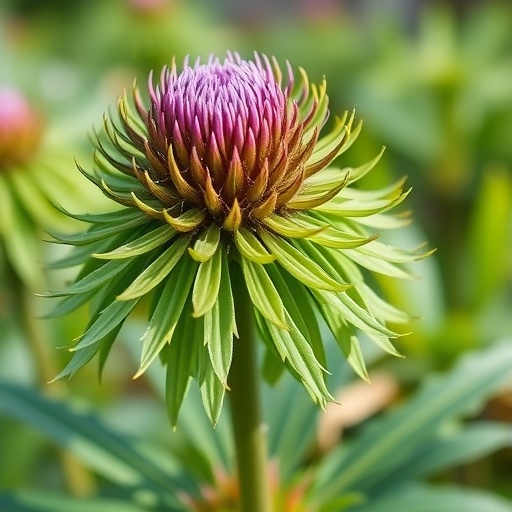
Inula britannica: Unlocking the Therapeutic and Functional Potential of a Traditional Medicinal Plant
In the continuously evolving landscape of natural product research, Inula britannica has emerged as an extraordinary subject worthy of scientific scrutiny due to its multifaceted bioactivities and promising applications. Long revered in traditional Asian medicine, this herbaceous plant is now being dissected with modern biochemical tools to uncover its constituents, physiological effects, and safety profile. A landmark study recently published in Food Science and Biotechnology by Yoon, Lee, and Paik (2026) offers an in-depth examination of the components, bioactivities, safety, and emerging uses of Inula britannica, positioning it at the forefront of natural therapeutic agents.
The scientific community has shown particular interest in Inula britannica owing to its diverse secondary metabolites, primarily sesquiterpene lactones, flavonoids, and polysaccharides, which collectively contribute to its biological effects. These phytochemicals have been systematically analyzed through advanced chromatographic and spectroscopic techniques to characterize their molecular structures and quantify their biological potency. Such comprehensive profiling enables an accurate understanding of how the synergy of components drives the plant’s medicinal efficacy.
Crucially, the anti-inflammatory properties of Inula britannica have gained significant attention due to their relevance in treating chronic inflammatory diseases and metabolic syndromes. The study highlights that specific sesquiterpene lactones inhibit pro-inflammatory mediators by modulating key signaling pathways such as NF-κB and MAPK. This mechanistic insight validates traditional usage as an anti-inflammatory agent and opens avenues for developing novel pharmaceuticals based on its bioactive compounds.
Antioxidant capacity is another remarkable attribute of Inula britannica, demonstrated through its ability to scavenge free radicals and upregulate endogenous antioxidant enzymes. The research illustrates that flavonoid-rich extracts contribute significantly to reducing oxidative stress, which is implicated in aging and numerous pathologies including neurodegenerative disorders and cancer. This antioxidative mechanism supports the rationale for incorporating Inula britannica-derived ingredients into functional foods and nutraceuticals aimed at promoting healthspan.
Beyond inflammation and oxidative stress, antimicrobial activity of Inula britannica is pivotal in combatting pathogenic microorganisms. The researchers detail its efficacy against a spectrum of bacterial and fungal strains, with evidence suggesting that sesquiterpene lactones disrupt microbial membranes and inhibit biofilm formation. Such findings highlight the potential of this plant as a natural antibiotic alternative amidst rising antimicrobial resistance challenges in clinical settings.
Equally important is the safety assessment carried out in this study, which underscores the non-toxic nature of Inula britannica when administered at therapeutically relevant doses. Through acute and sub-chronic toxicity assays in animal models coupled with in vitro cytotoxicity evaluations, the research confirms minimal adverse effects, bolstering its credibility for human consumption and integration into regulatory frameworks governing herbal products.
From an applied perspective, Inula britannica’s versatility extends into food sciences where its extracts are incorporated as functional ingredients offering both health benefits and extended shelf life due to their antioxidative and antimicrobial properties. Pilot studies discussed in the article showcase successful fortification of dairy and bakery products, illustrating market potential driven by growing consumer demand for natural and clean-label additives.
Additionally, the cosmetic industry stands to benefit from Inula britannica’s bioactive profile, notably in formulations aimed at skin protection and anti-aging. The modulation of inflammatory markers and free radicals at the dermal level provides a scientific basis for its inclusion in topical applications that target chronic skin conditions and photoaging, thereby meeting modern consumers’ criteria for efficacy and natural origin.
Technological advancements in extraction and purification methods addressed in the study have significantly improved yield and potency of active compounds from Inula britannica. Techniques such as supercritical fluid extraction and high-performance liquid chromatography (HPLC) enable scalable production while preserving bioactivity, facilitating industrial adoption and standardization crucial for therapeutic consistency.
The integration of omics technologies further propels the understanding of Inula britannica’s metabolic pathways and gene expression profiles associated with its bioactivities. Transcriptomic and metabolomic analyses reveal complex interactions between plant metabolites and molecular targets, setting the stage for synthetic biology approaches to enhance desired compounds or engineer novel derivatives with improved pharmacokinetics.
Notably, the ecological and agricultural aspects of Inula britannica cultivation are also discussed, emphasizing sustainable farming practices that optimize bioactive content while minimizing environmental impact. The study highlights genotype selection, soil health, and harvesting time as critical factors influencing phytochemical profiles, providing valuable guidelines for large-scale production aligned with green chemistry principles.
In a clinical context, preliminary human trials referenced in the article provide encouraging results regarding the efficacy of Inula britannica extracts in alleviating symptoms associated with respiratory ailments, including chronic bronchitis and asthma. These outcomes confirm translational relevance and warrant further controlled studies to fully establish dosage regimens and long-term safety.
Going forward, the fusion of traditional knowledge with cutting-edge research showcased in this comprehensive review underscores the untapped potential of Inula britannica as a transformative natural product. As global health systems increasingly embrace integrative approaches, plants like Inula britannica bridge the gap between ancient wisdom and contemporary science, promising new horizons in disease prevention and wellness.
This extensive study by Yoon and colleagues integrates fundamental phytochemical characterization, mechanistic bioactivity investigation, safety validation, and pragmatic application strategies to position Inula britannica as a multi-functional agent with widespread potential. Continued interdisciplinary efforts will be key to harnessing this botanical resource to its fullest, including regulatory standardization, consumer education, and innovative product development channels.
In summary, Inula britannica emerges from this investigation not merely as a traditional herbal remedy, but as a scientifically substantiated powerhouse with applications spanning pharmaceuticals, nutraceuticals, cosmetics, and food industries. The convergence of its rich phytochemical diversity, demonstrated bioactivities, safety profile, and technological facilitation marks a revolutionary stride in natural product research and development.
As the global marketplace increasingly values sustainable, bioactive plant materials, Inula britannica offers a promising model for future research-driven harnessing of botanical resources. Its story exemplifies the broader paradigm shift embracing plant-based interventions to complement modern medicine and enhance quality of life through scientifically informed innovation.
Subject of Research:
Inula britannica: Phytochemical composition, bioactivities, safety, and industrial applications.
Article Title:
Bioactivities, components, safety, and applications of Inula britannica.
Article References:
Yoon, H.J., Lee, N.K., & Paik, H.D. Bioactivities, components, safety, and applications of Inula britannica. Food Sci Biotechnol (2026). https://doi.org/10.1007/s10068-025-02078-5
Image Credits: AI Generated
DOI: 10.1007/s10068-025-02078-5 (Published 10 January 2026)
Keywords: Inula britannica, sesquiterpene lactones, flavonoids, anti-inflammatory, antioxidant, antimicrobial, natural product, phytochemicals, functional foods, nutraceuticals, cosmetic applications, safety assessment, extraction technologies, metabolic profiling
Tags: anti-inflammatory effects of Inula britannicaapplications of Inula britannica in modern medicinebioactivities of Inula britannicachromatography techniques in plant studiesemerging uses of traditional herbsflavonoids and polysaccharides in Inula britannicaInula britannica medicinal propertiesnatural therapeutic agents researchphytochemical components of Inula britannicasafety profile of Inula britannicasesquiterpene lactones in herbal medicinetraditional uses of Inula britannica



