


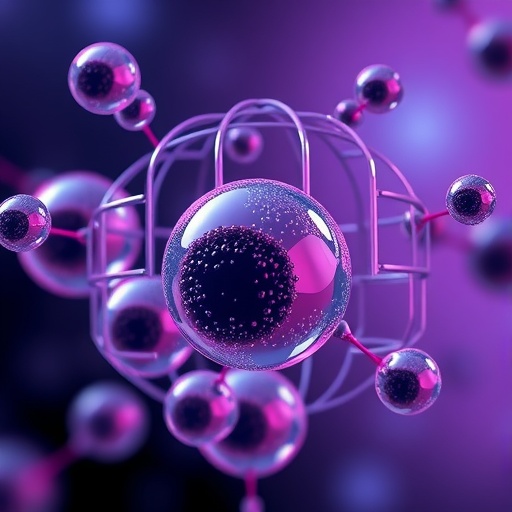
Recent groundbreaking research has illuminated a pivotal aspect of cellular communication and drug delivery systems, focusing particularly on the comparative efficacy of small intracellular vesicles (iICVs) versus small extracellular vesicles (sECVs). This study, spearheaded by Zhang, Yu, Yang, and their collaborators, demonstrates that iICVs outperform sECVs in critical applications involving cellular uptake, drug delivery, and neuroprotection in retinal cells. The findings represent a significant advancement in biomedicine and could revolutionize therapeutic strategies for a myriad of diseases, particularly those affecting the retina.
Vesicles are tiny, membrane-bound sacs that play crucial roles in transporting molecules within and outside cells. The two types under investigation—iICVs and sECVs—serve different functions in cellular environments. sECVs, which are secreted by cells, have been the focus of much previous research due to their naturally occurring roles in intracellular communication and their potential in drug delivery applications. However, the newly published findings challenge the prevailing wisdom, revealing that the smaller intracellular variant may have superior properties in these domains.
One of the key takeaways from the study is the remarkable efficiency with which iICVs are taken up by target cells compared to sECVs. This inefficient uptake has been a significant drawback for sECVs, limiting their effectiveness in delivering therapeutic drugs to the desired locations within the body. The authors conducted a series of experiments that conclusively demonstrated higher absorption rates of iICVs in cellular environments, which is poised to enhance the future of drug delivery systems vastly.
Moreover, the study indicates that iICVs possess unique biophysical properties that may facilitate their passage through biological barriers, such as cell membranes. This characteristic is particularly significant when considering the targeted delivery of drugs or genetic material to areas that may otherwise be difficult to access therapeutically. By utilizing these vesicles as delivery vehicles, the researchers suggest a new paradigm for treating diseases that currently have limited therapeutic options, including neurodegenerative disorders.
Retinal neuroprotection is one of the most pressing issues facing ophthalmology today, and this research has particularly profound implications in that field. The retina, being a delicate structure, is highly susceptible to damage from various factors, including oxidative stress and inflammation. Zhang and his team demonstrated that iICVs could be effectively loaded with neuroprotective agents and subsequently delivered to retinal cells, enhancing their survival and functionality. This could lead to novel strategies in preventing vision loss in diseases such as age-related macular degeneration and diabetic retinopathy.
The fascinating aspect of this study also lies in its exploration of the underlying mechanisms through which iICVs surpass sECVs. The authors utilized advanced imaging techniques to analyze how these vesicles interact with cellular surfaces and penetrate target cells. Their results indicate that the unique lipid composition and size of iICVs facilitate more effective fusion with target membranes, thus enhancing their ability to deliver payloads efficiently.
Additionally, the research sheds light on the potential engineering of iICVs to further amplify their effectiveness in drug delivery systems. By manipulating vesicle characteristics at the molecular level, it may be possible to tailor these delivery vehicles for specific therapeutic benefits, such as increased stability or targeted release mechanisms. This adaptability could vastly improve patient outcomes by providing more precise and controlled drug administration, reducing side effects often associated with systemic therapies.
The versatility of iICVs extends beyond drugs for retinal diseases. The implications of this research could touch various medical fields, providing novel avenues for treating cancers, inflammatory diseases, and genetic disorders.
Furthermore, the study posits that iICVs could also serve as biosensors, potentially revolutionizing diagnostic methods. Their unique characteristics might allow these vesicles to carry molecular indicators of disease, enhancing early detection and monitoring of conditions before they reach critical stages, thereby addressing a significant gap in preventative medicine.
However, while the findings are promising, they also raise questions regarding the practical implementation of iICVs in clinical settings. Transitioning from laboratory to bedside requires substantial considerations, including questions about the scalability of production, safety, and long-term efficacy of these engineered vesicles. Regulatory pathways must also be established to ensure that these novel therapies meet safety and efficacy criteria before they can be made available to patients.
In summary, the research led by Zhang et al. breaks new ground in the understanding of intracellular and extracellular vesicle dynamics. By showcasing the enhanced characteristics and potential applications of iICVs, this study opens exciting possibilities in drug delivery, with significant implications for retinal neuroprotection and beyond. The findings are poised to ignite further research and development in this area, paving the way for innovative therapeutic strategies that could change the landscape of biomedicine.
As the exploration of iICVs continues, the scientific community may find itself on the precipice of a new era in drug delivery and patient care. The excitement surrounding this research underscores its potential to inspire future innovations that could transform how we approach disease treatment and prevention, solidifying the relevance of this work in contemporary medical science.
Subject of Research: Investigation of Small Intracellular Vesicles (iICVs) in Drug Delivery and Neuroprotection
Article Title: Small intracellular vesicles outperform small extracellular vesicles in uptake, drug delivery and retinal neuroprotection.
Article References:
Zhang, H., Yu, X., Yang, F. et al. Small intracellular vesicles outperform small extracellular vesicles in uptake, drug delivery and retinal neuroprotection. Nat. Biomed. Eng (2026). https://doi.org/10.1038/s41551-025-01596-1
Image Credits: AI Generated
DOI: https://doi.org/10.1038/s41551-025-01596-1
Keywords: Small intracellular vesicles, drug delivery, retinal neuroprotection, extracellular vesicles, biomedicine, cellular uptake.
Tags: advancements in biomedicinecellular communication mechanismsdrug delivery systems in healthcareefficacy of vesicle uptakeinnovative drug delivery methodsintracellular versus extracellular vesiclesintracellular vesicles in drug deliveryneuroprotection in retinal cellssmall extracellular vesicles comparisontherapeutic strategies for retinal diseasesvesicle transport in cellular environmentsvesicle-mediated drug delivery



