Biological reconstruction of segmental long bone defects in the lower limb using all-internal bone transport systems achieved complete limb salvage and reached the planned transport end in all evaluated cases, according to a single-center retrospective study of 31 patients. The therapeutic investigation examined clinical outcomes associated with bone transport nails and plate-assisted bone segment transports utilized for reconstructive interventions involving the femur or tibia. Conducted at a single university hospital, the study retrospectively reviewed all consecutive patients treated with these internal systems between July 2019 and June 2024.
The study cohort consisted of 31 patients with an average age of 39.6 years, with a standard deviation of 16.3 years, and men comprising 71 percent of the total sample. Within the group, 22 individuals underwent treatment with bone transport nails, whereas nine individuals were managed with plate-assisted bone segment transports. Segmental bone defects involved the tibia in 18 cases and the femur in 13 cases. The underlying causes of the defects were postinfectious in 19 patients, posttraumatic in nine patients, and the result of surgical resection for malignant tumors in three patients.
Clinical monitoring across the cohort spanned a median follow-up period of 22 months, with an interquartile range of 17 to 37 months and a protocol-defined minimum observation window set at one year. Throughout this surveillance period, all-internal surgical techniques successfully achieved the planned end of transport and accomplished complete limb salvage in 100 percent of the cases. The median transport length documented across the cohort was 75 millimeters, with an interquartile range extending from 55 to 94 millimeters. Patients required a median time of 3.4 months to reach the transport end, with an interquartile range of 2.6 to 4.9 months.
Functional rehabilitation milestones indicated that patients required a median duration of 5.4 months to achieve full weight-bearing status, with an interquartile range spanning from 4.7 to 7.1 months. However, overall complication rates remained prominent during therapy. Documented adverse events occurred in 58 percent of all participants, representing 18 of the 31 patients. Specifically, mechanical complications developed in 42 percent of the cohort, affecting 13 of the 31 individuals, while deep infections occurred in 16 percent of cases, accounting for five of the 31 patients.
Further evaluation of infectious complications revealed that four of the five deep infections were persistent in nature, whereas zero deep infections occurred among patients presenting with posttraumatic bone defects. Furthermore, reoperations were exceptionally frequent throughout the course of treatment, with at least one subsequent surgical intervention required for 87 percent of the cohort, representing 27 of the 31 treated individuals. In 29 percent of the patients, corresponding to nine of the 31 cases, the performed reoperations were categorized exclusively as planned surgical procedures.
All comparative statistical evaluations were restricted to the non-oncological subpopulation of 28 patients, thereby excluding the three participants who underwent reconstruction following resection for malignant tumors. Within this non-oncological subset, recharging procedures were performed significantly more frequently for femoral defects compared with tibial defects, demonstrating a statistically significant association with a p-value of 0.004. Due to the limited overall sample size, researchers detected no other statistically significant differences between the two internal techniques or anatomical bone sites, and no statistically significant risk factors were identified.
The authors designated this research as a Level III therapeutic study, concluding that all-internal transport systems can be successfully deployed to achieve limb salvage and reach planned transport lengths in lower extremity biological reconstruction. Nevertheless, the investigators emphasized that clinicians must thoroughly counsel candidates before surgery regarding prolonged aftercare requirements, substantial rates of both planned and unplanned secondary operations, and the inherent complication risks associated with these complex limb-reconstruction procedures.
Subject of Research: All-internal bone segment transport for lower limb defect reconstruction
Article Title: Bone segment transport with all-internal systems (BTN or PABST): a single-center retrospective analysis of 31 cases
Article References: Valentini, M., Smolle, M. A., Zötsch, S., Zettl, R., Sagmeister, M., Leithner, A., Puchwein, P., & Lanz, P. (2026). Bone segment transport with all-internal systems (BTN or PABST): a single-center retrospective analysis of 31 cases. Journal of Orthopaedics and Traumatology. https://doi.org/10.1186/s10195-026-00962-2
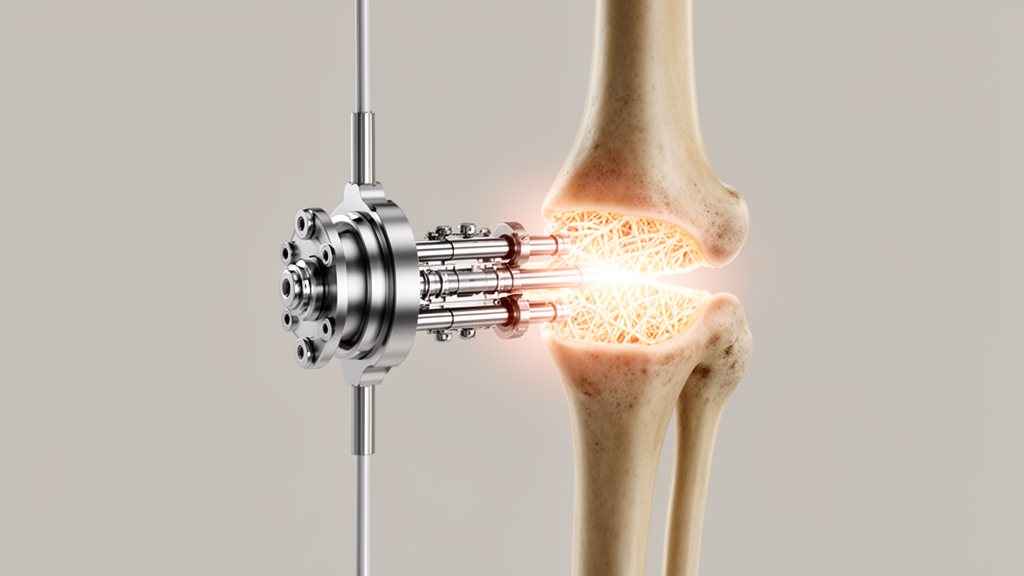
Image Credits: AI Generated
DOI: 10.1186/s10195-026-00962-2
Keywords: bone segment transport, all-internal transport systems, bone transport nails, plate-assisted bone segment transports, limb salvage, tibial defects, femoral defects, segmental long bone defects, biological reconstruction, postinfectious bone defects, posttraumatic bone defects, malignant tumor resection, mechanical complications, deep infections, reoperation rates, full weight-bearing, single-center retrospective analysis
News Source: Ophelia Keating. (November 18, 2026). Internal Bone Transport Systems Achieved Complete Limb Salvage in Retrospective Study. Scienmag.