In an era defined by rapid demographic shifts and the rising global aging population, the intricacies of geriatric care demand innovative and effective strategies. The GEROS Project emerges as a beacon of promise, grounding its approach in a novel service-learning program that intertwines Comprehensive Geriatric Assessment (CGA) with proactive health promotion. This initiative aims to revolutionize how communities engage with and support the elderly, blending empirical rigor with compassionate care to enhance quality of life and autonomy among older adults.
The foundation of the GEROS Project lies in the utilization of the Comprehensive Geriatric Assessment, a multidimensional, interdisciplinary diagnostic process designed to evaluate an older adult’s functional ability, physical health, cognition, and mental health. This extensive assessment framework is crucial for tailoring personalized interventions that address the complex and often interrelated health challenges faced by the aging population. By integrating CGA into the service-learning framework, the project ensures that health promotion efforts are not only evidence-based but also dynamically responsive to each individual’s comprehensive health profile.
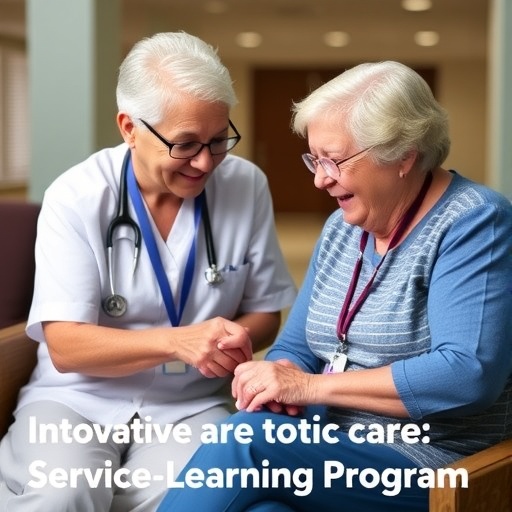
Service-learning, a pedagogical approach that combines meaningful community service with instruction and reflection, forms the scaffold on which GEROS is built. This model transcends traditional healthcare delivery by actively engaging health sciences students and professionals in real-world scenarios involving older adults. Through this reciprocal engagement, participants gain critical insights into geriatric health complexities while simultaneously contributing to the well-being of the elderly, fostering an invaluable partnership between learners and the community.
Health promotion within the GEROS framework extends beyond conventional wellness advice, embedding itself in tailored interventions derived from CGA findings. This proactive stance emphasizes prevention and the maintenance of functional independence, recognizing that successful aging goes hand-in-hand with sustained physical, cognitive, and social engagement. By equipping older adults with knowledge, resources, and support structures, the project aims to mitigate the onset and progression of chronic diseases, reduce hospitalizations, and enhance overall life satisfaction.
The protocol meticulously outlines a structured sequence wherein students and healthcare providers conduct CGA in community settings, identify modifiable risk factors, and formulate individualized health promotion plans. This hands-on experience enriches participants’ clinical acumen and empathy, creating a generation of healthcare professionals intimately familiar with the nuanced needs of the elderly. In parallel, older adults benefit from timely, personalized attention that addresses gaps frequently encountered in standard clinical practice, such as mobility assessments, nutritional counseling, and mental health support.
Innovation is at the core of GEROS, particularly in how it harnesses technology and data analytics to refine assessments and monitor outcomes. Digital tools facilitate the collection, analysis, and sharing of health data, enabling dynamic adjustments to intervention strategies and fostering a feedback loop that continuously improves the program’s effectiveness. This integration positions GEROS at the forefront of modern geriatric care, blending traditional clinical wisdom with cutting-edge technological assistance.
Further deepening its impact, the GEROS Project seeks to generate a robust evidence base through systematic documentation and evaluation of program outcomes. Metrics such as improved functional status, reduced emergency visits, and enhanced mental well-being provide quantifiable markers of success. These data-driven insights inform health policy and resource allocation, advocating for broader adoption of service-learning models in geriatric care and health promotion at regional and national levels.
Crucial to the program’s sustainability is the emphasis on community empowerment and capacity building. By embedding education within the service-learning experience, the project cultivates a network of informed caregivers, volunteers, and advocates who extend support beyond formal healthcare settings. This ecosystem fosters social inclusion and combats the pervasive issue of elderly isolation, which is linked to adverse health outcomes and decreased life expectancy.
The interdisciplinary nature of GEROS also merits attention, as it enlists expertise from geriatrics, nursing, psychology, social work, and physiotherapy, among others. This holistic approach ensures that interventions are multifaceted and address the broad spectrum of determinants influencing elder health. Collaboration across disciplines not only enriches the learning environment but also enhances the comprehensiveness of care provided to older adults.
In tackling cognitive health, the program incorporates screening and intervention strategies aimed at early detection and management of conditions such as dementia and depression. Cognitive decline remains one of the most challenging aspects of aging, often complicating the management of other chronic conditions. Through targeted assessment and personalized cognitive stimulation plans, GEROS endeavors to preserve mental faculties and foster resilience against neurodegenerative processes.
The mental health and emotional well-being components are equally compelling, acknowledging the psychological toll that aging and chronic illness can impose. Service-learning participants are trained to recognize signs of anxiety, depression, and social withdrawal, initiating timely referrals and psychosocial support. This sensitivity helps break down stigma surrounding mental health in older populations, which can otherwise hinder access to care.
Physical activity promotion is integrated within the service-learning curriculum, encouraging older adults to maintain or enhance mobility through tailored exercise regimens. Regular physical activity is widely recognized as a cornerstone of healthy aging, contributing to cardiovascular health, muscle strength, balance, and fall prevention. By embedding these principles into health promotion efforts, GEROS anticipates tangible improvements in physical function and autonomy.
Nutrition counseling further complements the program’s comprehensive approach, addressing malnutrition risks that are prevalent yet often underdiagnosed among seniors. Through educational workshops and personalized guidance, older adults receive support in developing balanced diets that are sensitive to their metabolic needs, medication effects, and existing comorbidities. This attention to nutritional status reinforces overall health and aids in disease management.
One of the profound strengths of the GEROS Project is its adaptability and scalability, designed to be replicated across diverse healthcare settings and cultural contexts. By fostering partnerships with local community organizations and healthcare providers, the program can be customized to suit population needs, resource availability, and health system infrastructures. This adaptability ensures that the benefits of GEROS can permeate various societies facing similar aging challenges globally.
In summary, the GEROS Project stands as a pioneering initiative that marries clinical innovation, educational excellence, and community engagement to redefine how aging populations are supported. Its service-learning program, rooted in comprehensive assessment and tailored health promotion, offers a beacon of hope for enhanced elderly care. As the world grapples with aging demographics, models like GEROS are essential to crafting sustainable, effective, and empathetic pathways toward healthier aging and improved quality of life.
Subject of Research: Comprehensive Geriatric Assessment and Health Promotion in Older Adults through a Service-Learning Program
Article Title: A Service-Learning Program Based on Comprehensive Geriatric Assessment and Health Promotion in Older Adults: Protocol for the GEROS Project
Article References:
Casacuberta-Roca, J., Minobes-Molina, E., Terradas-Monllor, M. et al. A Service-Learning Program Based on Comprehensive Geriatric Assessment and Health Promotion in Older Adults: Protocol for the GEROS Project. BMC Geriatr (2026). https://doi.org/10.1186/s12877-026-07312-1
Image Credits: AI Generated
Tags: addressing complex health needs of elderlycommunity engagement in elderly supportcomprehensive geriatric assessment in elderly careeducational models for healthcare studentsenhancing autonomy in aging adultsimproving quality of life for seniorsinnovative geriatric care programsinterdisciplinary approaches to aging populationsmental and physical health assessment in geriatricspersonalized interventions in geriatric healthproactive health promotion for older adultsservice-learning in health sciences education