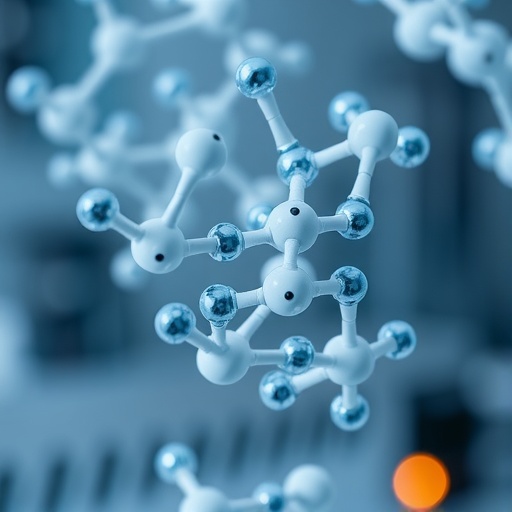
A groundbreaking advancement in pharmaceutical chemistry has emerged from the laboratories of the University of Gothenburg, marking a significant stride toward simplifying drug development processes. Researchers have engineered an innovative class of stable boron-fluorine compounds—specifically BF₂-boracycles—that possess the remarkable ability to enhance therapeutic efficacy or mitigate side effects without necessitating the disassembly of the drug molecule. This revolutionary approach promises to reshape the landscape of medicinal chemistry by enabling late-stage modification of complex pharmaceuticals with unprecedented precision and efficiency.
Boron-containing compounds have long held a pivotal role in contemporary chemical science, underpinning the synthesis of drugs, advanced materials, and vital diagnostic agents. However, the strategic incorporation of boron atoms at exact positions within multifaceted molecular architectures has traditionally presented formidable synthetic challenges. This limitation has curtailed the scope for refining existing bioactive molecules, hindering efforts to improve drug performance or diminish adverse effects through molecular tailoring.
The newly developed BF₂-boracycles stand apart by combining exceptional stability with high chemical reactivity, enabling their facile production through a streamlined, metal-free process that obviates the need for laborious purification steps. According to Henrik Sundén, Professor of Organic Chemistry at the University of Gothenburg, these compounds can be synthesized on a scalable basis, making them accessible for widespread application. Their dual attributes of robustness and reactivity facilitate selective chemical transformations that were previously unattainable with conventional boron reagents.
A pivotal advantage of BF₂-boracycles lies in their capacity to enable late-stage functionalization. Rather than rebuilding a drug molecule from scratch—a process often involving multiple complex and resource-intensive steps—chemists can now selectively replace a single hydrogen atom within a finished pharmacophore with this boron-fluorine moiety. This modification creates a versatile chemical handle, allowing subsequent substitution with diverse functional groups to enhance the drug’s properties systematically and efficiently.
This late-stage modification paradigm fundamentally transforms medicinal chemistry workflows by reducing synthetic complexity, minimizing chemical waste, and enhancing resource efficiency. It presents an environmentally conscientious alternative that aligns with green chemistry principles. The collaborative efforts of researchers from the University of Gothenburg, the University of Caen in France, and the University of Ljubljana in Slovenia have been instrumental in refining this methodology to meet practical drug development demands.
A key novelty of this strategy is its circumvention of the traditional necessity to incorporate functional groups during initial drug synthesis. Historically, introducing new functionalities entailed rebuilding the molecular scaffold to accommodate desired substituents, a process constrained by synthetic accessibility and chemical compatibility. BF₂-boracycles break this barrier by serving as transient intermediates that can be selectively exchanged, facilitating rapid screening of multiple functionally enhanced derivatives from a single parent compound.
Henrik Sundén highlights this transformative potential: the method allows medicinal chemists to generate a large array of functionalized analogues by substituting the boron compound with numerous candidate molecules. This modularity accelerates the identification of lead compounds with optimized pharmacodynamic and pharmacokinetic profiles, dramatically shortening the timeline from conceptual drug design to clinical candidate selection.
The versatility of BF₂-boracycles extends across various chemical reactions pivotal to drug synthesis. They can effectively substitute for numerous chemical groups, including halogens, alcohols, and azides, and participate robustly in widely used coupling reactions. This broad compatibility paves the way for their integration into diverse synthetic schemes, augmenting the toolkit available to medicinal chemists for constructing and modifying complex drug candidates.
A particularly exciting application of BF₂-boracycles lies in nuclear medicine, specifically in the incorporation of radioactive isotopes such as iodine-131 and iodine-123, which are cornerstone agents in both the diagnosis and treatment of oncological diseases. The method allows precise installation of radioactive iodine into drug molecules via substitution at the boron-functionalized site, facilitating targeted imaging and radiotherapy with improved selectivity and stability.
In nuclear imaging techniques like scintigraphy, radioactive iodine-labeled compounds accumulate in tissues exhibiting pathological alterations, enabling early detection of tumors and metastases through gamma camera imaging. This breakthrough in radiolabeling enhances the resolution and specificity of diagnostic scans, potentially improving clinical outcomes across a range of cancers affecting the skeleton, liver, kidneys, thyroid, and lymphatic system.
The translational impact of this research is heightened by direct engagement with pharmaceutical industry leaders such as AstraZeneca. Drug developers recognize the strategic advantage conferred by this late-stage functionalization approach, especially its capacity to fine-tune drug candidates without restarting the synthetic sequence. This collaboration underscores the industrial relevance and practical feasibility of applying BF₂-boracycles in ongoing drug discovery programs.
In summary, the advent of stable BF₂-boracycles as versatile reagents for selective ortho C–H functionalization represents a paradigm shift in drug development chemistry. By blending synthetic simplicity, environmental sustainability, and chemical versatility, this innovation equips scientists with powerful tools to expedite the refinement of therapeutics. It holds promise not only for enhancing conventional pharmaceuticals but also for advancing precision medicine through improved diagnostic and therapeutic agents.
As industries continuously seek methodologies that combine efficacy, cost reduction, and environmental consciousness, the BF₂-boracycle platform epitomizes the next generation of chemical innovation. Its implementation could herald a new era in medicinal chemistry, where drugs are improved rapidly, systematically, and sustainably, providing tangible benefits to both developers and patients worldwide.
Subject of Research: Development of stable BF₂-boracycles for late-stage drug molecule modification.
Article Title: Stable BF2 Boracycles as Versatile Reagents for Selective Ortho C–H Functionalization
News Publication Date: 16-Jan-2026
Web References: 10.1002/anie.202518421
Image Credits: Illustration by Henrik Sundén
Keywords: BF₂-boracycles, boron-fluorine compounds, drug development, late-stage functionalization, medicinal chemistry, radiolabeling, radioactive iodine, scintigraphy, cancer diagnostics, synthetic chemistry, environmental sustainability, pharmaceutical innovation
Tags: advancements in chemical scienceBF₂-boracycles in drug developmentboron in medicinal chemistryboron-fluorine compoundsenhancing therapeutic efficacyinnovative pharmaceutical chemistrylate-stage modification of pharmaceuticalsovercoming synthetic challenges in drug designreducing side effects in drugsscalable synthesis of boron compoundssimplifying drug synthesis processesstable boron compounds