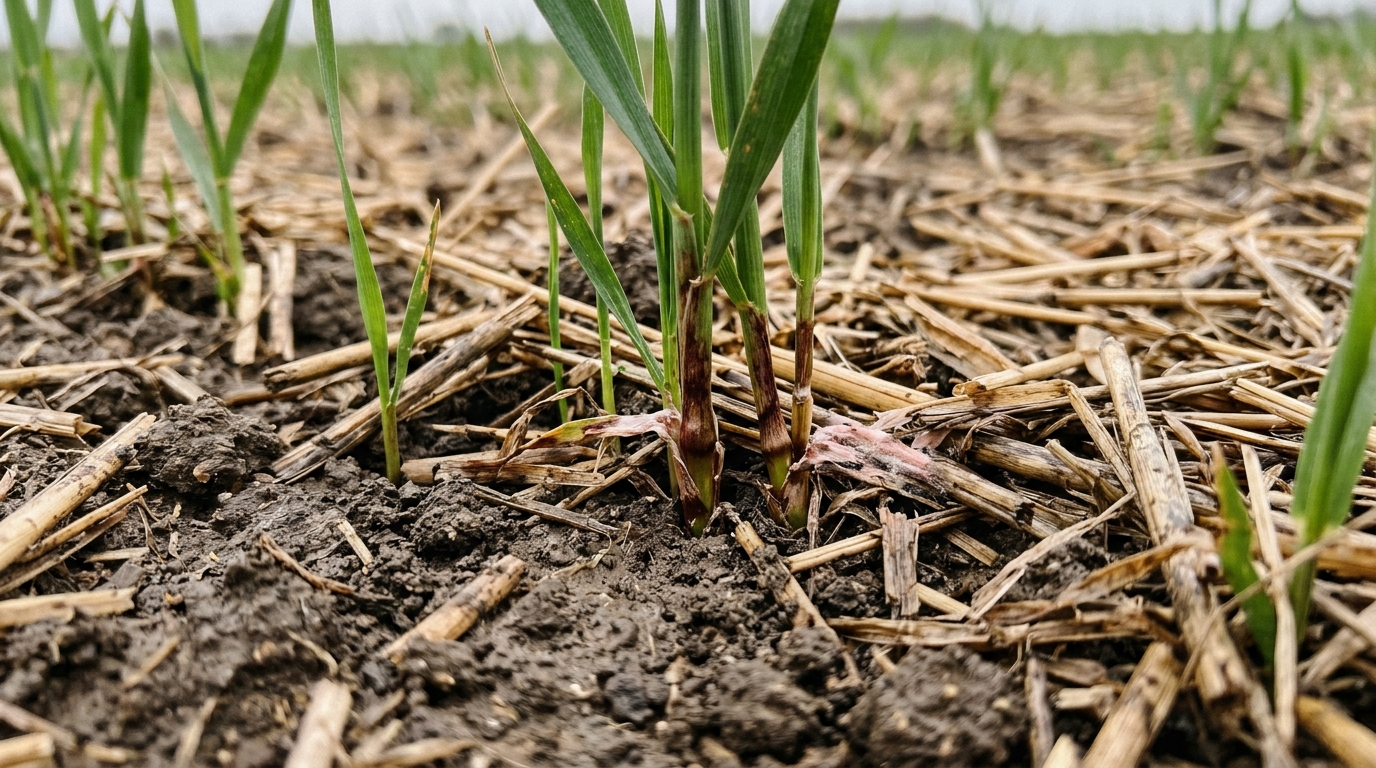
In a field experiment conducted within a wheat-maize rotation system, returning pathogen-infected wheat straw to the soil was associated with destabilization of the rhizosphere microbiome and increased severity of Fusarium crown rot in wheat. The research evaluated whether returning infected straw influences disease development through alterations to the soil microbial community rather than acting solely as a direct source of pathogen inoculum, revealing distinct cultivar-dependent outcomes.
Wheat straw return is widely practiced across agricultural regions in China to increase soil organic carbon, yet the practice carries the recognized side effect of exacerbating soil-borne crop diseases, especially when the returned residue harbors pathogen inoculum. Beyond the direct physical input of infectious inoculum into the field, the extent to which straw return affects disease dynamics by altering the surrounding microbiome has remained less clear.
To investigate these ecological dynamics, researchers designed an experimental framework that examined whether the co-occurrence structure of the rhizosphere microbiome, community assembly mechanisms, and the relative abundance of putatively beneficial taxa differed between treatments with and without pathogen-infected straw return. The field study employed absolute quantitative microbiome profiling, co-occurrence network analysis, and null model-based community assembly inference across two distinct wheat cultivars.
Measurements of disease severity showed that the Fusarium crown rot disease index was higher under pathogen-infected straw return for both tested wheat varieties. However, the observed increase was statistically significant only in the susceptible cultivar Zhoumai 33, where the disease index climbed from 3.0 to 11.1. In contrast, the resistant cultivar Zhoumai 18 exhibited a non-significant change, with its disease index shifting from 0.9 to 2.9.
The investigators found that returning pathogen-infected straw did not universally elevate Fusarium abundance across all analyzed soil compartments, but instead triggered differential enrichment of the fungus specifically within the wheat rhizosphere. This localized enrichment occurred alongside a measurable loss of microbiome stability, characterized by reduced complexity and reduced robustness in microbial co-occurrence networks constructed across both cultivars for inter-row and rhizosphere soils.
Community assembly patterns also shifted toward increased stochasticity under infected straw return, an effect that emerged most prominently within fungal communities at the later Feekes 11 sampling stage. Concurrently, the altered soil environment exhibited a depletion of putatively beneficial microbial taxa known to include biocontrol strains, including members of the bacterial genus Flavobacterium and the fungal genus Chaetomium.
Integrated machine learning analyses further linked the Fusarium crown rot disease index directly to these broader ecological disruptions, connecting disease severity with overall shifts in microbial diversity, the depletion of beneficial taxa, the enrichment of pathogenic fungi such as Fusarium and Bipolaris, and reduced soil nitrogen and phosphorus availability.
The study authors concluded that the disease-promoting consequences of returning pathogen-infected straw cannot be explained by direct inoculum input alone, highlighting that rhizosphere microbiome stability is a critical factor determining plant health outcomes, particularly in susceptible cultivars. Based on these findings, the authors advocated for integrated agricultural management strategies combining resistant wheat cultivars, microbiome-aware nutrient management, and targeted microbial amendments to preserve soil health in straw return systems.
Subject of Research: Impact of pathogen-infected wheat straw return on rhizosphere microbiome stability and Fusarium crown rot in wheat
Article Title: Pathogen-infected wheat straw return is associated with rhizosphere microbiome destabilization and increased Fusarium crown rot severity in wheat
Article References: Feng, C., Zhang, J., & Xu, F. (2026). Pathogen-infected wheat straw return is associated with rhizosphere microbiome destabilization and increased Fusarium crown rot severity in wheat. Environmental Microbiome. https://doi.org/10.1186/s40793-026-00990-9
Image Credits: AI Generated
DOI: 10.1186/s40793-026-00990-9
Keywords: Fusarium crown rot, rhizosphere microbiome, wheat straw return, Zhoumai 33, Zhoumai 18, wheat-maize rotation, microbiome stability, co-occurrence network, community assembly, stochasticity, Feekes 11, Flavobacterium, Chaetomium, Bipolaris, soil nitrogen availability, soil phosphorus availability, biocontrol strains, microbial diversity
News Source: Morgan Morrow. (November 27, 2026). Infected Wheat Straw Return Destabilizes Soil Microbiome and Increases Crown Rot. Scienmag.