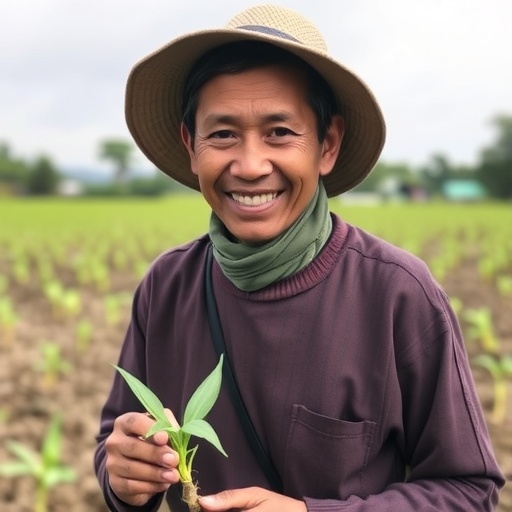
In the verdant landscapes of Indonesia, oil palm cultivation is not just an agricultural activity; it is the linchpin of the economy for millions of smallholder farmers. However, the palm oil industry faces a critical challenge: the aging of oil palm plantations, which significantly erodes both productivity and the livelihoods dependent on them. Recently, Indonesia’s government launched a replanting subsidy program designed to incentivize smallholders to renew their aging palms. Yet, according to new research, these subsidies fall woefully short of empowering farmers to undertake the costly and complex process of replanting. The findings suggest a pressing need for a reevaluation of policy to secure a sustainable future for Indonesia’s palm oil sector.
At the heart of this issue lies the biological and economic reality of oil palm cultivation. Oil palms typically reach their peak productivity around 8 to 15 years after planting, after which yields decline progressively. Without timely replanting, the economic returns from these plantations diminish, exposing farmers to greater financial vulnerability. However, replanting is resource-intensive, requiring significant upfront capital investment, knowledge, and access to quality seedlings. This complexity especially burdens smallholders, who collectively produce about 40% of Indonesia’s palm oil but often operate on limited incomes with scant access to credit.
The Indonesian government’s replanting subsidy program was introduced to offset these upfront costs, aiming to stimulate replanting and sustain national production levels. The subsidies include financial support earmarked for purchasing seedlings and covering planting labor. On paper, this appears to be a targeted intervention that should alleviate the financial constraints faced by smallholders. Nevertheless, the recent study reveals that the subsidy amounts are insufficient when confronted with the real costs of replanting, which include maintaining agricultural operations during the non-productive lag phase post-replanting.
Crucially, the subsidy does not fully account for the complex socio-economic constraints that smallholder farmers confront. Beyond direct financial hurdles, there are indirect costs such as interrupted income streams during the juvenile period of replanted palms, which can last up to three years. During this period, farmers do not generate substantial yields yet must continue to meet household expenses and agricultural inputs for other crops or activities. The subsidy scheme, focused narrowly on seedling costs, leaves these opportunity costs ignored, leading to underutilization and delays in replanting.
From a technical standpoint, the aging of oil palms is linked to physiological changes that reduce photosynthetic efficiency, nutrient uptake, and overall vigor. As palms mature beyond their prime, increases in pest and disease susceptibility further compromise yields. In this context, replanting with improved, high-yielding varieties using better agronomic practices is critical for reversing declining productivity trends. However, transitioning to new planting stock necessitates comprehensive extension services and technical support, areas that remain inadequately addressed by current subsidy policies.
The inability to sustain timely replanting risks entrenching low productivity cycles, triggering a cascade of environmental and socio-economic consequences. Ecologically, older plantations tend to require higher inputs of fertilizers and pesticides, raising concerns about runoff and biodiversity impacts. Economically, prolonged low productivity undermines rural incomes, exacerbating poverty and potentially prompting land abandonment or conversion to other, less sustainable land uses. The research underscores how subsidy insufficiency and policy gaps jeopardize both agricultural sustainability and socio-economic resilience in rural Indonesia.
Moreover, the study highlights the critical role of farmer heterogeneity—smallholder farmers vary widely in access to capital, landholding sizes, and knowledge levels. The “one-size-fits-all” subsidy approach fails to tailor support according to specific farmer needs and capacities. Some smallholders may require credit access and risk mitigation tools, while others need infrastructural support or training to implement best management practices. Without such nuanced policy design, the impact of subsidies remains limited and the uptake slow.
The Indonesian case study offers salient lessons for the global palm oil sector, where smallholder participation is pivotal for production expansion and sustainability goals. International markets increasingly demand certified sustainable palm oil, pushing producers to adopt responsible agricultural practices. Therefore, empowering smallholders to replant responsibly is not only a national priority but a global imperative to ensure supply chain integrity and minimize environmental footprints.
Technological innovation can also play a decisive role in addressing replanting challenges. Advances in remote sensing, soil health diagnostics, and precision agriculture could help smallholders optimize resource use and monitor palm health, facilitating better timing and management of replanting operations. Integrating such technologies with improved financial instruments—such as microinsurance and flexible loan products—could alleviate risk and financial barriers that smallholders face.
In addition to technological and financial dimensions, institutional coordination is critical. The research emphasizes the need for enhanced collaboration between government agencies, palm oil companies, financial institutions, and farmer cooperatives. Such partnerships can streamline subsidy delivery, technical extension, and credit provision, fostering an enabling environment for successful replanting initiatives. Without systemic integration, subsidies risk fragmentation and inefficiency, limiting their transformative potential.
Social dynamics also factor into the replanting equation. In many communities, land tenure insecurity and complex customary rights can deter farmers from investing in long-term replanting. Clearly defined land ownership and tenure reforms, coupled with supportive policies, can boost farmers’ confidence to commit resources to rejuvenate their plantations. The new subsidy framework must, therefore, be embedded within a broader policy matrix that acknowledges and addresses these socio-legal dimensions.
Importantly, the article outlines the economic trade-offs inherent in replanting timing and scale. Delay in replanting due to financial barriers leads to cumulative yield losses, while premature replanting without adequate preparation can risk productivity gaps and resource inefficiency. The subsidy scheme must navigate these trade-offs, offering flexible and adaptive mechanisms that align with farmers’ realities and agroecological conditions.
The findings importantly call for increased government budget allocations toward replanting support, emphasizing that current subsidy levels are insufficient given the sector’s scale and the financial demands of comprehensive replanting programs. Combined with international cooperation and development assistance, enhanced funding could create more robust frameworks for sustainable palm oil production landscapes.
Looking ahead, continuous monitoring and evaluation of subsidy impacts are essential. Adaptive management approaches that incorporate farmer feedback and dynamic economic analyses will ensure that policy instruments remain relevant and effective amid evolving market and environmental contexts. This iterative process will be vital to achieving sustainable intensification in Indonesian palm oil systems.
In conclusion, while Indonesia’s replanting subsidy policy represents an important step towards addressing plantation aging, it falls short of enabling smallholder farmers to undertake the critical task of replanting effectively. Overcoming this gap will require comprehensive, multi-dimensional policy reforms that encompass financial, technical, social, and institutional components. Only then can Indonesia ensure the longevity and sustainability of its palm oil sector, securing livelihoods, food security, and environmental integrity for future generations.
Subject of Research:
Replanting subsidy effectiveness for smallholder farmers in Indonesia’s oil palm sector.
Article Title:
Indonesia’s new replanting subsidy is insufficient to empower smallholder farmers to replant aging oil palms.
Article References:
Zhao, J., Cochrane, M.A., Lee, J.S.H. et al. Indonesia’s new replanting subsidy is insufficient to empower smallholder farmers to replant aging oil palms. npj Sustain. Agric. 4, 32 (2026). https://doi.org/10.1038/s44264-026-00142-z
Image Credits:
AI Generated
DOI:
https://doi.org/10.1038/s44264-026-00142-z
Tags: aging oil palm plantations challengecost of oil palm replantingeconomic impact of oil palm yield declinegovernment agricultural policy IndonesiaIndonesia smallholder palm oil farmersoil palm productivity lifecycleoil palm replanting subsidy programpalm oil industry economic vulnerabilitypalm oil sector sustainability Indonesiaquality seedlings access Indonesiasmallholder agricultural financing barrierssmallholder farmer livelihood risks