• HOME
  • NEWS
  • EXPLORE
    • CAREER
      • Companies
      • Jobs
    • EVENTS
    • iGEM
      • News
      • Team
    • PHOTOS
    • VIDEO
    • WIKI
  • BLOG
  • COMMUNITY
    • FACEBOOK
    • INSTAGRAM
    • TWITTER
Wednesday, November 18, 2026
BIOENGINEER.ORG
No Result
View All Result
  • Login
  • HOME
  • NEWS
  • EXPLORE
    • CAREER
      • Companies
      • Jobs
        • Lecturer
        • PhD Studentship
        • Postdoc
        • Research Assistant
    • EVENTS
    • iGEM
      • News
      • Team
    • PHOTOS
    • VIDEO
    • WIKI
  • BLOG
  • COMMUNITY
    • FACEBOOK
    • INSTAGRAM
    • TWITTER
No Result
View All Result
Bioengineer.org
No Result
View All Result
Home NEWS Science News Biology

Indirect Steering Muscles Stabilize Fruit Fly Flight by Adjusting Wing Pitch

by
November 18, 2026
in Biology
Reading Time: 2 mins read
0
Indirect Steering Muscles Stabilize Fruit Fly Flight by Adjusting Wing Pitch

Indirect Steering Muscles Stabilize Fruit Fly Flight by Adjusting Wing Pitch

Share on FacebookShare on TwitterShare on LinkedinShare on RedditShare on Telegram

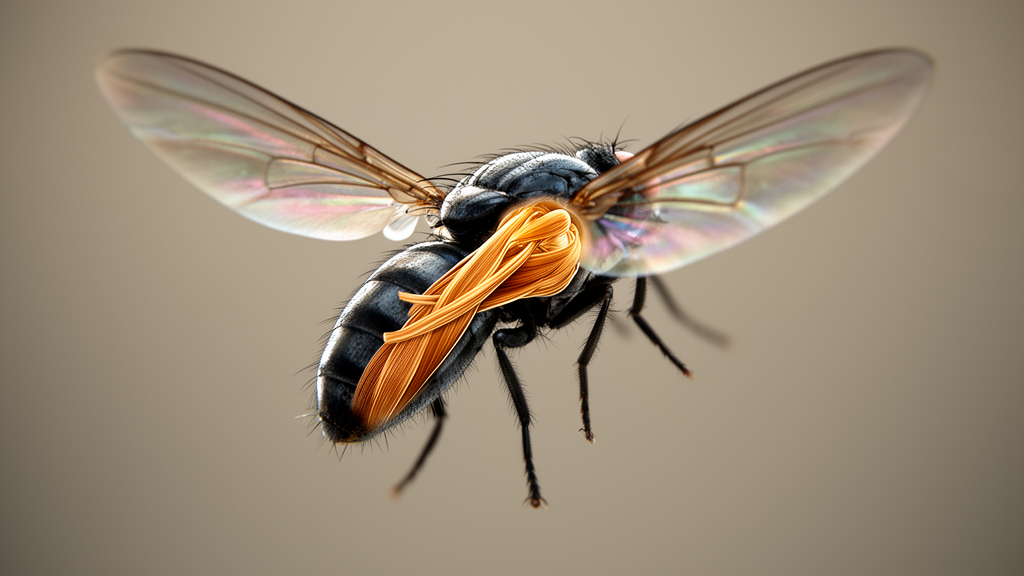
Flapping flight is inherently unstable and requires fruit flies, specifically Drosophila, to fine-tune their wing motions on a timescale of milliseconds. While pioneering investigations established that direct steering muscles attached to the wing hinge drive these rapid flight reflexes, recent connectome data revealed that indirect steering muscles, or tension muscles that alter thorax mechanics, receive shared synaptic inputs from sensory systems. A new study demonstrates that these indirect tergopleural muscles contribute substantially to flight stabilization, specifically when flies encounter large pitch perturbations.

The researchers found that fruit flies switch their corrective flight mechanisms depending on the magnitude of the disturbance. During small perturbations measuring less than 1,000 degrees per second, flies modulate their wing stroke amplitude to generate lift-based corrective torques, matching previously documented flight responses. For larger perturbations exceeding this threshold, Drosophila engage an additional degree of freedom by altering their wing pitch angle. This behavioral shift allows the insects to recruit both lift and drag forces to execute rapid recovery maneuvers.

Quasi-steady aerodynamic simulations carried out by the team revealed that engaging the wing pitch angle minimizes power consumption during these corrective actions. This energy-saving dynamic operates analogously to how certain mammals, including humans, adjust their steady-state gaits in a near energy-optimal manner. The findings indicate that fruit flies rely on specialized reflex strategy selection during time-critical behaviors to maintain stable flight without expending unnecessary aerodynamic power.

To uncover the underlying neural and physical mechanics, the researchers employed optogenetics alongside a control theory framework. Their analysis demonstrated that the tergopleural muscle is activated by a proportional gain component within a nonlinear proportional-integral controller, which dictates the wing pitch angle during large perturbations. Furthermore, the team developed a simplified torsional spring model of the wing hinge, which captures observed pitch dynamics by showing that the tergopleural muscle functions to adjust the rest angle of the wing.

Together, these findings highlight the vital contribution of indirect tension muscles in insect flight control, expanding beyond traditional models focused exclusively on direct hinge muscles. By demonstrating how sensory inputs drive the tergopleural muscle to adjust wing hinge mechanics under intense flight disturbances, the research provides clear evidence of multi-tiered reflex strategies in natural flapping systems.

Subject of Research: Role of indirect steering muscles in insect flight stabilization

Article Title: An indirect wing steering muscle stabilizes flight by regulating wing pitch angle in Drosophila

Article References: Teoh, H. K., Biswas, D., Li, H., Leung, A., Ludlow, B. K., Whitehead, S. C., Ehrhardt, E., Dickinson, M., Beatus, T., Cowan, N. J., & Cohen, I. (2026). An indirect wing steering muscle stabilizes flight by regulating wing pitch angle in Drosophila. PLOS Biology, 24(11), e3003565. https://doi.org/10.1371/journal.pbio.3003565

Image Credits: AI Generated

DOI: 10.1371/journal.pbio.3003565

Keywords: Drosophila, tergopleural muscle, indirect steering muscles, wing pitch angle, flight stabilization, flapping flight, wing stroke amplitude, pitch perturbations, aerodynamic simulations, optogenetics, control theory, proportional-integral controller, torsional spring model, wing hinge mechanics, power consumption, reflex strategy selection

News Source: Drew Townsend. (November 18, 2026). Indirect Steering Muscles Stabilize Fruit Fly Flight by Adjusting Wing Pitch. Scienmag.


Tags: aerodynamic simulationscontrol theoryDrosophilaflapping flightflight stabilizationindirect steering musclesoptogeneticspitch perturbationsPower Consumptionproportional-integral controllerreflex strategy selectiontergopleural muscletorsional spring modelwing hinge mechanicswing pitch anglewing stroke amplitude
Share12Tweet7Share2ShareShareShare1

Related Posts

Two Case Reports Link Structural Y Chromosome Rearrangements to Male Infertility

Two Case Reports Link Structural Y Chromosome Rearrangements to Male Infertility

November 18, 2026
Ferroptosis Mechanisms and Their Role in Human Reproductive Disorders

Ferroptosis Mechanisms and Their Role in Human Reproductive Disorders

November 18, 2026

Circular RNA Signatures Map Secondary Progressive Multiple Sclerosis Lesion Pathology

November 18, 2026

Landscape Connectivity Outweighs Local Habitat Structure for Coastal Wetland Terrestrial Vertebrates

November 18, 2026

POPULAR NEWS

  • Streaming Framework With Hybrid Machine Learning Achieves Sub-Forty-Millisecond Intrusion Detection

    Streaming Framework With Hybrid Machine Learning Achieves Sub-Forty-Millisecond Intrusion Detection

    29 shares
    Share 12 Tweet 7
  • Multidisciplinary Protocol Aids Mitral Valve Repair in Post-Infarction Shock Case

    29 shares
    Share 12 Tweet 7
  • Physical Exercise Linked to Lower Relative Health Disadvantage Among Older Adults

    29 shares
    Share 12 Tweet 7
  • Adolescent Brain Connectivity Predicts Depression and Anxiety Trajectories Over 18 Months

    29 shares
    Share 12 Tweet 7

About

We bring you the latest biotechnology news from best research centers and universities around the world. Check our website.

Follow us

Recent News

Lung Cancer Drug Appraisals Showed 56% Cost-Effectiveness Concordance Between Agencies

Two Case Reports Link Structural Y Chromosome Rearrangements to Male Infertility

Cellular Danger Signals Drive Persistent Sterile Inflammation Across Chronic Musculoskeletal Injuries

Subscribe to Blog via Email

Enter your email address to subscribe to this blog and receive notifications of new posts by email.

Join 88 other subscribers
  • Contact Us

Bioengineer.org © Copyright 2023 All Rights Reserved.

Welcome Back!

Login to your account below

Forgotten Password?

Retrieve your password

Please enter your username or email address to reset your password.

Log In
No Result
View All Result
  • Homepages
    • Home Page 1
    • Home Page 2
  • News
  • National
  • Business
  • Health
  • Lifestyle
  • Science

Bioengineer.org © Copyright 2023 All Rights Reserved.